

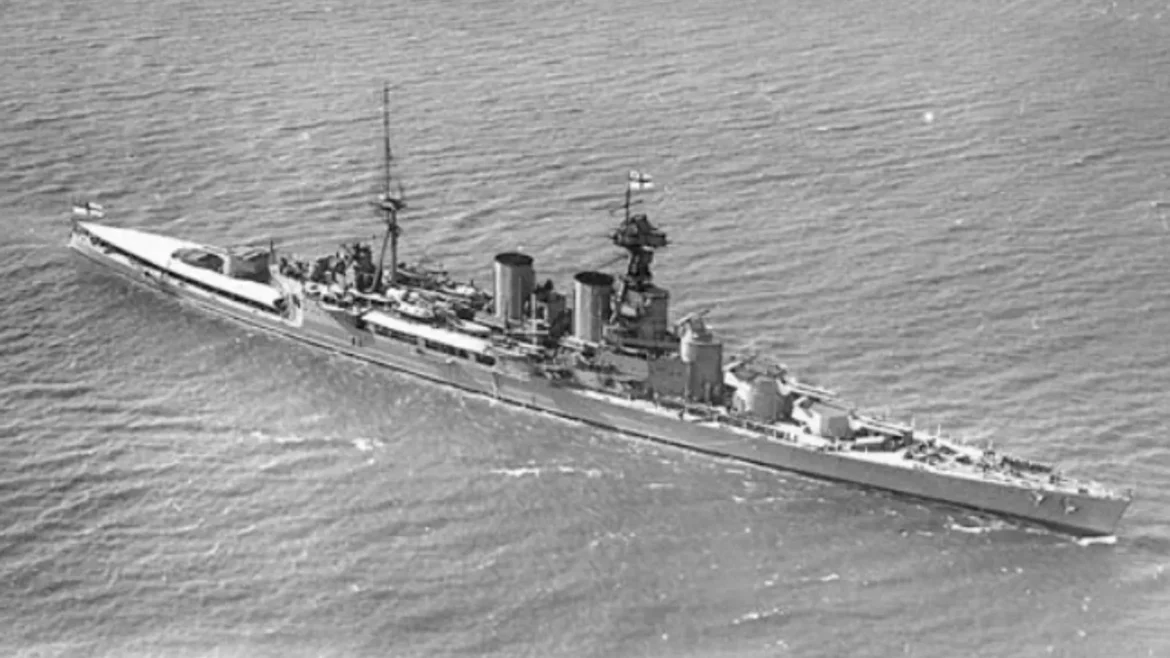
Operation Catapult: The Royal Navy’s Pre-Emptive Strike on the French Fleet
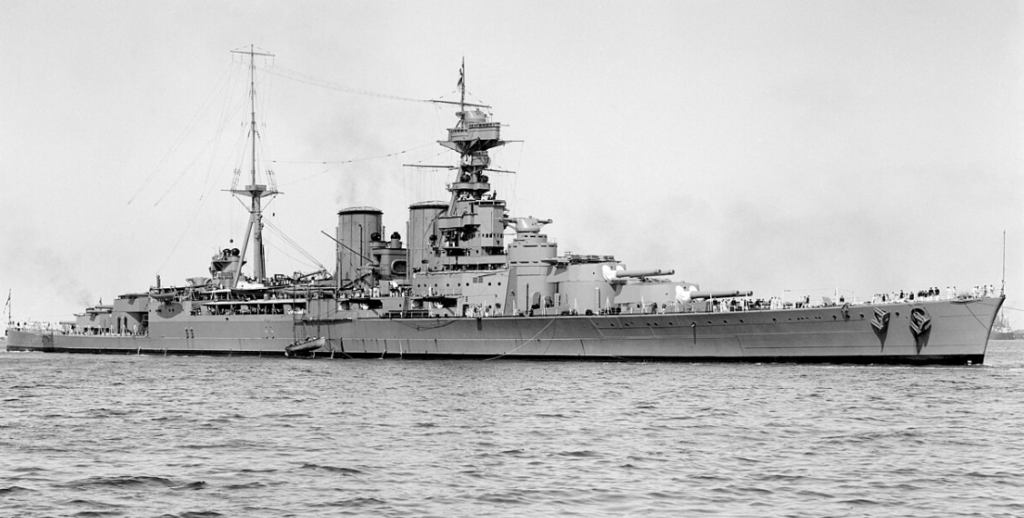
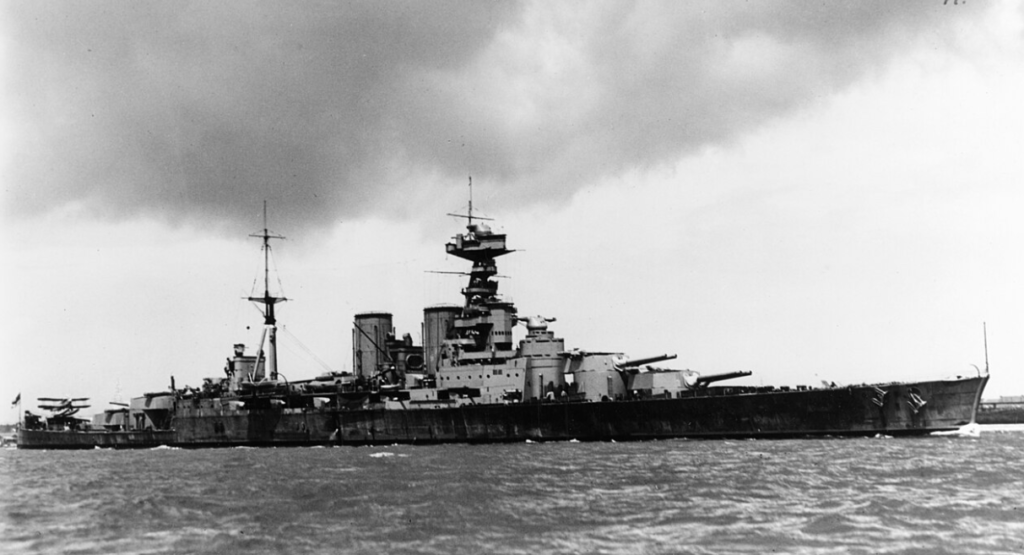
On the morning of July 3, 1940, Royal Navy signalmen aboard Force H’s flagship handed French Admiral Marcel-Bruno Gensoul an ultimatum he had nine hours to answer. By 5:54 that evening, the guns of HMS Hood, Resolution, and Valiant had turned on ships that three weeks earlier had been fighting alongside Britain against the same enemy. Operation Catapult remains one of the most controversial command decisions of the Second World War — and one of the clearest historical case studies in the logic, and the cost, of pre-emptive naval action against a nominally friendly force.
Key Takeaways
- Operation Catapult was a unilateral British strike on the French fleet at Mers-el-Kébir on July 3, 1940, launched to prevent Germany or Italy from absorbing France’s warships after the armistice.
- The attack killed roughly 1,297 French sailors, destroyed the battleship Bretagne, and damaged Dunkerque and Provence, while Strasbourg escaped to Toulon.
- Parallel actions at Alexandria (negotiated demilitarization) and in British home ports (peaceful seizure) show violence was not the inevitable outcome of the broader denial strategy.
- Catapult remains a foundational case study in pre-emptive capability-denial doctrine, echoed in later strikes like Osirak and al-Kibar and in modern compressed-decision-window strike doctrine.
At-a-Glance: Strategic Brief
| Strategic Brief | Details |
|---|---|
| Codename / Mission | Operation Catapult |
| Date / Theater | July 3, 1940 (main action) / Mers-el-Kébir naval base, near Oran, French Algeria |
| Executing Force(s) | Royal Navy Force H — Battlecruiser HMS Hood, battleships HMS Resolution and HMS Valiant, carrier HMS Ark Royal, supporting cruisers and destroyers, under Vice-Admiral Sir James Somerville |
| Primary Target | French Marine Nationale capital ships of the Force de Raid, under Vice-Admiral Marcel-Bruno Gensoul |
| Key Platforms & Tech | 15-inch naval gunnery, carrier-launched Fairey Swordfish torpedo bombers, coordinated multi-port simultaneous action (Mers-el-Kébir, Alexandria, Plymouth, Portsmouth) |
| Mission Outcome | Tactical success — French battleship Bretagne destroyed, Dunkerque and Provence damaged/grounded; strategic outcome contested — achieved fleet neutralization but inflicted lasting diplomatic damage on Anglo-French relations |
Strategic Background & Operational Context
The armistice France signed with Germany on June 22, 1940 placed London in an impossible strategic position. Article 8 of the armistice required French warships to return to their peacetime ports and be demobilized under German or Italian supervision, with Berlin publicly pledging it would not use the fleet for its own purposes. The British War Cabinet did not, and could not afford to, take that pledge at face value.
The Marine Nationale in June 1940 was the fourth-largest navy in the world, and a significant fraction of its most modern surface combatants — including the fast battleships Dunkerque and Strasbourg — were concentrated at Mers-el-Kébir, the fortified anchorage west of Oran on the Algerian coast. If those hulls were seized intact by the Kriegsmarine or the Regia Marina, the naval balance in the Atlantic and Mediterranean would shift catastrophically against Britain at the precise moment the Royal Navy was bracing for a possible German invasion and needed every asset available to maintain its blockade and control the sea lines of communication.
Winston Churchill, newly installed as Prime Minister and facing France’s collapse, framed the decision starkly to the War Cabinet: better to alienate a defeated ally than risk the German or Italian navy absorbing a fleet that could contest Royal Navy dominance of the Mediterranean and threaten the Atlantic convoy routes. The operation was conceived not as an act of war against France, but as a unilateral insurance policy against a scenario British planners judged unacceptable — a textbook case of a state acting on worst-case capability assessment rather than waiting to confirm hostile intent.
Diplomatic Framework & the Ultimatum
Force H’s commander, Vice-Admiral Sir James Somerville, was personally uneasy with the assignment, reportedly calling it the most hateful task of his career. The Admiralty’s plan nonetheless required him to present Admiral Gensoul with a formal set of options rather than attack without warning, an important distinction that shaped both the operation’s legal framing and its historical reception.
The ultimatum, delivered via Captain Cedric Holland (who had served as naval attaché in Paris and knew several French officers personally), offered Gensoul four choices: sail and join the Royal Navy to continue the fight against Germany and Italy; sail with reduced crews to a British port for internment; sail to a French port in the West Indies such as Martinique, where the ships could be demilitarized under American observation; or scuttle the fleet within six hours. Gensoul, constrained by orders from the Vichy Admiralty and skeptical of British intentions, offered only a partial and unsatisfactory counter-proposal, and communications delays compounded the impasse. When the deadline lapsed without resolution, Somerville executed his standing orders from London.
Simultaneously, British forces moved against French naval assets elsewhere: ships in Portsmouth and Plymouth were boarded and seized without significant resistance, while at Alexandria, Admiral Andrew Cunningham negotiated a peaceful demilitarization of the French squadron there with Admiral René-Emile Godfroy — a far less bloody outcome that stands in direct contrast to Mers-el-Kébir and is frequently cited by historians as evidence that violence was not the inevitable result of Catapult’s underlying strategic logic, but a product of the specific breakdown in communication and trust at Oran.
Mission Execution & Key Sorties
At 17:54 on July 3, Force H opened fire from a range of roughly 17,500 yards. The action lasted approximately ten minutes but was catastrophic for the anchored French squadron, which had limited room to maneuver inside the harbor and was caught largely at moorings.
The battleship Bretagne suffered a magazine explosion and capsized rapidly, taking roughly 977 of her crew down with her — the single largest loss of life in the engagement. Dunkerque was heavily damaged and ran aground to avoid sinking; she would be struck again several days later by a follow-up strike from Swordfish torpedo bombers launched from Ark Royal on July 6, targeting the ship as she lay disabled. Provence was damaged and beached. The modern battleship Strasbourg, along with several destroyers, managed to escape the harbor under fire, evading pursuit by Hood and reaching Toulon — a fact later cited by critics as evidence the operation had failed to achieve total fleet neutralization even as it achieved its broader deterrent aim.
In total, the action killed approximately 1,297 French sailors and wounded roughly 350 more, casualties on a scale that shocked the Vichy government and French public opinion, and that Admiral Gensoul’s own after-action reporting to Vichy amplified in ways that hardened French resentment toward Britain for years afterward.
Tactical Outcome & Operational Assessment
Judged narrowly against its stated objective — preventing the German or Italian navies from operationally absorbing the French capital ship force at Mers-el-Kébir — Operation Catapult succeeded. The core of the anchored squadron was put out of action, and no French warship at Mers-el-Kébir was subsequently used by the Axis. Combined with the parallel seizures and internments in British ports and the negotiated demilitarization at Alexandria, Catapult removed a substantial fraction of the Marine Nationale’s most capable hulls from any near-term contest for naval supremacy.
The operational assessment is less clean when the escape of Strasbourg and her escorts is weighed alongside the diplomatic fallout. Vichy France severed relations with Britain, and the raid became a durable propaganda tool for the collaborationist government, used to characterize Britain as a treacherous former ally rather than a co-belligerent. Some historians argue the human cost at Mers-el-Kébir was disproportionate given that a negotiated demilitarization — as achieved at Alexandria and in British home ports — was demonstrably possible under different command conditions. Others, including Churchill himself in later writings, argued the operation’s real value was demonstrative: it signaled to Roosevelt’s still-neutral United States, and to the world, that Britain intended to fight on alone and would take extreme measures to deny Germany any path to naval parity in the Atlantic, a signal credited with influencing early American assessments of British resolve.
Engineering & Technological Context
Catapult was not a technology-driven operation in the sense of novel ordnance or guidance systems; its significance lies instead in coordinated multi-theater execution and in the doctrine of pre-emption it embodied. The action combined conventional main-battery naval gunfire from Hood‘s 15-inch guns and the Queen Elizabeth-class battleships’ 15-inch batteries with carrier aviation, using Ark Royal‘s Fairey Swordfish biplane torpedo bombers for the follow-up strike against the grounded Dunkerque — an early operational example of carrier air power being used to finish off a target initially engaged by surface gunnery, a combined-arms naval pattern that would recur throughout the Mediterranean and Pacific campaigns.
The wider significance was doctrinal rather than mechanical: Catapult established a precedent for unilateral, time-boxed ultimatum-then-strike action against a fleet-in-being belonging to a state not formally at war with the acting power, justified purely on the denial of future adversary capability.
The Modern Connection: Lineage to 21st-Century Warfare
Operation Catapult is a foundational case study in what modern strategists call “counter-proliferation through fleet or capability denial” — acting to neutralize a military asset before it can be captured, transferred, or weaponized by a third party, rather than in response to a completed attack. The core logic recurs throughout the nuclear and missile age: the 1981 Israeli strike on Iraq’s Osirak reactor, the 2007 Israeli strike on Syria’s al-Kibar facility, and ongoing debates over pre-emptive strikes against adversary hypersonic or nuclear infrastructure all trace back to the same strategic calculus Churchill’s War Cabinet applied to the French fleet — deny the capability now, absorb the diplomatic and moral cost, rather than risk it later in the hands of a more dangerous actor.
The Mers-el-Kébir ultimatum-and-deadline structure also anticipates the modern “decision window” problem central to today’s loitering-munition and hypersonic-strike doctrine. Just as Somerville was forced to act within a compressed timeline against a target whose intentions were genuinely ambiguous, modern commanders operating short-notice strike platforms — from MQ-9 Reaper-launched precision munitions to naval long-range anti-ship missiles — increasingly face compressed rules-of-engagement windows where the cost of inaction (an adversary capability escaping intact, as Strasbourg did) must be weighed in real time against the cost of a strike against an ambiguous or friendly-flagged target, an ethical and legal tension modern NATO targeting directives explicitly try to codify in ways 1940 planners had to improvise.
Finally, the contrast between the bloodless outcome at Alexandria and the bloody one at Mers-el-Kébir remains a case study taught in modern naval staff colleges on the disproportionate weight that trust, personal rapport between commanders, and communication reliability carry in de-escalating a crisis — a lesson with direct relevance to today’s tense naval standoffs in contested waters such as the Taiwan Strait and the South China Sea, where miscommunication between opposing task force commanders carries similarly catastrophic escalation risk.
From the Bridge to the Battle Map: A Wargaming Perspective
For strategy gamers who have run the Mers-el-Kébir scenario in titles like War Thunder‘s naval mode or Rule the Waves, Operation Catapult plays out as a brutal lesson in the “sitting duck” problem: French capital ships anchored in a confined harbor, without sea room to maneuver or build speed, face devastating fire-control solutions from an attacker firing from open water — the naval equivalent of an ambush on a choke point in a real-time strategy title. Community after-action reports on Mers-el-Kébir scenarios consistently note that Strasbourg‘s escape hinged on a narrow window between the harbor’s exit channel and Force H’s covering position, mirroring the real engagement’s central tactical fact: proximity to open water, not raw firepower, determined which French ships survived the opening minutes.
FAQs
France had signed an armistice with Germany, and the British War Cabinet judged the risk of the French fleet falling into Axis hands too great to accept on the basis of German assurances alone. Catapult was framed as a pre-emptive denial-of-capability operation, not an act of war against the French people.
No. The battleship Bretagne was destroyed and Dunkerque and Provence were damaged and beached, but the fast battleship Strasbourg and several escorting destroyers escaped the harbor and reached Toulon.
At Alexandria, Admiral Andrew Cunningham negotiated a peaceful demilitarization of the French squadron with Admiral René-Emile Godfroy, avoiding bloodshed entirely — a contrast historians use to argue the violence at Mers-el-Kébir stemmed from a specific breakdown in trust and communication rather than being inherent to the operation’s goals.
Approximately 1,297 French sailors were killed and around 350 wounded, with the majority of deaths occurring aboard the battleship Bretagne when she capsized.
Yes. Strategists frequently cite it alongside the 1981 Israeli strike on Iraq’s Osirak reactor and the 2007 strike on Syria’s al-Kibar facility as an early example of pre-emptive capability-denial strikes carried out to prevent an adversary from acquiring a strategic asset.