


- Finland is preparing to receive its first F-35A fighters as part of a 64-aircraft procurement program.
- The Finnish Air Force is upgrading bases, training personnel, and integrating new logistics systems.
- The program strengthens NATO’s northern flank and enhances regional deterrence against Russia.
- Initial deliveries are expected later this decade, with full operational capability planned in the 2030s.
- The F-35 will replace Finland’s legacy F/A-18 Hornet fleet and redefine its air combat doctrine.
Finland F-35 Fighters Arrival Marks Critical Transition Phase
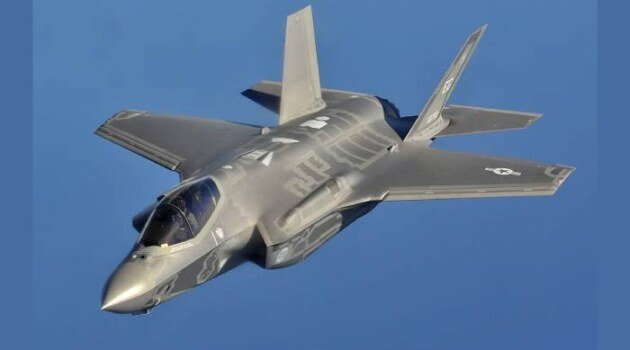
Finland F-35 fighters arrival is entering a decisive phase as the Finnish Air Force accelerates preparations to integrate its first fifth-generation aircraft, marking a major shift in Nordic airpower and NATO interoperability.
The Big Picture
Finland’s transition to the F-35A comes amid a broader transformation of NATO’s northern defenses following Helsinki’s accession to the alliance in 2023.
Northern Europe has become a focal point for deterrence planning. Russia’s military posture along its western borders and in the Arctic continues to drive modernization efforts among Nordic states. Finland’s decision to procure 64 F-35A fighters aligns it with other regional operators, including Norway and Denmark, creating a more integrated fifth-generation ecosystem.
The move also reflects a wider U.S.-led push to standardize allied airpower capabilities around the F-35 platform, enabling shared logistics, data fusion, and joint operations.
What’s Happening
The Finnish Air Force is preparing infrastructure, personnel, and operational concepts ahead of the Finland F-35 fighters arrival, according to official updates from the Finnish Defence Forces.
Finland selected the F-35A in 2021 under its HX Fighter Program to replace its aging F/A-18 Hornet fleet. The country plans to acquire 64 aircraft, with deliveries expected to begin in the coming years and continue into the early 2030s.
Preparations include:
- Upgrading air bases to support F-35 operations, including hardened shelters and secure data systems
- Training pilots and maintenance crews, both domestically and in the United States
- Establishing new logistics and sustainment frameworks tailored to the F-35’s requirements
- Integrating advanced mission planning and data-sharing systems
The Finnish Defence Forces emphasize that the transition involves not only new aircraft but also a complete overhaul of operational concepts.
Why It Matters
The Finland F-35 fighters arrival represents a generational leap in capability for the Finnish Air Force.
The F-35A provides stealth, advanced sensors, and data fusion capabilities that significantly enhance situational awareness and survivability. These features allow Finland to detect, track, and engage threats at longer ranges while operating in contested environments.

Replacing the F/A-18 Hornet with the F-35 also shifts Finland’s air doctrine from traditional air defense toward network-centric warfare. The aircraft acts as both a sensor and a shooter, enabling distributed operations across multiple domains.
From a policy perspective, the acquisition reinforces Finland’s integration into NATO’s command structure and strengthens interoperability with U.S. and allied forces.
Strategic Implications
Finland’s adoption of the F-35 strengthens NATO’s deterrence posture along its northeastern flank.
The aircraft’s ability to operate in highly contested environments improves NATO’s capacity to monitor and respond to activity in the Baltic Sea region and the Arctic. Finland’s geographic position gives it strategic depth, allowing F-35 operations to cover key approaches to Northern Europe.
The growing concentration of F-35 operators in the Nordic region creates a networked force capable of sharing real-time data across borders. This enhances collective situational awareness and reduces response times in crisis scenarios.
The Finland F-35 fighters arrival also signals a shift toward integrated air and missile defense architectures, where fifth-generation fighters play a central role.
Competitor View
Russia is likely to view Finland’s F-35 program as a significant enhancement of NATO’s capabilities near its borders.
Moscow has long expressed concern over NATO expansion and the deployment of advanced Western systems in neighboring countries. The introduction of stealth aircraft capable of penetrating air defenses adds complexity to Russia’s regional military planning.
The presence of multiple F-35 operators in Northern Europe could challenge Russia’s ability to maintain air superiority in the region, particularly in contested scenarios involving the Baltic Sea or Arctic approaches.
At the same time, Russia continues to invest in counter-stealth technologies and integrated air defense systems, which will shape how both sides adapt operationally.
What To Watch Next
The next phase of the Finland F-35 fighters arrival will focus on delivery milestones and operational integration.
Key developments to monitor include:
- First aircraft deliveries and initial operational testing
- Expansion of pilot training pipelines
- Certification of upgraded air bases
- Integration with NATO command and control systems
- Progress toward initial and full operational capability
These milestones will determine how quickly Finland can transition from legacy systems to a fully operational fifth-generation force.
Capability Gap
Finland’s F-35 acquisition addresses several critical gaps in its current airpower structure.
The F/A-18 Hornet, while upgraded over time, lacks the stealth and sensor fusion capabilities required for modern high-threat environments. This limits its effectiveness against advanced air defense systems and next-generation adversary aircraft.
The F-35 fills this gap by enabling:
- Penetration of contested airspace
- Advanced intelligence, surveillance, and reconnaissance missions
- Seamless integration with allied forces
However, the platform also introduces challenges. The F-35 requires complex maintenance, secure data infrastructure, and sustained funding for lifecycle support. These factors will shape long-term operational readiness.
The Bottom Line
Finland F-35 fighters arrival marks a decisive shift toward fifth-generation airpower that strengthens NATO’s northern defenses and reshapes regional deterrence dynamics.

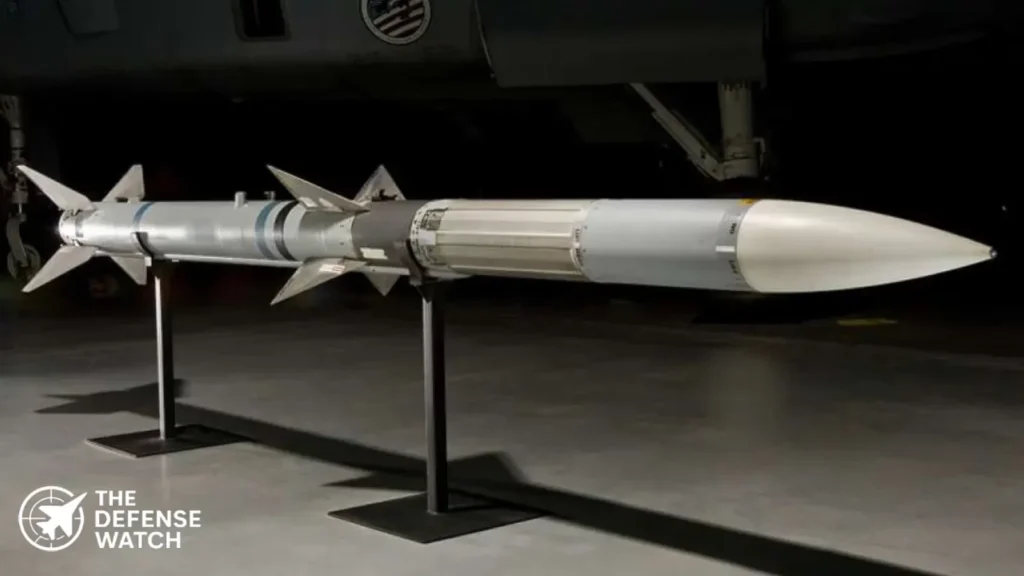
Finland Selects AIM-120D-3 Missile for F-35A Program
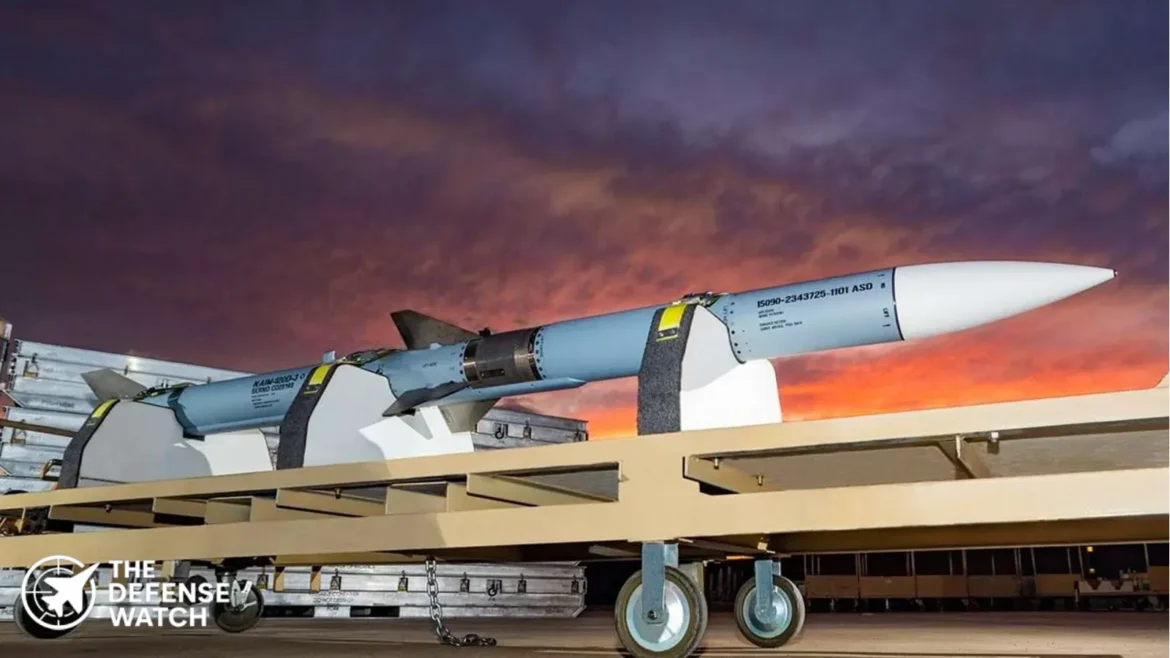
Finland has selected the AIM-120D-3 missile to arm its incoming F-35A fighter jets, marking a key step in the country’s largest defense modernization effort. The decision was confirmed in 2025 and aligns with Finland’s plan to fully equip its future fifth generation fighters with advanced beyond visual range air to air weapons.
The missile selection supports Finland’s HX Fighter Program, under which the Finnish Air Force will replace its aging F A 18 Hornet fleet with 64 Lockheed Martin F-35A Lightning II aircraft. Deliveries of the jets are scheduled to begin later this decade, with full operational capability expected in the early 2030s.
Strengthening Long Range Air Combat Capability
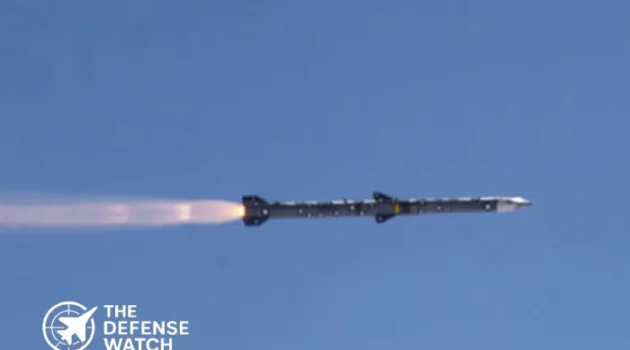
The AIM-120D-3 missile is the latest variant of the Advanced Medium Range Air to Air Missile family, widely known as AMRAAM. It offers extended range, improved guidance, and enhanced resistance to electronic countermeasures compared to earlier versions.
By choosing the AIM-120D-3 missile, Finland ensures that its F-35A fleet will be capable of engaging hostile aircraft at long distances while operating in contested airspace. The missile uses active radar homing and advanced data link features, allowing it to receive mid course updates from the launching aircraft or other networked platforms.
The AIM-120D-3 missile is already in service with the United States Air Force and several allied nations, making it a standard weapon within NATO air forces.
Background on Finland’s F-35A Acquisition
Finland selected the F-35A in 2021 after a multi year competition involving several advanced fighter aircraft. The decision was driven by the F-35’s stealth design, sensor fusion, and ability to operate as part of a wider network of air and ground assets.
As a NATO member sharing a long border with Russia, Finland places strong emphasis on air defense, rapid response, and deterrence. The combination of the F-35A and the AIM-120D-3 missile supports these goals by providing high survivability and strong first shot capability.
Weapons integration is a critical part of the F-35 program, and the AIM-120 family has long been considered the backbone of Western beyond visual range air combat.
Technical Overview of the AIM-120D-3 Missile
The AIM-120D-3 missile builds on earlier AMRAAM variants with several upgrades. These include improved kinematics for longer engagement ranges, more accurate navigation, and software updates that enhance performance against maneuvering targets.
The missile is designed to operate in high threat environments, including those with heavy jamming. When paired with the F-35’s advanced sensors and low observable profile, the AIM-120D-3 missile can be launched without alerting enemy radar systems until late in the engagement.
This capability allows pilots to detect, track, and engage threats while remaining difficult to detect themselves.
Interoperability With NATO and Allied Forces
One of the key advantages of selecting the AIM-120D-3 missile is interoperability. Many NATO members operate both the F-35 and earlier fighter aircraft armed with AMRAAM missiles. This allows allied air forces to share targeting data and coordinate engagements during joint operations.

Finland’s choice supports seamless integration with allied air policing missions, joint exercises, and collective defense operations. It also simplifies logistics, training, and sustainment over the long term.
The AIM-120D-3 missile can be carried internally by the F-35A, preserving the aircraft’s stealth profile, or externally when stealth is less critical.
Industrial and Program Considerations
The AIM-120D-3 missile is produced by RTX, formerly known as Raytheon Technologies. Production and sustainment are supported through U.S. government managed foreign military sales frameworks, which Finland already uses for other defense acquisitions.
While specific contract values for the missile purchase were not disclosed, the selection is consistent with previously approved U.S. export clearances for advanced AMRAAM variants to Finland.
The missile procurement is expected to progress alongside aircraft deliveries to ensure the Finnish Air Force can reach initial operational capability without delays.
What Comes Next for the Finnish Air Force
As F-35A deliveries approach, Finland will continue to finalize its weapons mix, training pipelines, and basing infrastructure. Alongside the AIM-120D-3 missile, the F-35A is expected to carry a range of air to ground munitions and short range air to air missiles.
The integration of the AIM-120D-3 missile marks another milestone in Finland’s transition to a fifth generation air combat force. Once operational, the new fleet will significantly enhance national air defense and contribute to regional security in Northern Europe.
Finland Air Force to Retire Swastika Flags
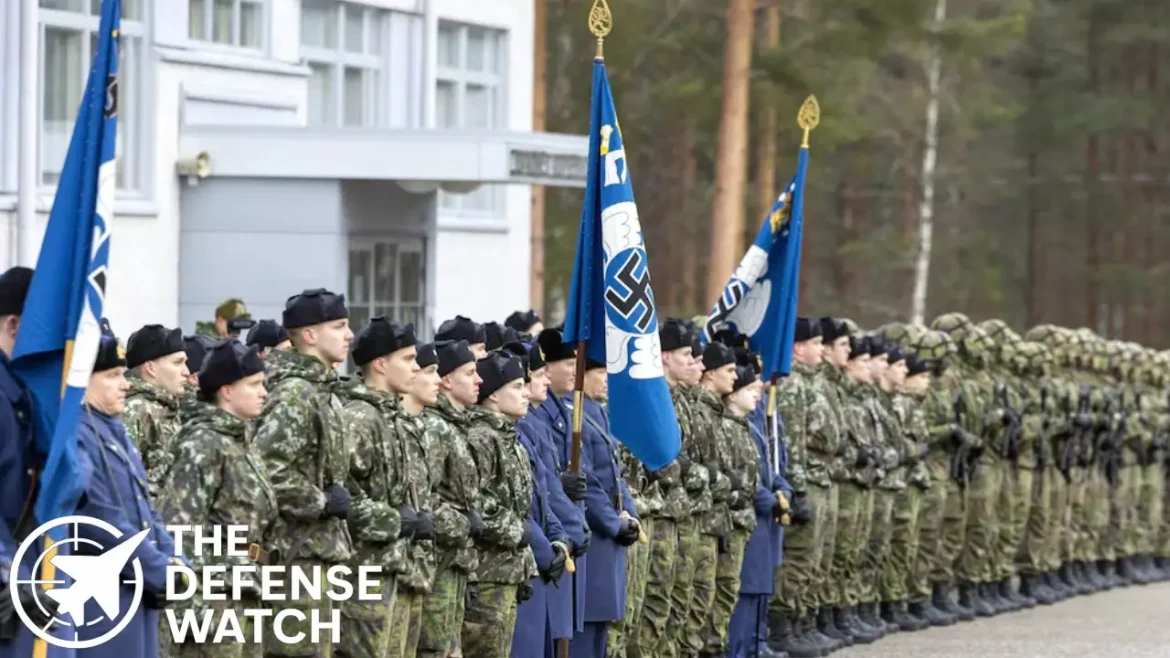
Finland’s Air Force is preparing to phase out swastikas still displayed on a handful of unit flags, a move aimed at avoiding diplomatic awkwardness with NATO allies and foreign visitors. While Finland insists its use of the swastika predates Nazi Germany, the symbol’s strong association with tyranny and hate groups has increasingly posed challenges for Helsinki since joining NATO in 2023.
The Finnish Defense Forces confirmed that a program to renew Air Force unit flags began in 2023, the same year Finland formally entered the alliance. Officials said the decision was not directly linked to NATO accession but rather part of a broader effort “to update the symbolism and emblems of the flags to better reflect the current identity of the Air Force.”
An Ancient Symbol with Modern Controversy
The Finnish Air Force adopted the swastika in 1918, when Sweden’s Count Eric von Rosen donated Finland’s first aircraft marked with his personal emblem — a blue swastika on a white background. The symbol became the service’s insignia until 1945, appearing on aircraft, flags, and academy emblems.
However, its use became controversial after Nazi Germany adopted the same symbol in the 1930s. Despite Finland stressing that its swastika had no connection to Hitler’s regime, the historical overlap complicated its international perception. Von Rosen himself was later linked to Nazi circles, being the brother-in-law of Hermann Göring, who would go on to command the Luftwaffe.
“Sometimes awkward situations can arise with foreign visitors,” Col. Tomi Böhm, commander of the Karelia Air Wing, told Finnish public broadcaster YLE. “It may be wise to live with the times.”
NATO Membership Accelerates Change
Finland’s move comes as it deepens integration with NATO’s command structure. Experts note that the swastika, while historically distinct in Finland, remains deeply taboo across much of Europe.
Teivo Teivanen, professor of world politics at the University of Helsinki, told Helsingin Sanomat that the swastika had become an “embarrassing symbol in international contexts.” He noted that in 2021, German Air Force personnel skipped a final ceremony in Lapland after learning swastika-bearing flags would be displayed.
This context has made it increasingly difficult for Finland to reconcile its traditions with alliance interoperability. New unit flags, expected to feature an eagle motif, will gradually replace the older banners at parades and military ceremonies.
A Logical Continuation of Reform
The Finnish Air Force already removed the swastika from its command emblem several years ago, part of a gradual modernization effort. The Defense Forces emphasized that the current flag replacement program is simply the latest stage in aligning symbols with contemporary military identity.
“The traditional Von Rosen swastika emblem, in use since 1918, has already been removed from most other Air Force emblems during earlier reforms, so its removal from the unit flags is a logical continuation of this work,” the military said in a statement.
Analysis: Balancing Tradition and Alliances
Finland’s decision underscores the broader challenge of balancing national traditions with multinational defense obligations. While the swastika in Finland predates Nazi Germany, the global perception of the symbol is overwhelmingly negative. For a new NATO member located on the alliance’s front line with Russia, maintaining cohesion and avoiding unnecessary friction with key allies such as Germany and France carries strategic weight.
Symbolism in defense organizations is not merely ceremonial — it also communicates values, unity, and interoperability. For Finland, retiring the swastika from military use is both a diplomatic necessity and a symbolic marker of its transition from historic neutrality to NATO integration.
FAQs
The swastika was adopted in 1918 when Sweden’s Count Eric von Rosen donated Finland’s first aircraft marked with the symbol, decades before Nazi Germany.
Finnish officials say the decision was not directly tied to joining NATO, but analysts note that alliance integration accelerated the move.
The Defense Forces said new designs featuring an eagle emblem will gradually replace existing flags.
According to experts, four units introduced in the 1950s continue to display the symbol.
The Defense Forces did not specify an exact timeline but said the work is ongoing.