

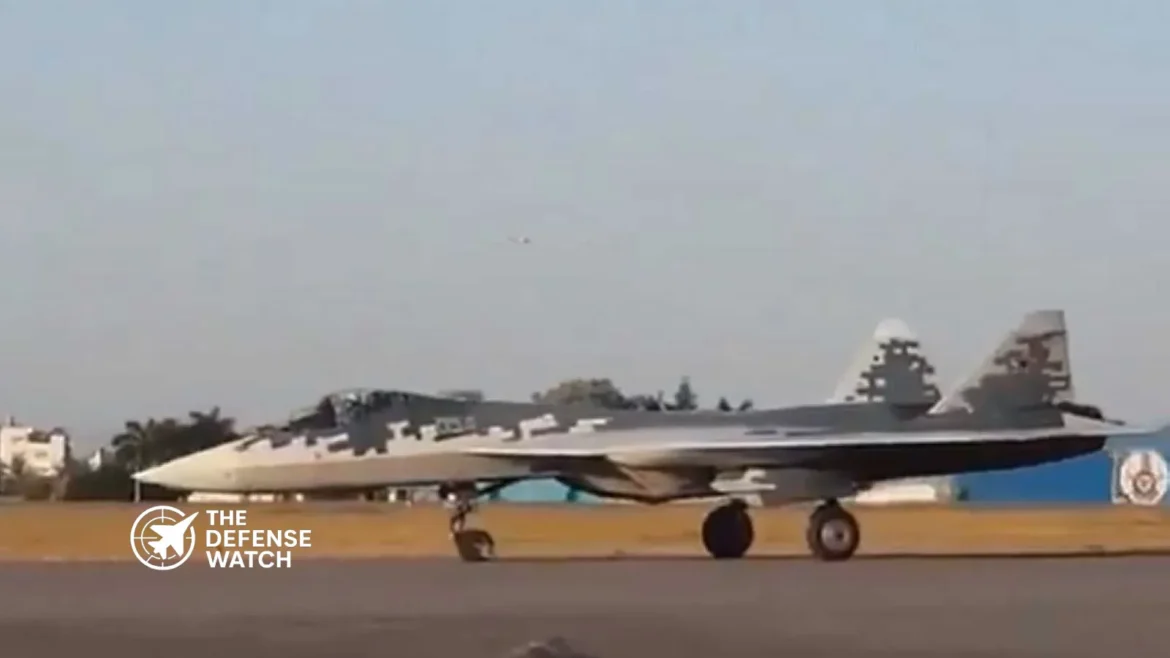
India Explores Su-57E Local Production as Fighter Gap Widens
India Su-57E fighter talks have entered a deeper phase as New Delhi evaluates local production of Russia’s fifth-generation stealth aircraft to address growing capability gaps in the Indian Air Force. The discussions come as the United States quietly positions the F-35 as a potential long-term option, highlighting India’s widening set of strategic choices in fighter modernization.
(adsbygoogle = window.adsbygoogle || []).push({});According to reporting by Army Recognition and Indian defense officials, Moscow has proposed assembling the export variant Su-57E in India, potentially under a framework aligned with Make in India defense manufacturing goals. The proposal arrives amid delays in India’s indigenous Advanced Medium Combat Aircraft program and sustained pressure from regional airpower developments in China and Pakistan.
India’s Fifth-Generation Fighter Dilemma
Capability Gaps Drive Urgency
The Indian Air Force currently operates around 30 squadrons, well below the authorized strength of 42. Modernization efforts have been slowed by delays in indigenous programs and limited progress in foreign acquisitions beyond the Rafale fleet.
China’s operational deployment of the J-20 stealth fighter has sharpened concerns in New Delhi, particularly regarding air dominance and long-range strike capabilities. In this context, India’s interest in the Su-57E reflects a near-term attempt to secure fifth-generation capabilities without waiting for domestic development timelines to mature.
The Su-57E is Russia’s export-configured version of its stealth fighter, featuring reduced sensitive technologies compared to the domestic Su-57, but retaining low observability features, internal weapons bays, and advanced sensors.
What Russia Is Offering India
Local Assembly and Technology Access
Moscow’s proposal reportedly includes domestic assembly in India, with possible technology transfer linked to avionics integration, weapons compatibility, and maintenance infrastructure. Russian officials have emphasized flexibility on customization, including the integration of Indian or third-party systems.
India previously partnered with Russia on the Fifth Generation Fighter Aircraft program, a joint derivative of the Su-57, but withdrew in 2018 citing concerns over cost, stealth performance, and engine maturity. The renewed Su-57E discussions suggest both sides are revisiting the concept under revised terms.
For India, local production would support industrial capacity, reduce long-term sustainment risks, and align with strategic autonomy objectives. For Russia, India remains one of the few partners capable of sustaining high-end aerospace cooperation amid sanctions and export restrictions.
How the U.S. F-35 Fits Into the Picture
Strategic Option, Not a Near-Term Deal
While India Su-57E fighter talks are gaining momentum, U.S. officials have increasingly referenced the F-35 as a potential future option. Any F-35 pathway would involve strict interoperability, data security, and political alignment requirements that differ significantly from Russian platforms.
Washington views India as a key Indo-Pacific partner, but an F-35 sale would require long-term policy alignment, interoperability commitments, and potential constraints on India’s existing Russian-origin systems, including the S-400 air defense network.
Defense analysts note that while the F-35 offers proven stealth performance, sensor fusion, and networked warfare capabilities, it remains a strategic rather than immediate option for India due to cost, basing requirements, and political considerations.
Operational and Technical Considerations
Stealth, Engines, and Sustainment
The Su-57E’s current configuration continues to evolve, particularly in engine development and radar cross-section reduction. Russia is working to field the Izdeliye 30 engine, which is expected to improve thrust, fuel efficiency, and thermal management.
(adsbygoogle = window.adsbygoogle || []).push({});Indian planners are expected to closely evaluate sustainment models, mission readiness rates, and lifecycle costs, areas that have historically challenged Russian-origin platforms. Western aircraft typically offer stronger logistics transparency, but at higher acquisition and operational costs.
Any Indian Su-57E variant would also require integration with existing command, control, and sensor networks, including indigenous datalinks and airborne early warning platforms.
Strategic Signaling and Geopolitical Balance
Multi-Alignment in Practice
India’s parallel engagement with Russia and the United States reflects its long-standing multi-alignment strategy. Rather than committing exclusively to one supplier, New Delhi continues to assess competing offers to preserve leverage, operational flexibility, and strategic autonomy.
The Indian Air Force fifth generation fighter decision will carry long-term implications for training pipelines, weapons inventories, and alliance interoperability, particularly as India expands defense cooperation with the United States, France, and Japan.
(adsbygoogle = window.adsbygoogle || []).push({});What Comes Next
Decision Timeline Remains Unclear
No formal contract or request for proposal has been announced. Defense officials indicate that feasibility studies, cost assessments, and operational evaluations are ongoing. Any decision is likely to follow broader reviews of India’s combat aircraft roadmap, including the AMCA and additional Rafale acquisitions.
Observers expect incremental progress rather than a rapid commitment, with India weighing industrial benefits, geopolitical risk, and operational readiness before choosing a path forward.

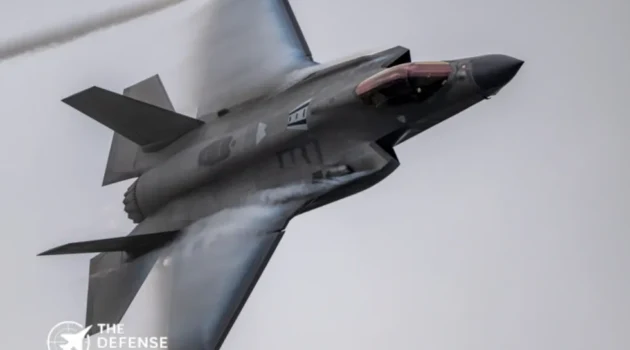

The F-22 Raptor may have taken first flight decades ago, but as the People’s Liberation Army Air Force (PLAAF) accelerates its stealth-fighter production and the U.S. next-generation air-dominance fleet remains years away, the United States Air Force (USAF) finds itself facing a potential air-superiority gap. According to a recent article in the National Security Journal, the optimum path forward is not retirement of the F-22, but an immediate push to transform it into a “Super Raptor” variant—extending its life, modernizing its sensors, weapons and networking, and bridging the time until sixth-generation systems mature.
This article explores why the F-22 Super upgrade has become a strategic imperative, outlines the key upgrade pathways, examines obstacles and counter-arguments, and provides a short context and analysis of what this means for air-power balance into the 2030s.
Why Upgrading the F-22 Makes Strategic Sense
Rising peer-threats demand constant air-dominance
China’s PLAAF is reported to operate approximately 300 stealth combat jets (such as the J-20) and is rapidly pushing ahead with follow-on 5th-generation and 6th-generation programs. In this context, retiring or sidelining the F-22 fleet would leave the USAF reliant on fewer proven platforms at a time when adversary capability is growing—not shrinking.

In short, the “air-dominance” mission set cannot be taken for granted. The F-22 remains one of the few platforms capable of executing the “first-shot, first-kill” doctrine in contested airspace thanks to its stealth, high thrust-to-weight ratio, and internal weapons bay design.
Production constraints and timing of next-gen fighters
The USAF is deja-vu: the next-gen fighter (under the Next Generation Air Dominance (NGAD) umbrella) will take years to achieve mass production. Meanwhile, the F-22 production line is closed, meaning building new airframes is not an option. Upgrading existing frames is far faster and more cost-effective.
Thus, the F-22 Super pathway becomes more than an option—it becomes a necessity to maintain credible air superiority while waiting for the 6th-generation leap.
Proven platform, vast upgrade potential
The F-22 airframe is not static: over the years it has undergone software, sensors, coatings and weapons updates—so much so that it is arguably a very different aircraft today than the one that first entered service.
Upgrading it further—with modern sensor-fusion, AI-enabled targeting, advanced electronic warfare, hypersonic and directed-energy weapons—makes strategic sense. It leverages continuity (training, logistics, maintainers) rather than starting from scratch.
What a “Super” F-22 Upgrade Would Entail
Networked avionics and sensor fusion
A core upgrade path involves giving the F-22 an enhanced integrated sensor suite, AI-driven data processing, and two-way communications/battle-management links—particularly with the F-35 Lightning II. According to the National Security Journal article, the F-22 already serves as an “aerial quarterback” connecting intelligence, targeting and strike elements.
A “Super” version would further that role, seamlessly tying into a networked force of manned and unmanned platforms.
Weapons and stealth enhancements
The planned integration of next-generation air-to-air weapons such as the AIM-260 Joint Advanced Tactical Missile, and possibly hypersonic missile options (e.g., the USAF’s MAKO air‑launched hypersonic missile) is central to the Super Raptor concept.
In tandem, upgrades to coatings, radar-absorbent materials and signature control will keep the platform stealth-relevant in increasingly contested electromagnetic environments.
Rapid deployment and global reach
Past USAF initiatives like “Rapid Raptor” focused on deploying F-22s globally within 24 hours. A Super Raptor variant would build upon this, leveraging modern logistics, forward-basing, and support to ensure readiness in high-threat theaters.
Extended service life
Rather than phasing out the F-22 in the near term, the Super concept envisions flying the type into the 2050s, acting as a credible dominant air-superiority platform while next-gen squadrons scale up.
Challenges and Counter-Arguments
Cost and opportunity‐cost
Upgrading the fleet is not free. Critics argue that funds poured into an extended F-22 life could divert resources from next-gen programs like NGAD, the F/A-XX (naval) or unmanned systems, thus delaying future capabilities. The National Security Journal acknowledges these concerns.
Platform limitations
Even upgraded, the F-22 retains inherent constraints: closed production line (so no expansion of fleet size), limited combat radius (which remains a logistical challenge, especially in the Indo-Pacific theatre) and maintenance burdens tied to its stealth skin and internal-weapons design.
How long is “enough”?
Even a Super Raptor variant can only hold the line until next-gen systems arrive; the question remains how much capability gap the USAF is willing to accept, and whether newer threats (e.g., more advanced integrated air-defense systems, hypersonic missiles) will outpace the upgrade.
Context and Implications for Air-Power Balance
Indo-Pacific posture
With China intensifying its naval and air‐force expansion, aircraft like the F-22 Super become critical in reinforcing U.S. deterrence. The ability to field stealthy, networked air-dominance fighters that can tie into allied and unmanned assets is central to the USAF’s posture in the region.
Strategic timeline bridging
The USAF’s plans show a fighter-fleet expansion to meet growing needs: one analysis notes the service is targeting 1,558 jets by 2035, up from roughly 1,271 today. In parallel, next-gen platforms will not reach numbers for years. The Super Raptor bridges this timeline by ensuring that fifth-generation air dominance remains credible while sixth-generation fleets are scaled.
Industrial and sustainment benefits
Modernizing rather than replacing leverages existing sustainment infrastructure, training pipelines and contractor support (primarily Lockheed Martin, with the F-22). It helps maintain the industrial base while newer programs ramp up. It may also reduce risk: mid-life upgrades are more predictable than entirely new airframe development.
Conclusion
In an era of intense great-power competition, the risk is not that the USAF will have too many superior fighters—it’s that it will have too few credible ones in the right place at the right time. The F-22 Raptor remains a formidable air-dominance asset, and transforming it into a “Super” variant offers an intellectually sound, fiscally and strategically responsible way to maintain U.S. air superiority until the next generation of fighters arrives.
The proposed upgrade path—sensor networking, weapons enhancements, stealth maintenance and global rapid deployment—aligns with the evolving threat environment. Nevertheless, challenges remain: delays in NGAD, budget pressures, maintenance burdens and range/logistics constraints must be addressed. On balance, the argument is compelling: the Super Raptor is not just a nice-to-have—it may be indispensable.
By accelerating the F-22 upgrade now, the USAF can buy time, preserve dominance and ensure that the United States remains the benchmark of air-superiority into the 2040s.
FAQs
It refers to a heavily upgraded version of the F-22 Raptor featuring advanced avionics, networking, weapons (including hypersonics/DEW), and sensor fusion—effectively converting a proven airframe into a “fifth-generation-plus” fighter.
Because next-gen platforms (such as those under NGAD) are years away from large-scale deployment. Waiting risks a capability gap; upgrading the F-22 is faster and leverages existing assets.
With the right upgrades, analysts project the F-22 platform could serve into the 2050s and maybe beyond in the U.S. inventory.
The key risks include funding diversion from next-gen programs, inherent airframe limitations (range, closed production line), stealth-skin maintenance burdens and evolving threat systems that may outpace the upgrades.
No new production line is planned—the upgrade applies to existing airframes. So fleet size remains unchanged, reinforcing the importance of networked operations and teaming with unmanned systems.