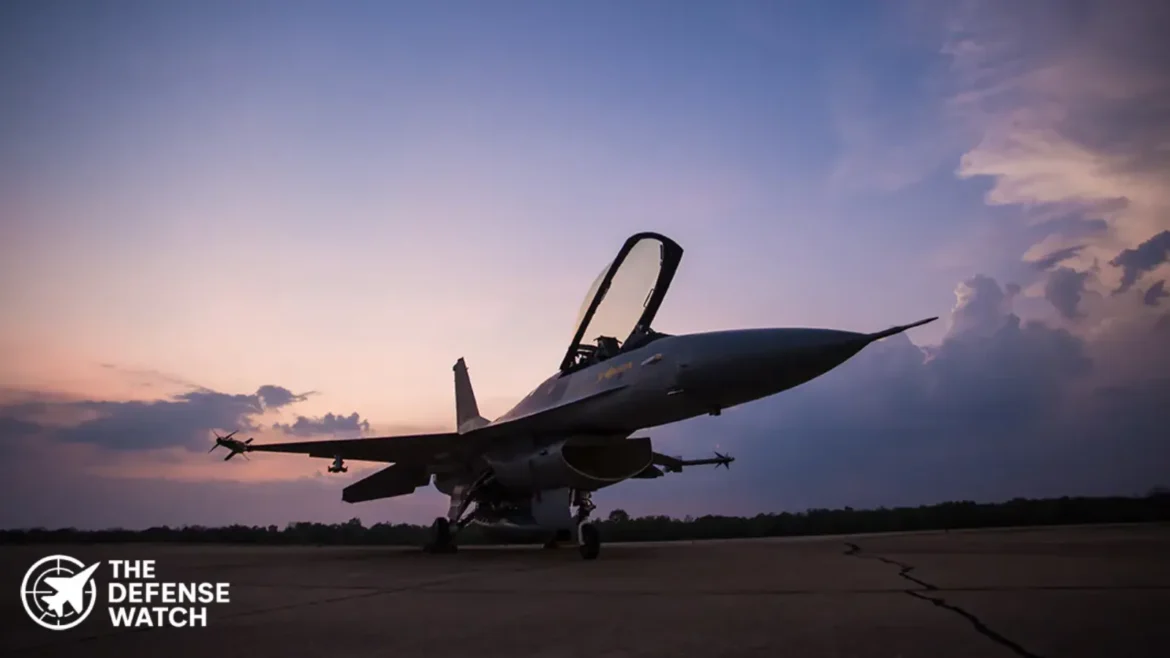
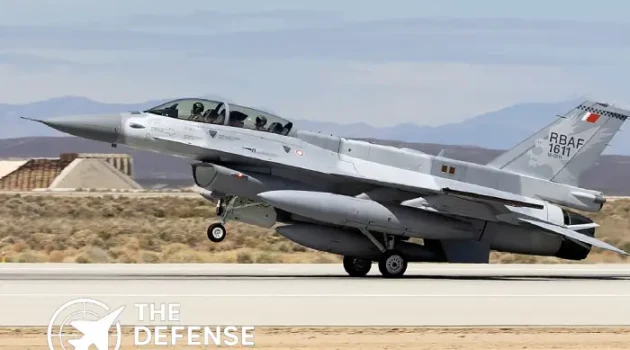
The US Air Force has awarded Sabena Aerospace Engineering a $235.4 million F-16 FMS support contract to sustain Ukraine’s growing F-16 fleet, marking another major step in long term Western backing for Ukrainian airpower. The contract covers intermediate and depot level aircraft and engine maintenance, along with material management support, under the Foreign Military Sales framework.
The award underscores the shift from short term aid to structured, multi year sustainment as Ukraine integrates Western combat aircraft into active service.
Contract Details and Scope
According to the US Department of Defense contract announcement, Sabena Aerospace Engineering, based in Woluwe-Saint-Lambert, Belgium, received a ceiling value contract worth up to $235,449,716. The award combines time and materials and firm fixed price elements, providing flexibility for varying maintenance and support demands over the contract period.
The effort supports the F-16 System Program Office and is specifically tied to Foreign Military Sales support for Ukraine. Work will be performed at Sabena’s facilities in Belgium, with contract performance scheduled through Jan. 28, 2029.
At the time of award, $69,725,380 in FMS funds were obligated. The Air Force Lifecycle Management Center at Hill Air Force Base, Utah, is the contracting authority under contract number FA823226CB005.
The contract was awarded as a sole source acquisition, reflecting Sabena’s existing qualifications, infrastructure, and experience with the F-16 platform.
Role of Sabena Aerospace Engineering
Sabena Aerospace Engineering is a well established European maintenance, repair, and overhaul provider with decades of experience supporting military aircraft fleets. The company has long been involved in F-16 sustainment programs for European air forces and NATO partners, covering structural maintenance, avionics support, and engine related work.
Under this contract, Sabena will provide intermediate and depot level maintenance for both aircraft and engines. This includes scheduled inspections, structural repairs, component overhauls, and supply chain and material management functions needed to keep aircraft mission ready.
By relying on a European based provider, the US Air Force can shorten logistics chains and reduce turnaround times for aircraft supporting Ukraine, while operating within NATO aligned maintenance ecosystems.
Importance for Ukraine’s F-16 Program
The Sabena Aerospace contract is a key enabler for Ukraine’s transition to Western multirole fighters. While aircraft deliveries and pilot training often receive the most attention, long term sustainment is critical to operational effectiveness.
F-16s require robust depot level support to maintain airframe life, radar and avionics reliability, and engine performance. Without consistent access to certified maintenance facilities and spare parts management, sortie rates and mission readiness can degrade quickly.
By securing a multi year FMS support contract, the US Air Force is helping ensure that Ukraine’s F-16 fleet remains viable beyond initial operational capability. This approach aligns with broader US and allied efforts to integrate Ukraine into Western defense support structures rather than relying on ad hoc wartime solutions.
FMS Framework and Oversight
The Foreign Military Sales system allows partner nations to acquire defense articles and services through the US government, ensuring standardization, oversight, and compliance with US policy. In this case, the FMS structure provides transparency and accountability for funds supporting Ukraine, while leveraging existing US Air Force program offices and contracting mechanisms.
The involvement of the F-16 System Program Office ensures that maintenance activities follow established technical orders, safety standards, and configuration control processes used across global F-16 fleets. This reduces risk and supports interoperability with NATO air forces.
Broader Context of US and Allied Support
The Sabena Aerospace award fits within a broader pattern of US and allied investments in sustainment and logistics for Ukraine. As Kyiv fields more Western supplied systems, including combat aircraft, air defense, and armored vehicles, sustainment contracts are becoming as strategically important as initial equipment transfers.
European based maintenance hubs are increasingly central to this strategy, allowing advanced support to be delivered without moving sensitive systems into the United States or into contested airspace. Belgium’s location and NATO integration make it a practical choice for F-16 sustainment activities.
What Comes Next
With funding already obligated and contract performance underway, Sabena Aerospace is expected to begin or expand maintenance activities supporting Ukrainian F-16s in the near term. As additional aircraft are transferred and operational tempo increases, demand for depot level support is likely to grow over the life of the contract.
The award signals continued US confidence in the FMS model as a long term mechanism for sustaining Ukraine’s air combat capabilities, while reinforcing the role of trusted European industry partners in that effort.

Faxon Machining awarded major U.S. bomb production contract
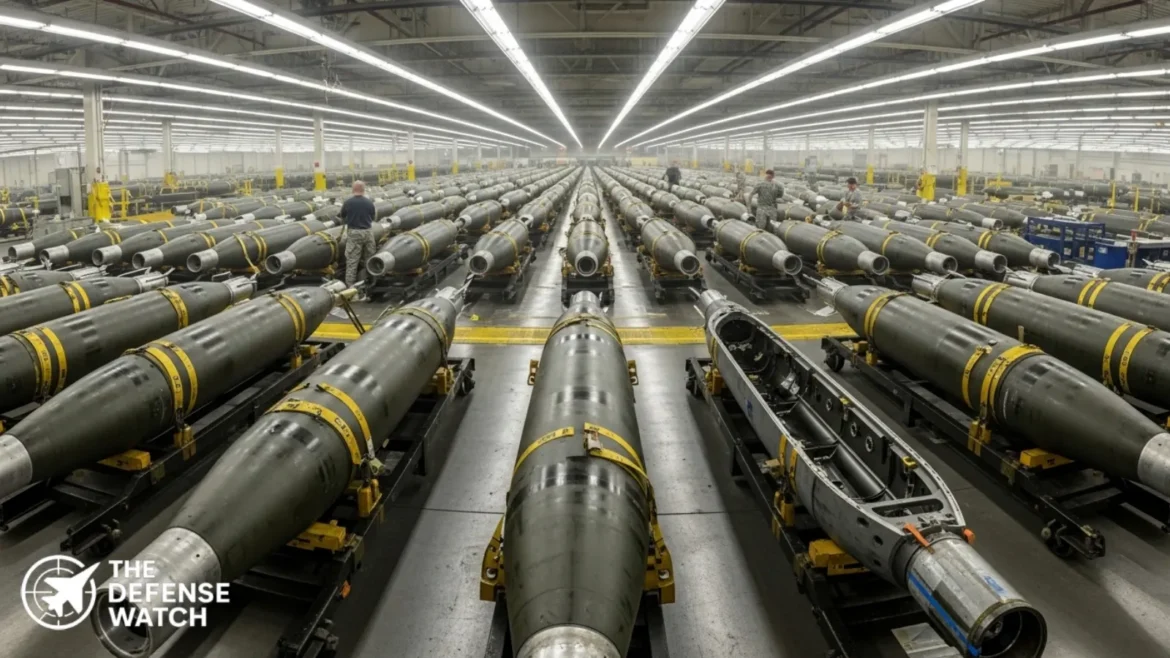
Faxon Machining LLC has been awarded a $473.2 million firm-fixed-price contract to produce 2,000 lb high fragmenting bomb bodies in support of U.S. Air Force and potential Foreign Military Sales requirements, according to a U.S. Army contract announcement.
The award highlights continued U.S. investment in conventional air-delivered munitions as part of broader efforts to sustain stockpiles, maintain industrial capacity, and support allied defense requirements.
Contract Details and Scope
The contract covers the production of Bomb Live Unit 136/B, a 2,000 lb class high fragmenting bomb body, along with CNU-417/E containers, which are used for transportation, storage, and handling of large air-delivered munitions.
The agreement is structured as a firm-fixed-price, indefinite-delivery contract, allowing the Department of Defense to issue task orders over time as operational and allied requirements evolve. According to the contract notice, work locations and funding will be determined with each order, providing flexibility for changing mission needs.
The estimated completion date for the contract is Jan. 27, 2031, reflecting long-term production planning for U.S. and partner nation air forces.
Role of Army Contracting Command
Although the munitions are intended to support the U.S. Air Force, the contracting activity is the Army Contracting Command at Rock Island Arsenal, Illinois, which frequently manages joint-service munitions procurement on behalf of the Department of Defense.
This approach allows for centralized oversight of complex ordnance production programs, while leveraging Army-managed contracting expertise to support Air Force operational requirements.
The contract was awarded under solicitation W519TC-26-D-0001. Bids were solicited via the internet, with two offers received, indicating a competitive but limited industrial base for large-scale bomb body manufacturing.
Strategic Importance of 2,000 lb Bomb Bodies
The 2,000 lb bomb class remains a cornerstone of U.S. and allied airpower, providing flexible strike options against hardened and area targets when paired with guidance kits such as JDAM or Paveway systems.
High fragmenting bomb bodies are designed to deliver significant blast and fragmentation effects, making them suitable for a wide range of conventional strike missions. Maintaining steady production capacity for these weapons supports readiness across multiple combatant commands.
Defense analysts note that sustained procurement of unguided bomb bodies also ensures compatibility with a variety of precision guidance systems, allowing the U.S. military to adapt munitions quickly based on mission requirements.
Support for Foreign Military Sales
The contract explicitly includes potential Foreign Military Sales, underscoring ongoing U.S. efforts to supply allied air forces with compatible munitions. Many partner nations operate U.S.-made aircraft and rely on U.S. supply chains for standardized weapons and logistics support.
By maintaining a long-term production line for 2,000 lb bomb bodies, the Department of Defense can more efficiently respond to allied requests while sustaining domestic manufacturing capacity.
This approach aligns with broader U.S. defense policy goals focused on interoperability, allied readiness, and supply chain resilience.
Faxon Machining’s Role in U.S. Defense Manufacturing
Based in Cincinnati, Ohio, Faxon Machining LLC is part of the U.S. industrial base supporting conventional weapons production. While the company is widely known for precision manufacturing, this contract positions Faxon as a significant contributor to large-scale ordnance production over the next decade.
Long-duration contracts such as this provide stability for skilled manufacturing jobs while supporting the Department of Defense’s goal of maintaining surge capacity for munitions production.
Broader Context: U.S. Munitions Modernization
The award comes amid increased Pentagon focus on munitions readiness and stockpile replenishment, driven by lessons from recent conflicts and heightened global security demands.
Senior defense officials have emphasized the need for predictable, multi-year contracts to strengthen the industrial base and avoid production bottlenecks. Firm-fixed-price arrangements also provide cost predictability for the government while incentivizing efficient manufacturing.
This contract reflects those priorities, ensuring sustained availability of conventional air-delivered weapons well into the next decade.

General Dynamics IT Expands Air Force DCGS Support Contract
The Distributed Common Ground System contract with General Dynamics Information Technology has been expanded under a new U.S. Air Force modification valued at $19.1 million, reinforcing continued investment in intelligence, surveillance, and reconnaissance infrastructure.
General Dynamics Information Technology, based in Falls Church, Virginia, has been awarded an option year seven modification to a previously awarded Air Force contract for the Distributed Common Ground System, or DCGS, network weapon system. The modification, identified as P00034 under contract FA489019FA022, increases the total cumulative contract value to $151.5 million, up from $132.4 million.
According to U.S. Department of Defense contract award data, the work will be carried out at Joint Base Langley Eustis in Virginia and at Beale Air Force Base in California. The effort is expected to be completed by Jan. 31, 2027.
Fiscal year 2026 operations and maintenance funding totaling $15.4 million is being obligated at the time of award. The Acquisition Management and Integration Center at Hampton, Virginia, is the contracting activity.
Sustaining the Air Force Distributed Common Ground System
The Distributed Common Ground System is the U.S. Air Force’s primary intelligence, surveillance, and reconnaissance processing and exploitation system. It integrates data from airborne, space-based, and ground sensors into a unified network that supports commanders with near real-time intelligence products.
DCGS enables the collection, processing, exploitation, and dissemination of intelligence across multiple domains. It supports missions ranging from air operations and targeting to global situational awareness and threat assessment. The system is a core component of the Air Force’s ISR enterprise and remains critical to joint and coalition operations.
Through this Distributed Common Ground System contract modification, GDIT will continue providing network weapon system support services. While the Department of Defense did not release detailed task descriptions, such contracts typically cover system sustainment, network operations, cybersecurity support, and technical integration to ensure high availability and performance.
Role of Joint Base Langley Eustis and Beale AFB
Joint Base Langley Eustis serves as a major hub for Air Force intelligence and combat airpower, hosting units central to ISR operations and command and control. Beale Air Force Base is home to key intelligence wings and has long been associated with high-altitude ISR platforms and DCGS operations.
Sustaining DCGS capabilities at these locations supports global Air Force intelligence operations, including data processing for remotely piloted aircraft, manned reconnaissance platforms, and space-based sensors.
The continuation of work at both sites reflects the Air Force’s emphasis on maintaining resilient and secure intelligence networks amid growing operational demands.
General Dynamics IT and Defense Intelligence Systems
General Dynamics Information Technology is a major provider of mission IT, cyber, and intelligence solutions to the U.S. Department of Defense and the broader federal government. The company has extensive experience supporting Air Force intelligence systems, enterprise networks, and classified environments.
This latest contract action builds on GDIT’s long-standing involvement in DCGS-related programs and broader defense information infrastructure. The increase in total contract value underscores the sustained nature of the program and the Air Force’s reliance on industry partners for complex ISR systems.
Defense analysts note that continued funding for DCGS reflects the enduring importance of intelligence dominance as the U.S. military adapts to evolving threat environments and peer competition.
Part of Broader Air Force Modernization Efforts
The Distributed Common Ground System contract aligns with ongoing Air Force modernization priorities focused on data integration, network resilience, and multi-domain operations. While newer concepts such as the Advanced Battle Management System aim to transform command and control, DCGS remains a foundational capability supporting intelligence workflows today.
By extending option year seven, the Air Force ensures continuity of operations while pursuing incremental upgrades and sustainment of existing systems. This approach reduces operational risk and preserves mission readiness across global theaters.
The contract modification also highlights the steady flow of operations and maintenance funding directed toward intelligence systems, even as procurement budgets shift toward next-generation platforms.
Contract Overview at a Glance
The $19.1 million modification brings the total value of the Distributed Common Ground System contract to more than $151 million since initial award. Work will continue through early 2027, funded through fiscal year 2026 operations and maintenance accounts.
As geopolitical competition intensifies and information advantage remains central to military effectiveness, sustained investment in systems like DCGS is expected to remain a priority for the U.S. Air Force.
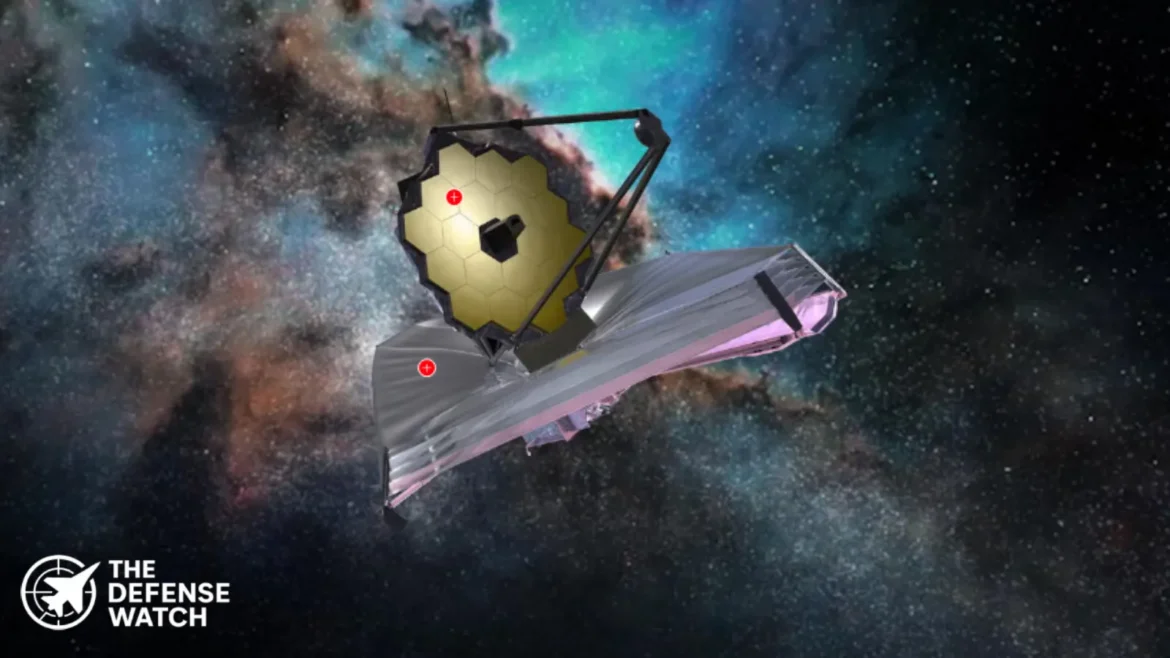
L3Harris Technologies Inc. has received a 62.7 million contract modification from the US Space Force to support long term sustainment of critical space surveillance systems. The L3Harris space surveillance contract expands ongoing work tied to radar and electro optical assets that monitor objects in deep space and Earth orbit, according to official US Department of Defense contract announcements.
The modification continues a long running relationship between L3Harris and the Space Force focused on maintaining high availability of sensors that underpin space domain awareness. The award reflects steady investment by the US military in protecting space based infrastructure and tracking potential threats in increasingly congested orbital environments.
Contract details and scope of work
The contract modification, valued at 62,749,158 dollars, was issued as modification P00353 under the previously awarded contract FA8823 20 C 0004. The work covers Option Year Seven for several interconnected programs, including the Eglin Radar, round based Electro Optical Deep Space Surveillance Telescope, the Space Surveillance Telescope, and Agile Portfolio Engineering sustainment activities.
With this action, the total cumulative face value of the contract rises to approximately 1.506 billion dollars, up from about 1.443 billion dollars. This scale highlights the long term nature of the effort and the importance of continuous sustainment for space surveillance systems that operate around the clock.
According to the Department of Defense, work will be performed in Colorado Springs, Colorado, a major hub for US Space Force operations and industry support. The effort is scheduled for completion by Jan. 31, 2027.
No funds are being obligated at the time of award. Fiscal 2026 operations and maintenance funds, along with fiscal 2026 research development test and evaluation funds, will be incrementally funded prior to the start of the performance period. The contracting activity is the Space Systems Command Directorate of Contracting at Peterson Space Force Base in Colorado.
Why space surveillance sustainment matters
The L3Harris space surveillance contract focuses on sustainment rather than new system development, but this role is no less critical. Space surveillance sensors must remain highly reliable to detect, track, and characterize objects ranging from operational satellites to debris and potential adversary systems.
The Space Surveillance Telescope and associated radar and electro optical systems contribute to the broader US Space Force mission of space domain awareness. This mission supports collision avoidance for satellites, monitoring of foreign space activity, and early detection of actions that could threaten US or allied space assets.
As orbital traffic increases and counter space capabilities continue to develop globally, sustainment contracts ensure that existing sensors do not degrade or fall behind operational requirements. Engineering support, upgrades, software maintenance, and logistics planning all factor into keeping these systems effective.
L3Harris role in US space security
L3Harris has built a strong portfolio in space and missile defense, sensor integration, and command and control systems. The company is a long standing supplier to the US Air Force and the US Space Force, particularly in areas tied to surveillance, communications, and electronic systems.
In Colorado Springs, L3Harris supports multiple national security space programs, working closely with Space Systems Command and other defense organizations. The sustained investment reflected in this contract modification underscores trust in the company’s technical expertise and program management experience.
Publicly available company materials highlight L3Harris involvement in radar modernization, space situational awareness tools, and resilient architectures designed to operate in contested environments. While this contract action does not introduce new capabilities, it ensures continuity for systems already integrated into daily Space Force operations.
Space Systems Command and acquisition approach
Space Systems Command is responsible for acquiring, fielding, and sustaining space systems for the US Space Force. Its Directorate of Contracting manages large and complex contracts that often span decades and multiple option years, as seen in this case.
Incremental funding, as noted in the contract announcement, is a common approach for sustainment efforts. It allows the Space Force to align spending with annual budget authorities while maintaining flexibility to adjust scope as mission needs evolve.
This contract modification fits within broader Department of Defense priorities to maintain readiness across all domains, including space. Senior defense leaders have repeatedly emphasized that space systems require the same disciplined sustainment planning long applied to aircraft, ships, and ground systems.
Broader context of space surveillance investments
The L3Harris space surveillance contract comes amid continued US investment in space monitoring infrastructure. In recent years, the Space Force has pursued both ground based and space based sensors to improve coverage and resilience.
Ground based assets such as radar sites and optical telescopes remain a foundational layer of space domain awareness. Sustainment ensures these systems can integrate with newer capabilities, share data across networks, and adapt to changing threat profiles.
Authoritative sources such as the US Space Force, Space Systems Command, and Congressional budget documents consistently identify space surveillance as a priority area for funding. Industry partners like L3Harris play a key role in translating those priorities into operational capability through long term support contracts.
What this means for defense and industry
For the defense industry, the modification highlights the enduring value of sustainment work. While new program awards often attract headlines, long running contracts provide stable revenue and reinforce relationships between government and industry.
For the US Space Force, the award supports continuity in operations at a time when space is increasingly recognized as a contested domain. Reliable surveillance underpins deterrence, operational planning, and protection of national security assets.
From a policy perspective, steady funding for sustainment reflects recognition that capability is only as strong as its availability. Engineering and logistics work often determines whether advanced sensors can deliver their intended value over decades of service.
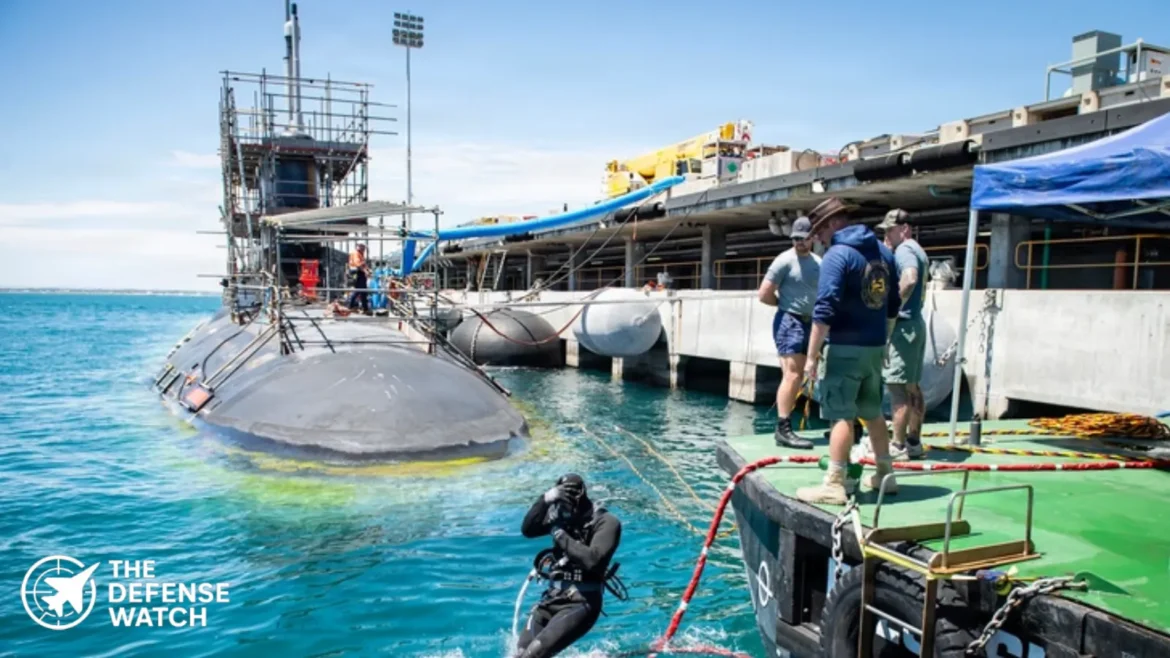
Lockheed Martin submarine electronic warfare systems are set to receive continued engineering support under a new U.S. Navy contract modification valued at 9.5 million dollars. The award, announced by Naval Sea Systems Command, supports electronic warfare capabilities on both new construction and in service U.S. Navy submarines, reinforcing long term undersea warfare readiness.
The contract modification was awarded to Lockheed Martin Corp. in Syracuse, New York, under an existing indefinite delivery, indefinite quantity agreement. Work will continue through February 2027 and will be funded with fiscal year 2026 Navy procurement funds.
Contract Details and Scope
The U.S. Navy awarded Lockheed Martin a 9.5 million cost plus incentive fee and cost contract modification under delivery order N00024-25-F-6260. The delivery order falls under a broader indefinite delivery, indefinite quantity contract identified as N00024-25-D-6211.
According to the Navy, the modification exercises contract options for engineering support tied to submarine electronic warfare systems. These systems are used across the Navy submarine fleet, including both newly built platforms and submarines already in operational service.
Work under the contract will be performed in Syracuse, New York. The Navy expects all work to be completed by February 2027.
Fiscal year 2026 other procurement Navy funds totaling 4,867,641 dollars will be obligated at the time of award. The Navy confirmed these funds will not expire at the end of the current fiscal year.
Naval Sea Systems Command in Washington, D.C. is listed as the contracting activity.
Importance of Submarine Electronic Warfare
Submarine electronic warfare systems play a central role in modern undersea operations. These systems allow submarines to detect, classify, and respond to electromagnetic threats, including radar, communications signals, and hostile sensing systems.
Electronic warfare capabilities are increasingly important as potential adversaries invest in advanced sensors, networked maritime surveillance, and multi domain command systems. For U.S. Navy submarines, maintaining reliable and adaptable electronic warfare systems is critical for survivability and mission success.
Lockheed Martin submarine electronic warfare systems support situational awareness, threat warning, and countermeasure employment. Engineering support contracts like this one help ensure these systems remain effective as threat environments evolve.
Support for New and In Service Submarines
The Navy confirmed that the contract covers both new construction submarines and submarines already in service. This approach allows electronic warfare systems to remain consistent across the fleet while also supporting upgrades and refinements over time.
New construction submarines, including future Virginia class boats, rely on advanced electronic warfare systems from the earliest design stages. Engineering support helps integrate sensors, processors, and software into complex combat systems.
For in service submarines, engineering work supports system sustainment, updates, and technical improvements. This helps the Navy extend service life and maintain operational relevance without costly platform replacements.
Lockheed Martin Role in Undersea Warfare
Lockheed Martin has a long standing role in U.S. Navy undersea warfare programs. The company supplies electronic warfare systems, combat system components, sensors, and integration services for submarines and surface ships.
The Syracuse, New York facility is a key hub for Lockheed Martin undersea and electronic warfare activities. It supports engineering, production, and lifecycle sustainment work for Navy customers.
By securing this contract modification, Lockheed Martin reinforces its position as a trusted supplier of submarine electronic warfare technology and support services.
Budget Context and Navy Procurement
The funding for this contract comes from fiscal year 2026 other procurement Navy accounts. These funds are typically used to support systems, equipment, and upgrades that fall outside standard shipbuilding or weapons procurement lines.
The Navy’s decision to obligate funds that do not expire at the end of the fiscal year provides program stability. It allows engineering work to proceed without annual funding disruptions, which is important for long term technical support efforts.
Defense contracts structured as cost plus incentive fee arrangements are common for complex engineering tasks. They allow the Navy to manage technical risk while encouraging performance and cost control.
Electronic Warfare and Future Naval Strategy
Electronic warfare is a growing focus within U.S. naval strategy, particularly in contested maritime regions. Submarines remain one of the Navy’s most survivable and flexible assets, and their effectiveness depends heavily on electronic awareness and control of the electromagnetic spectrum.
As adversaries improve anti submarine warfare sensors and tracking networks, U.S. submarines must rely on advanced electronic warfare systems to remain undetected and effective.
Engineering support contracts such as this one help the Navy adapt existing systems to new threats while preparing for future platform upgrades.
Industry and Program Stability
While the contract value is modest compared to major shipbuilding awards, it reflects steady investment in critical support functions. Engineering services often determine how well advanced systems perform over time.
For industry, these contracts provide continuity for skilled engineering teams and preserve technical knowledge within the defense industrial base.
For the Navy, sustained engineering support reduces risk and helps ensure that electronic warfare systems remain aligned with operational needs.
Outlook
The Lockheed Martin submarine electronic warfare contract modification underscores the Navy’s continued focus on undersea dominance and electromagnetic spectrum control. With work scheduled through early 2027, the program supports near and mid term fleet readiness.
As the Navy modernizes its submarine force, electronic warfare engineering will remain a priority area for investment and industry collaboration.
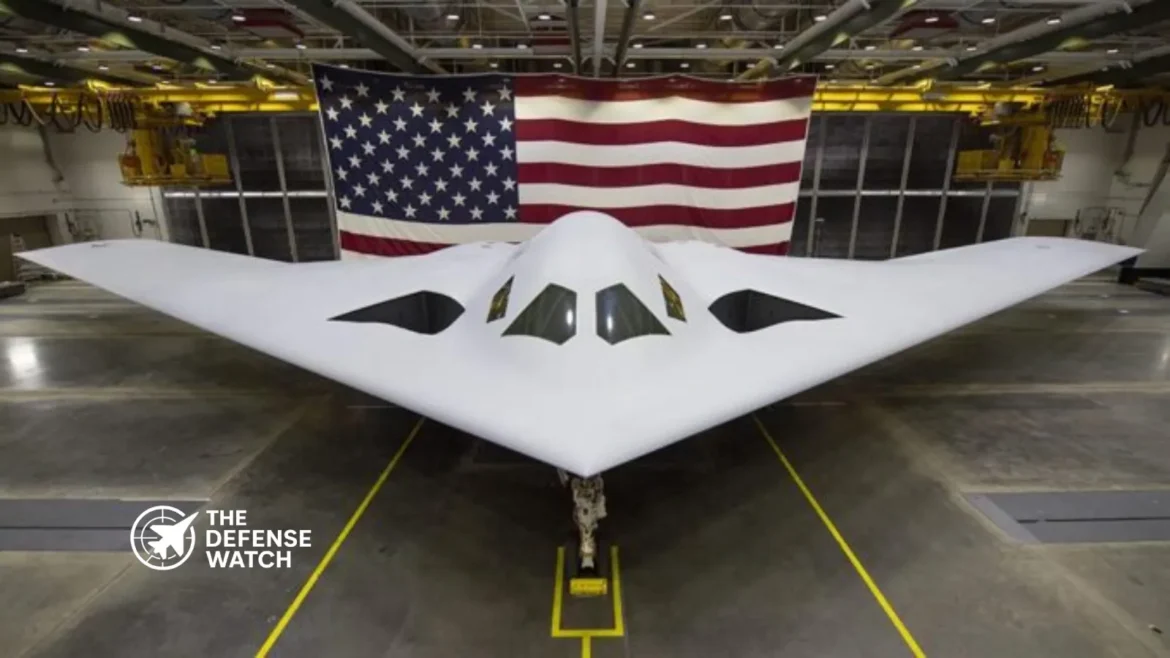
Northrop Grumman Finalizing Major Production Agreement
Northrop Grumman expects to finalize an agreement with the Air Force to accelerate B-21 Raider production expansion by the end of March, according to company CEO Kathy Warden during a Jan. 27 earnings call.
The announcement confirms that negotiations for one of the U.S. military’s most critical modernization programs are entering their final phase. Congress approved $4.5 billion for expanding production capacity for the B-21 as part of a reconciliation package passed in July 2025, and defense officials have been working to structure the contract terms since then.
“We continue to work closely with the Air Force on plans to increase the production rate of the program,” Warden stated. Our priority is to establish a mutually beneficial agreement that accelerates the delivery of this game-changing capability to our nation.”
The current fiscal quarter concludes March 31, 2026, establishing a firm timeline for contract finalization.
Massive Investment in Bomber Capacity
The production expansion contract represents substantial financial commitment from both parties. The Air Force outlined plans in its 2026 budget request to spend all $4.5 billion from the reconciliation bill this fiscal year: nearly $2.4 billion in research and development and $2.1 billion in procurement.
Northrop Grumman is also making significant internal investments to support increased manufacturing throughput. Warden revealed that Northrop plans to invest between $2 to $3 billion over multiple years for “facilitizing for that acceleration”, though specific details about these facility upgrades were not disclosed.
The defense contractor previously announced in April 2025 that it had invested $477 million in a “process change” designed to enable higher production rates for the advanced stealth bomber.
Low-Rate Initial Production Advances
Parallel to expansion negotiations, the B-21 program continues advancing through its planned production phases. Warden confirmed that Northrop received the contract for the third lot of low-rate initial production in the final quarter of 2025, as well as a contract for advanced procurement for the fifth lot.
The low-rate initial production phase is expected to encompass 21 aircraft distributed across five lots, establishing the manufacturing foundation before full-rate production begins.
Flight testing is also progressing on schedule. The CEO highlighted the first flight of a second B-21 test aircraft as evidence of program momentum, building on the successful maiden flight of the initial test platform.
Classification Limits Public Disclosure
Specific details about production metrics and long-term program objectives remain highly classified. The Air Force has consistently declined to reveal exact production rates or whether the expansion aims to exceed the current program of record of 100 aircraft or simply deliver that baseline quantity on an accelerated timeline.
Defense industry sources have previously suggested the B-21 production rate operates around seven aircraft annually, though official confirmation remains restricted.
An Air Force spokesperson provided limited comment, stating: “The B-21 program of record has not changed. We are in low-rate initial production. We don’t have additional details to share at this time.”
Congressional Funding Adjustments
Despite overall program progress, lawmakers recently modified the B-21’s fiscal 2026 baseline budget allocation. Congressional appropriators cut $620 million from procurement and added $409 million for research and development for a net reduction of $211 million, citing “classified adjustments” without elaborating on specific rationale.
These budget shifts are separate from the $4.5 billion reconciliation package dedicated to production expansion, which remains intact.
Sentinel ICBM Program Faces Delays
While the B-21 bomber program accelerates, Warden provided sobering updates on the Air Force’s other major nuclear modernization effort—the Sentinel intercontinental ballistic missile system.
The Sentinel program is undergoing comprehensive restructuring following a “Nunn-McCurdy breach” triggered by significant cost overruns and schedule delays. If the program had continued on its trajectory, it would have been 81 percent over budget and three years late.
We still believe that the program will be in development for several years and not transitioning into production until later in the decade,” Warden explained, adding that production transition falls “outside of that two-to-three-year window at this point.
The Pentagon cleared Sentinel to continue in July 2024 but rescinded its previous approval for engineering and manufacturing development, mandating the current restructure before the program can advance.
Strategic Significance of B-21 Expansion
The B-21 Raider represents the cornerstone of the Air Force’s future strategic bomber fleet and nuclear deterrence posture. The aircraft’s stealth characteristics, advanced sensors, and open-architecture design position it to operate in highly contested environments against peer adversaries.
Accelerating production delivery directly supports the Department of Defense’s priority to field next-generation capabilities faster amid intensifying great power competition. The bomber is designed to eventually replace aging B-1 and B-2 fleets while complementing upgraded B-52 Stratofortress bombers.
Industry analysts anticipate the March contract announcement will provide greater clarity on delivery timelines and potential force structure implications, though classification constraints will likely limit public disclosure of operational details.
The production expansion initiative reflects broader Pentagon efforts to strengthen America’s deterrence capabilities and ensure air dominance against advanced anti-access/area-denial threats in the 2030s and beyond.

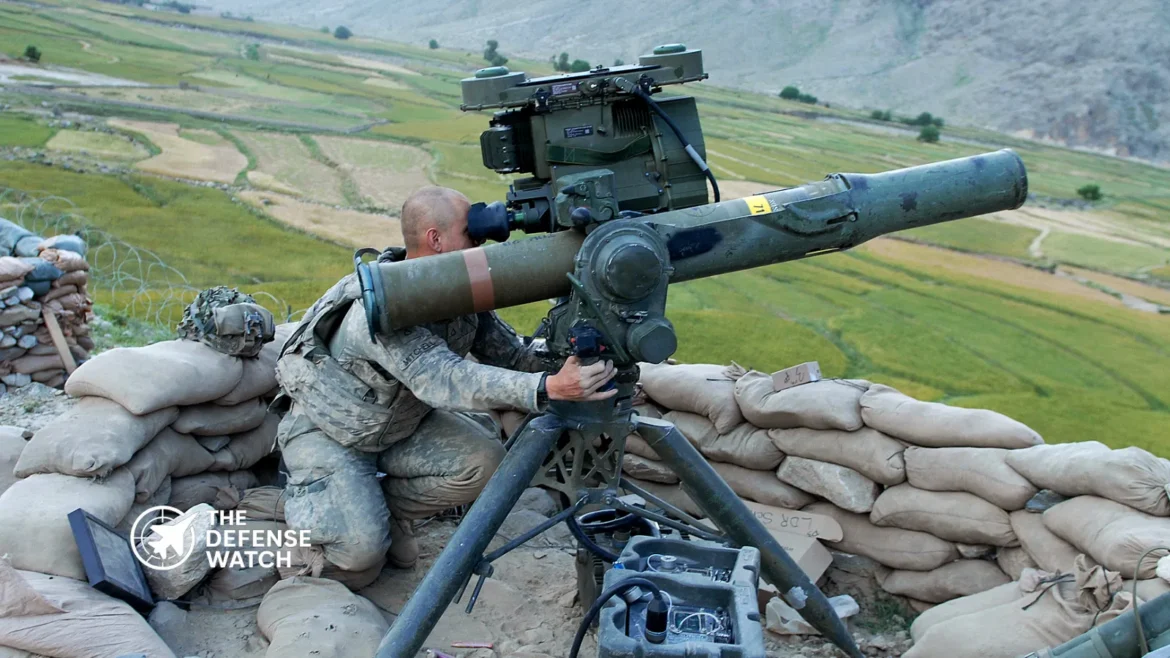
Raytheon expands Tube Launched Optically Tracked Wireless Guided Missiles production for US Army
Tube Launched Optically Tracked Wireless Guided Missiles remain a core part of the US Army anti armor inventory as Raytheon secures a major contract modification to expand procurement through the end of the decade.
Raytheon, based in Tucson, Arizona, has been awarded a 193,705,262 dollar modification to an existing US Army contract for the procurement of Tube Launched Optically Tracked Wireless Guided Missiles, according to official US Department of Defense contracting data. The modification, listed as P00019 under contract W31P4Q 23 C 0026, brings the total cumulative face value of the contract to the same amount.
The award reflects continued Army investment in proven infantry and vehicle mounted missile systems as part of broader conventional force modernization efforts.
Contract details and funding breakdown
The modification covers additional procurement quantities of Tube Launched Optically Tracked Wireless Guided Missiles, commonly referred to as TOW missiles, which have been in US service for decades and remain widely deployed across allied forces.
Work under the contract will be performed in Tucson, Arizona, with an estimated completion date of Sept 30, 2028. The long performance period suggests sustained production rather than a one time surge buy.
At the time of award, the Army obligated 46,762,368 dollars in fiscal 2024 other procurement Army funds, along with 2,679,094 dollars from fiscal 2025 other procurement Army accounts. Army Contracting Command at Redstone Arsenal, Alabama, is managing the contracting activity.
According to Pentagon contracting announcements, the obligation structure allows the Army to incrementally fund missile production while maintaining flexibility for future procurement decisions.
Why Tube Launched Optically Tracked Wireless Guided Missiles still matter
Despite growing attention on next generation precision weapons and long range fires, Tube Launched Optically Tracked Wireless Guided Missiles remain a reliable and adaptable system for US and allied ground forces.
The missile system provides heavy anti armor capability against main battle tanks, fortified positions, and low speed aerial threats. Its wire free guidance variants reduce vulnerability to countermeasures and allow for longer engagement ranges compared to earlier wire guided versions.
The US Army continues to deploy TOW systems across multiple platforms, including Bradley infantry fighting vehicles, Stryker variants, Humvee mounted launchers, and tripod configurations for dismounted units.
Defense analysts note that the system’s continued relevance stems from incremental upgrades rather than radical redesigns. These upgrades have improved guidance accuracy, range, and warhead effectiveness while keeping training and sustainment costs relatively low.
Raytheon’s role in US missile industrial base
Raytheon has been the prime contractor for the TOW missile family for decades, making the Tucson facility a critical node in the US missile industrial base.
The company’s Arizona operations support missile assembly, testing, quality assurance, and supply chain coordination. Sustained contracts such as this one help preserve skilled manufacturing labor and ensure production continuity for the Army and foreign military sales customers.
Industry observers view long term production contracts as increasingly important amid broader Pentagon efforts to stabilize munitions manufacturing after years of surge demand driven by global conflicts and security assistance programs.
The Department of Defense has repeatedly emphasized the need for predictable funding to maintain missile stockpiles and avoid production gaps that could weaken readiness.
Alignment with Army modernization priorities
The contract modification aligns with the Army’s focus on near term readiness while it develops future anti armor solutions. While programs exploring advanced top attack and extended range missiles continue, Army leadership has signaled that existing systems will remain essential through the late 2020s.
Tube Launched Optically Tracked Wireless Guided Missiles offer a mature capability that integrates easily into current force structures. This reduces risk compared to fielding entirely new systems under compressed timelines.
Army budget documents have consistently included funding lines for TOW procurement and sustainment, particularly for armored brigade combat teams and allied force interoperability.
The continued investment also supports coalition operations, as many NATO and partner nations operate the same missile system, simplifying logistics and training during joint deployments.
Broader context in global security environment
The renewed emphasis on conventional ground combat capabilities reflects lessons drawn from recent conflicts, where armored vehicles and fortified positions remain decisive factors.
Defense planners have observed that high end anti armor weapons are consumed at faster rates than previously expected during sustained operations. This has prompted a reassessment of stockpile requirements and production capacity.
By extending procurement of Tube Launched Optically Tracked Wireless Guided Missiles through 2028, the Army signals confidence in the system’s ability to meet current and foreseeable operational needs.
Analysts at institutions such as the Center for Strategic and International Studies have highlighted the importance of balancing advanced research with immediate force requirements, particularly as global demand for munitions increases.
What comes next
With work scheduled to continue for more than three years, Raytheon’s Tucson facility is expected to remain a key supplier of anti armor missiles for the Army and potentially for allied customers through foreign military sales channels.
While the Pentagon has not disclosed specific quantities associated with the modification, the contract value suggests a substantial production run aimed at replenishing inventories and supporting operational units.
Future budget cycles may include additional options or follow on modifications, depending on Army requirements and congressional appropriations.
For now, the award reinforces the enduring role of Tube Launched Optically Tracked Wireless Guided Missiles within the US Army arsenal and highlights the continued reliance on established defense manufacturers to meet pressing readiness demands.

Lockheed Martin Expands Role in Mark IV-B Weather Program
Lockheed Martin has secured a $10.2 million contract modification for the Mark IV-B weather program, expanding its role in supporting U.S. Space Force and Air Force weather operations worldwide.
The U.S. Department of Defense announced that Lockheed Martin Space Mission Systems, based in King of Prussia, Pennsylvania, was awarded contract modification P00011 under an existing contract for the Mark IV-B weather program. The modification raises the total cumulative value of the contract to $21.9 million, up from $11.7 million.
The award was issued by Space Systems Command Directorate of Contracting at Peterson Space Force Base, Colorado, underscoring the growing importance of resilient and modernized military weather infrastructure.
Scope of Work and Global Footprint
The Mark IV-B weather program supports environmental monitoring and forecasting capabilities critical to U.S. and allied military operations. Under the modified contract, Lockheed Martin will perform work across a wide network of operational locations.
Designated work sites include Hickam Air Force Base in Hawaii, Andersen Air Force Base in Guam, Kadena Air Base in Japan, Ali Al Salem Air Base in Kuwait, Kapaun Air Base in Germany, Soto Cano Air Base in Honduras, Offutt Air Force Base in Nebraska, and Joint Base Elmendorf Richardson in Alaska.
These sites reflect the global reach of U.S. air and space operations and the need for reliable, standardized weather systems to support flight operations, space launches, intelligence missions, and contingency planning.
Funding and Contract Timeline
Fiscal year 2026 operations and maintenance funds totaling $5.9 million are being obligated at the time of award, according to the Department of Defense contract notice. The remaining value will be funded in accordance with future budget allocations and contract milestones.
Work under the contract modification is scheduled to be completed by January 31, 2027. The timeline aligns with ongoing Space Force and Air Force efforts to modernize legacy ground systems and improve environmental awareness across contested and remote regions.
Importance of the Mark IV-B Weather Program
The Mark IV-B weather program provides ground-based weather processing and dissemination capabilities that support commanders, pilots, and mission planners. Accurate and timely weather data is essential for aircraft sortie generation, space launch operations, missile warning activities, and joint force readiness.
Military weather systems differ from civilian forecasting platforms by focusing on mission specific variables such as cloud ceilings, winds aloft, electro optical conditions, and space weather impacts. These factors directly affect aircraft survivability, sensor performance, and operational tempo.
According to U.S. Space Force planning documents, environmental intelligence remains a core enabler for multi domain operations, particularly as forces operate across greater distances and in more complex threat environments.
Lockheed Martin and Military Weather Modernization
Lockheed Martin has long supported U.S. military weather and environmental monitoring programs, including satellite ground systems, data processing architectures, and secure communications networks. The Mark IV-B weather program fits within the company’s broader portfolio of space and command and control solutions.
The contract modification reflects continued reliance on industry partners to sustain and upgrade critical infrastructure while new space based weather systems are developed and fielded. Space Systems Command oversees these efforts as part of its mandate to acquire and maintain space and ground capabilities for the Space Force.
Strategic Context
As U.S. forces operate in increasingly contested environments, dependable weather intelligence supports both day to day operations and crisis response. Bases in the Indo Pacific, Middle East, Europe, and Arctic regions face unique environmental challenges that require tailored forecasting tools.
The expansion of the Mark IV-B weather program highlights the incremental approach the Department of Defense is taking to modernize essential support systems while ensuring continuity of operations.
Looking Ahead
With completion scheduled for early 2027, the updated Mark IV-B weather infrastructure is expected to enhance reliability and interoperability across multiple combatant commands. The contract modification also reinforces Space Systems Command’s role as a central hub for space and ground system acquisitions.
As the Space Force continues to refine its mission set, investments in environmental awareness remain a foundational element of operational success.
US Air Force Sustainment Contract Overview
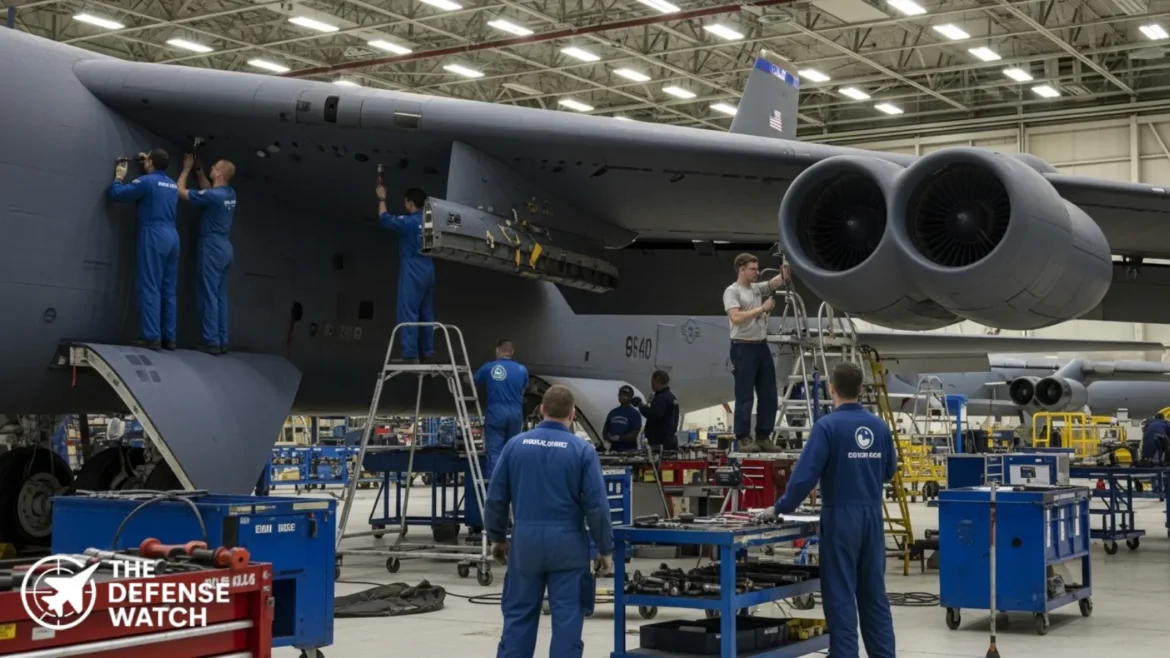
The US Air Force Sustainment Center has awarded a major sustainment contract valued at up to seven billion dollars to support contract field team labor augmentation across the force.
The indefinite delivery indefinite quantity multiple award contract supports aircraft and system sustainment missions worldwide and will run for ten years, according to official Air Force contract data.
Contract Scope and Structure
The contract provides contract field team labor augmentation to support Air Force maintenance, repair, and operational readiness missions. These teams are typically deployed to supplement organic Air Force maintenance units, particularly for high demand aircraft platforms and specialized systems.
The effort covers a ten year period from February 2026 to January 2036 and includes a five year base period with one five year option. Work locations will be determined through individual task orders and may include domestic and overseas operating sites.
The total contract ceiling is set at seven billion ten million dollars. At the time of award, fiscal year 2026 operations and maintenance funding totaling eleven thousand five hundred dollars was obligated, reflecting the initial administrative action rather than full program execution.
The contracting activity is the Air Force Sustainment Center at Tinker Air Force Base in Oklahoma.
Companies Selected for the Award
Twenty three companies were selected under the multiple award structure following a competitive acquisition that received twenty six offers.
Awarded firms include
4MHR Logistics LLC of Texas
Adams Communication Engineering Technology of Maryland
Aircraft Readiness Alliance of Alaska
Akima Logistics Services of Virginia
Global Logistics Support Services of Alabama
Kay and Associates of Illinois
PKL Services of California
Powerhouse Resources International of North Carolina
R2C Limited Liability of Alabama
Resicum International of Virginia
S and K Aerospace of Montana
Strategic Technology Institute of Maryland
Vali of Alabama
Vector Solutions of Arizona
AAR Government Services of Illinois
Amentum Services of Virginia
M1 Support Services of Texas
Several companies received more than one contract line under the award structure, reflecting their ability to support multiple mission areas.
Why Field Team Support Matters
Contract field teams play a central role in sustaining complex Air Force aircraft fleets, especially legacy platforms that require specialized technical expertise.
These teams often support depot level maintenance, aircraft modification programs, foreign military sales support, and surge operations where organic manpower is insufficient. They also provide continuity for long term sustainment programs where contractor experience is critical.
According to Air Force sustainment planning documents, contractor field support helps maintain readiness while allowing uniformed maintainers to focus on core operational missions.
Strategic Context
The award aligns with broader Air Force sustainment priorities focused on fleet availability, cost control, and lifecycle management. As aircraft fleets age and modernization efforts compete for funding, sustainment contracts remain a critical pillar of force readiness.
The Air Force Sustainment Center oversees maintenance and supply chain operations for a wide range of aircraft, including bombers, tankers, fighters, and mobility platforms. Contracted field team support enables rapid response to maintenance demands across this diverse inventory.
Defense acquisition experts note that large scale multiple award contracts also increase flexibility, allowing the Air Force to compete task orders and adjust workload distribution based on performance and mission need.
US Air Force Awards FalconSAT 11 Contract
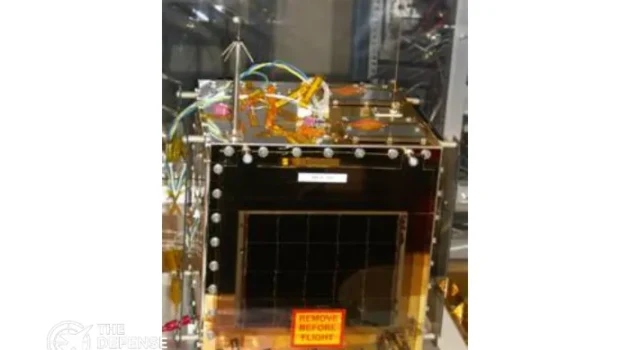
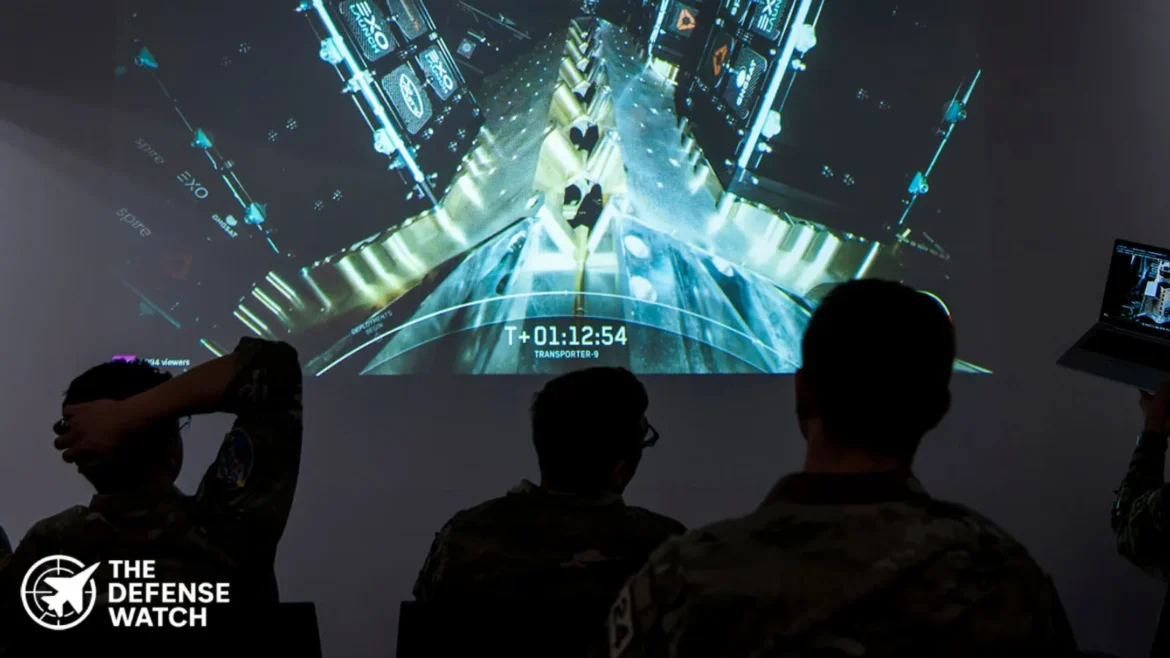
The US Air Force has awarded a 17.7 million dollar FalconSAT 11 contract to Geneva Technologies Inc of Monument Colorado to mature and deliver the FalconSAT 11 satellite bus for future space test operations.
The firm fixed price award covers final design maturation, assembly, integration, testing, and delivery of the FalconSAT 11 spacecraft to a designated launch site. The Air Force Test Center at Edwards Air Force Base California is the contracting activity.
Contract Scope and Technical Objectives
Under the awarded contract, Geneva Technologies will advance the FalconSAT 11 platform from critical design review level through full spacecraft assembly integration and test activities. The effort includes incorporation of a Modular Propulsion Unit, a key capability supporting maneuverability and on orbit experimentation.
FalconSAT spacecraft are small satellite platforms historically used by the US Air Force and Air Force Academy to support technology demonstrations, space domain awareness testing, and operational concept validation. FalconSAT 11 continues this lineage with a focus on modular design and propulsion maturity.
The contract requires delivery of a flight ready spacecraft to a launch site, completing all environmental and functional testing necessary to support launch readiness.
Schedule and Funding Profile
Work under the FalconSAT 11 contract will be performed in Monument Colorado. Program completion is scheduled for May 26 2028, aligning with long term US Air Force space experimentation timelines.
At the time of award, 4 million dollars in fiscal year 2026 research and development funding has been obligated. The remaining contract value will be funded incrementally as program milestones are achieved.
The acquisition resulted from a competitive process in which a single offer was received, according to official award documentation.
Role of the Air Force Test Center
The Air Force Test Center at Edwards Air Force Base oversees developmental testing across air, space, and cyber domains. Its involvement in the FalconSAT 11 program highlights the spacecraft role as a test and evaluation asset rather than an operational satellite.
FalconSAT platforms historically support rapid experimentation, risk reduction, and validation of emerging space technologies. These missions feed directly into future operational satellite programs across the Department of the Air Force and the broader US Space enterprise.
Strategic Importance of FalconSAT 11
The FalconSAT 11 satellite contract reflects continued US Air Force investment in small satellite development as a means to accelerate innovation and reduce program risk. Modular propulsion integration allows greater flexibility in mission design and supports advanced orbital testing scenarios.
Small satellite programs like FalconSAT play a critical role in training, technology maturation, and experimentation, especially as the US military places increased emphasis on resilient and responsive space architectures.
While FalconSAT 11 is not an operational combat system, its development contributes directly to future military space capabilities by validating technologies before wider adoption.
Industry and Government Context
Geneva Technologies Inc specializes in advanced aerospace systems and has supported multiple government research and development efforts. The FalconSAT 11 award positions the company within a niche segment of military space development focused on rapid prototyping and test spacecraft.
The award aligns with broader Department of Defense efforts to leverage smaller contractors and specialized firms to deliver focused space capabilities on defined schedules and budgets.
Program Outlook
With funding in place and a defined schedule through 2028, FalconSAT 11 is positioned to serve as a future test platform for propulsion, satellite bus technologies, and space operations concepts.
The program supports long term US Air Force goals of maintaining technological advantage in space through disciplined testing and incremental capability development.