Takeaways
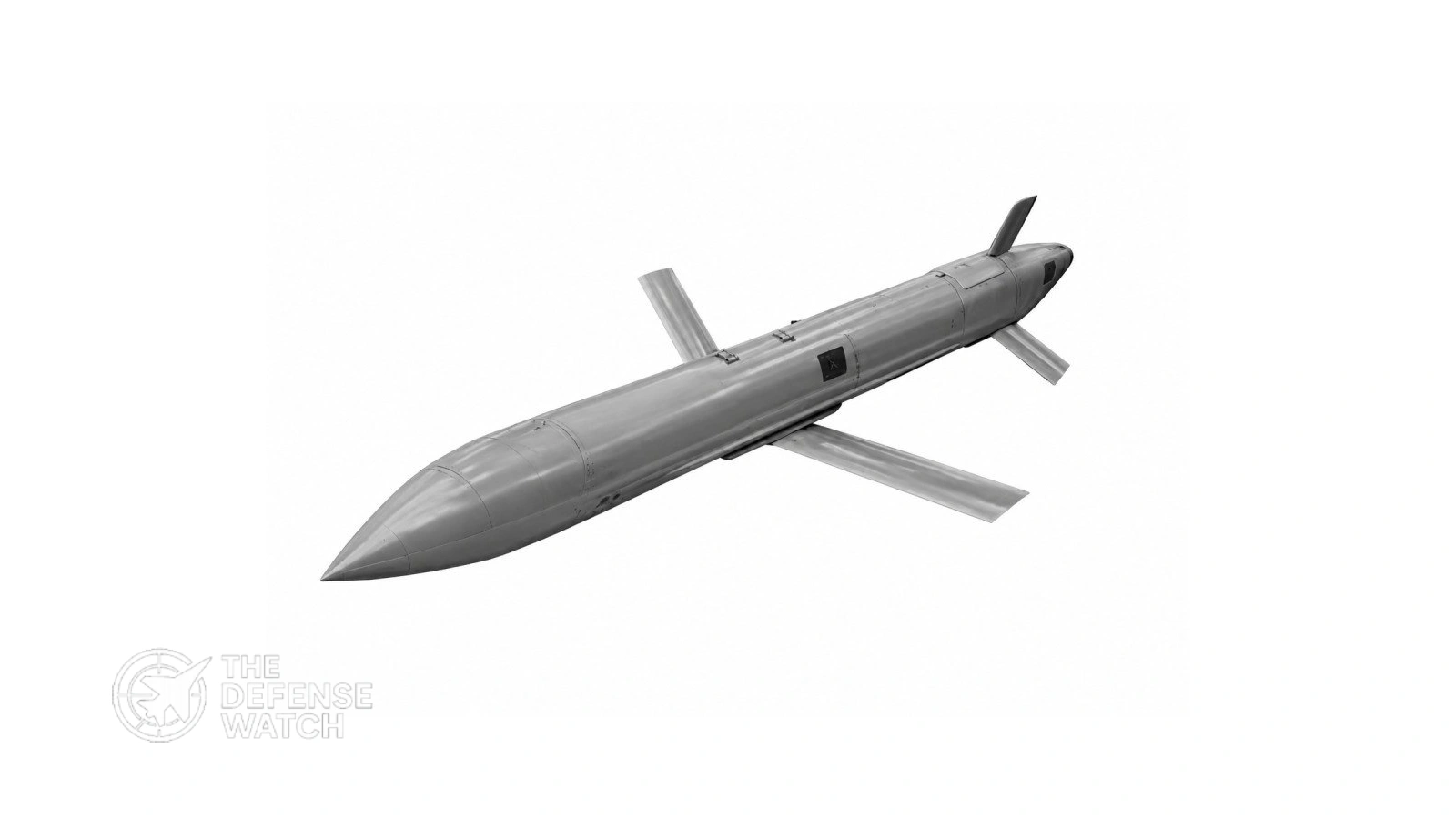
Russia has publicly unveiled the Dan-T air-launched loitering munition, combining jet propulsion, autonomous operation and a claimed air-defense-avoidance flight mode.
Russia Unveils Dan-T Air-Launched Strike Drone
Russia has publicly unveiled the Dan-T air-launched loitering munition at the El Alamein International Airshow in Egypt, presenting a jet-powered weapon that Rostec says can operate autonomously after release and use a dedicated flight mode intended to evade air-defense systems. The Russian state defense conglomerate says the weapon has already been tested in combat and that hundreds of launches have been conducted against targets in the Ukraine war.
The exhibition, held from September 8 to 10, 2026, marks the first public international presentation of Dan-T. Rosoboronexport organized Russia’s joint exhibition, which included aircraft, weapons, air-defense systems and unmanned systems aimed partly at foreign customers.
Dan-T Specifications Reported by Russia
| Specification | Reported information |
|---|---|
| Weapon | Dan-T |
| Type | Air-launched loitering munition |
| Propulsion | Compact turbojet engine |
| Reported range | Up to 450 km |
| Reported weight | Up to 270 kg |
| Launch platforms | Aircraft and helicopters |
| Operation | Fire-and-forget, autonomous after launch |
| Air-defense feature | Special flight mode intended to bypass air defenses |
| Combat experience | Rostec claims hundreds of successful launches |
TASS reported the 450-km range and 270-kg weight, citing information from Rostec. The manufacturer’s initial announcement was less specific, describing Dan-T as capable of reaching targets several hundred kilometers away.
How Dan-T Is Different From Conventional Loitering Munitions
Dan-T occupies an unusual position between a conventional loitering munition and a small air-launched cruise missile.
Rostec classifies it as a loitering munition, but the publicly disclosed characteristics emphasize long-range autonomous flight rather than persistent operation over a target area. The weapon is launched from an aircraft or helicopter and then continues toward its target without requiring continuous control from the launching platform.
The use of a compact jet engine is also significant. Jet propulsion generally allows a weapon of this type to maintain higher cruising speeds than many piston-powered long-range drones, although Rostec has not publicly released a specific Dan-T cruise or maximum speed in its announcement.
That distinction matters operationally. A faster weapon can reduce the time available for detection, classification, engagement and interception, but speed alone does not determine survivability against modern integrated air-defense networks.
Air-Defense Evasion Is a Central Feature
Rostec says Dan-T includes a special flight mode designed to bypass enemy air defenses. The company has not publicly disclosed the exact altitude profile, radar cross-section, electronic-warfare equipment or navigation techniques associated with that mode.
Those missing details are important.
An air-defense-penetration claim cannot be evaluated solely from a stated range or propulsion type. Survivability depends on several factors, including detection probability, flight altitude, radar signature, route planning, electronic warfare, navigation resilience and the ability of defenders to coordinate sensors and interceptors.
Consequently, Dan-T should not be described as being inherently undetectable or as capable of defeating NATO air defenses. Rostec’s statement supports the narrower claim that the weapon has a flight mode specifically intended to complicate air-defense engagement.
Air Launch Gives Russia More Flexibility
Another feature highlighted by Rostec is compatibility with both Russian and foreign aircraft and helicopters. That gives the weapon a potentially broad carrier concept rather than tying it to one dedicated aircraft.
Air launching also changes the geometry of a long-range strike.
A ground-launched weapon begins its flight from a fixed or relatively predictable launch area. An air-launched munition starts from a moving platform that can approach from different directions and release the weapon before turning away.
For helicopters, a long-range standoff weapon could also extend the strike role of platforms that otherwise would have to operate relatively close to defended targets. For fixed-wing aircraft, the same concept can increase the distance between the carrier and the target.
The practical value depends heavily on the weapon’s actual mass, dimensions, release envelope and compatibility with specific aircraft. Rostec has not publicly identified a complete list of qualified carriers.
Combat Claims Need to Be Read Carefully
Rostec says Dan-T has completed a testing cycle as an air-launched weapon and that its effectiveness has been confirmed by hundreds of successful launches against enemy targets in the Ukraine war.
That is an important claim, but it remains a claim from the manufacturer.
The public information available at the time of the Egyptian debut does not provide an independently verified database of those launches, including launch numbers, target types, interception rates, failure rates or the circumstances under which individual weapons reached their intended targets.
That distinction is particularly important when assessing the weapon’s claimed ability to penetrate air defenses. Combat use demonstrates operational experience, but it does not by itself establish a universal probability of penetration against every type of integrated air-defense system.
Why Dan-T Matters for Air Defense
The larger significance of Dan-T is its potential role within Russia’s expanding mix of long-range unmanned and precision-strike systems.
Modern air-defense networks must deal with multiple target classes at the same time. These can include cruise missiles, ballistic missiles, aircraft, inexpensive drones and more sophisticated autonomous weapons.
A jet-powered air-launched munition adds another target category. Its combination of air launch, autonomous operation and relatively long reported range could allow it to participate in coordinated strike packages without requiring the launching aircraft to remain near the defended area.
This creates an important resource-management problem for defenders.
Air-defense systems have finite radar coverage, interceptor inventories, engagement channels and crew attention. However, the existence of another long-range weapon does not automatically mean that an adversary can overwhelm a NATO or other advanced air-defense network.
The outcome depends on the number of weapons employed, their approach geometry, signatures, electronic-warfare environment, intelligence available to the defender and the architecture of the defending force.
Dan-T May Also Reflect Russia’s Export Strategy
The Egyptian debut has a clear international dimension.
Rosoboronexport said Russia was presenting combat-proven products for potential customers in Egypt, Africa and the Middle East, including aircraft, weapons, air-defense systems and unmanned systems.
TASS separately reported that Dan-T is being presented as an export version of the weapon Russia knows domestically as Banderol, according to a Russian military expert. That identification should be treated as an expert assessment rather than as an independently established fact unless Russian authorities provide additional technical documentation.
The export positioning is nevertheless significant. Russia is using combat experience in Ukraine as part of the marketing narrative for a new generation of unmanned and standoff weapons.
That strategy has become increasingly visible across the Russian exhibition presence in Egypt, where Moscow also displayed new unmanned systems and air-defense equipment.
What Remains Unknown
Despite the attention surrounding Dan-T, several important characteristics remain undisclosed.
These include:
- Exact cruise and maximum speed
- Warhead type and explosive mass
- Guidance architecture
- Satellite-navigation dependence
- Terminal targeting method
- Radar cross-section
- Typical operating altitude
- Electronic-warfare resistance
- Exact list of qualified aircraft and helicopters
- Production rate
- Unit cost
- Independent combat-loss and interception data
These gaps prevent a reliable comparison with weapons such as the U.S. AGM-158 JASSM, European Storm Shadow or other long-range air-launched weapons.
Dan-T also should not automatically be categorized as a cheaper equivalent to a cruise missile. Cost, production scale, warhead, guidance, survivability and mission requirements all determine the actual value of a weapon system.
Implications for U.S. and NATO Air Defense
For the United States and NATO, the more relevant issue is not whether Dan-T represents a revolutionary new class of weapon. It is whether Russia can manufacture and deploy sufficient numbers of autonomous, air-launched standoff weapons to complicate defensive planning.
That question is increasingly relevant as Russia develops several categories of unmanned strike systems.
A weapon with a reported 450-km range could allow a carrier aircraft or helicopter to release the munition well outside the immediate engagement zone of many short-range air-defense systems. The weapon would then present a separate detection and interception problem for the defender.
But NATO air defense is also layered. Fighter aircraft, long-range surface-to-air missiles, medium-range systems, short-range defenses, electronic warfare and passive sensors can contribute to the overall defense architecture.
The real measure of Dan-T’s significance will therefore be its performance against a sophisticated, networked defensive system rather than its performance against any individual interceptor.
Bottom Line
Russia’s unveiling of Dan-T at the El Alamein International Airshow provides the clearest public picture yet of an air-launched, jet-powered loitering munition that Moscow says has already seen combat use.
Rostec says the weapon can be launched from aircraft and helicopters, operates autonomously after release and incorporates a flight mode intended to bypass air defenses. TASS reports a range of up to 450 km and a weight of up to 270 kg.
The system is potentially important because it combines several characteristics that are increasingly relevant to modern strike warfare: air launch, autonomous operation, jet propulsion, long-range reach and an emphasis on surviving air-defense networks.
However, the public evidence does not justify claims that Dan-T can defeat NATO air defenses or that it will automatically provide Russia with a low-cost means of overwhelming Western air-defense networks.
For now, the most defensible assessment is that Dan-T represents another step in Russia’s effort to expand the number, variety and launch options of autonomous long-range strike weapons.
