

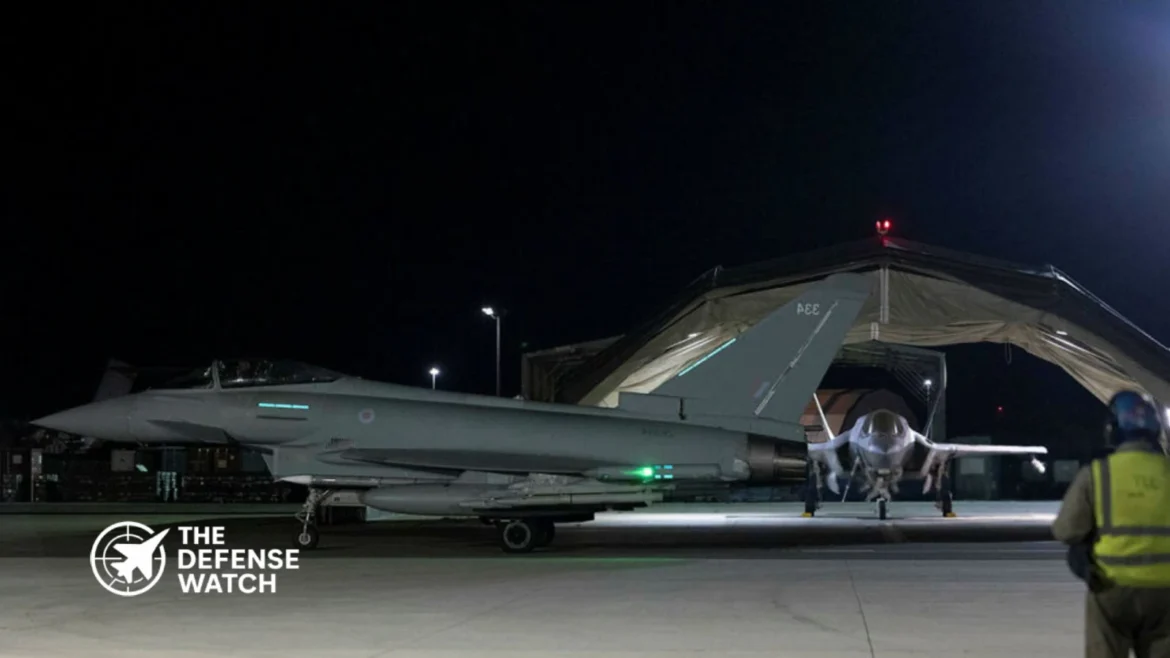
Executive Summary: The UK Ministry of Defence is adding a new £800,000 air raid warning system at RAF Akrotiri in Cyprus, expanding coverage to the base and neighboring Akrotiri village. The system is designed to provide portable, independent alerts for incoming air threats and other emergencies, including live and recorded voice announcements.
UK Expands RAF Akrotiri Air Raid Siren Coverage
The RAF Akrotiri air raid sirens expansion reflects a broader effort by the UK to strengthen warning and force protection measures at its Cyprus military facilities following heightened regional security concerns.
The department is purchasing additional warning sirens to supplement equipment already installed at RAF Akrotiri. The contract, identified as 2026/S 000-077006, was published on August 13, 2026, with a value of £800,000 and a five-year term beginning October 26, 2026.
The procurement is significant because the requirement extends warning coverage beyond military personnel. The new system is intended to cover both RAF Akrotiri and the neighboring Akrotiri village, providing an audible warning capability for personnel and civilians located within the British Sovereign Base Area.
Portable System Designed For Rapid Deployment
The new warning equipment is required to operate independently of fixed infrastructure, giving British Forces Cyprus greater flexibility in positioning and deploying warning units.
The contract specifies distinct alert tones for an air raid or imminent threat and an all-clear signal. It also requires both live and recorded voice announcement capabilities.
This combination is important because a modern warning system is not limited to producing a loud siren. Voice announcements can provide instructions about sheltering, evacuation, or other protective actions when a threat is detected.
The contract also covers supply, commissioning, documentation, training, warranty and through-life support. Two companies submitted bids through the open procurement process, with the award going to Acoustic Technologies, trading as ATI Systems, a Boston-based U.S. company.
ATI Systems says its product portfolio includes fixed outdoor warning systems, indoor warning equipment and mobile warning systems. Its mobile systems are designed for transportable deployment, while its high-powered speaker stations can provide both siren tones and voice announcements.
Why RAF Akrotiri Needs Expanded Warning Coverage
RAF Akrotiri is one of Britain’s most strategically important overseas air facilities. Located on Cyprus’s southern coast, the base supports British military operations across the eastern Mediterranean and wider Middle East.
The base’s importance has also made force protection a more prominent concern.
In March 2026, an Iranian drone struck near RAF Akrotiri during the regional conflict. UK Prime Minister Keir Starmer told Parliament that the drone struck within 800 yards of British personnel, although there were no casualties.
The incident was followed by repeated warning sirens at the base. Cyprus News Agency reported in March that there had been no confirmed incident involving Cyprus itself when sirens sounded at the British bases, highlighting the role of the alarms as part of precautionary force protection measures.
Reuters footage from March also documented warning sirens at RAF Akrotiri following the drone strike and subsequent regional security concerns.
The procurement announced August 13 does not, by itself, establish that a specific new attack is expected. Rather, the technical requirements indicate an effort to improve the ability of British Forces Cyprus to warn personnel and civilians when an aerial or other emergency threat develops.
A More Flexible Layer Of Base Protection
The most notable feature of the new RAF Akrotiri air raid sirens is their portability.
Fixed warning systems provide reliable coverage in established areas, but portable equipment can be positioned where additional coverage is required. That can be particularly useful at an overseas military installation where operational layouts, temporary facilities and threat conditions can change.
The requirement for independent operation also reduces reliance on permanent infrastructure. In practical terms, that can allow warning equipment to remain useful even if parts of a fixed communications or power network become unavailable.
ATI Systems describes its mobile warning equipment as transportable outdoor systems intended for situations requiring rapid deployment. Its broader warning architecture also supports centralized and local control options.
That makes the procurement more than a simple replacement of older sirens. It adds another layer to the warning architecture around a strategically important British air base.
RAF Akrotiri’s Wider Operational Role
RAF Akrotiri remains a key element of Britain’s overseas military posture.
The Royal Air Force describes the base as a permanent operating location in the eastern Mediterranean. In July 2026, the RAF also announced that new Airbus H145 Jupiter HC Mk2 helicopters had begun operating from Akrotiri, establishing a year-round response capability in Cyprus.
The base has supported British operations in the Middle East for decades. Its location provides access to the eastern Mediterranean and the Levant, while its facilities support aircraft and other military assets involved in regional missions.
That geographic position also means the installation operates relatively close to areas affected by recurring regional conflict.
The UK government’s March statements underscored the continuing security pressure surrounding British military facilities in the region. The government said British forces had been operating at high readiness following attacks involving missiles and drones across the Middle East.
What The New System Adds
From a force protection perspective, the procurement addresses a specific gap: getting timely warnings to people who may not be directly connected to the base’s existing alert infrastructure.
The new system is expected to provide:
- Additional siren coverage around RAF Akrotiri
- Warning coverage extending to Akrotiri village
- Distinct threat and all-clear tones
- Live voice announcements
- Recorded emergency messages
- Portable deployment
- Operation independent of fixed infrastructure
- Training, commissioning and long-term support
The £800,000 contract therefore represents an investment in warning and emergency communications rather than an air defense interceptor or detection system.
That distinction matters. Sirens cannot stop drones, missiles or aircraft. Their purpose is to reduce the time between threat detection and human response.
For RAF Akrotiri, that warning layer has become increasingly relevant as unmanned aircraft and missile threats have demonstrated their ability to reach military installations in the eastern Mediterranean.
What The Procurement Signals
The decision to expand RAF Akrotiri air raid sirens should be viewed primarily as a force protection measure.
It demonstrates that the UK is investing not only in systems designed to detect or defeat incoming threats, but also in the final stage of the defensive chain: warning people quickly enough to take protective action.
The inclusion of Akrotiri village is particularly important. Because the British Sovereign Base Areas include civilian communities, emergency warning arrangements have implications beyond the military population.
The contract’s portable and self-contained requirements also suggest that flexibility is a priority. Rather than relying exclusively on permanently installed infrastructure, British Forces Cyprus will have additional equipment that can be positioned according to operational requirements.
The system is scheduled to enter the five-year contract period on October 26, 2026, with the earliest contract signature date listed as August 25.
For the UK, the investment adds another practical layer to the protection of a strategically important overseas air base at a time when the threat environment around Cyprus remains closely linked to wider instability in the Middle East.