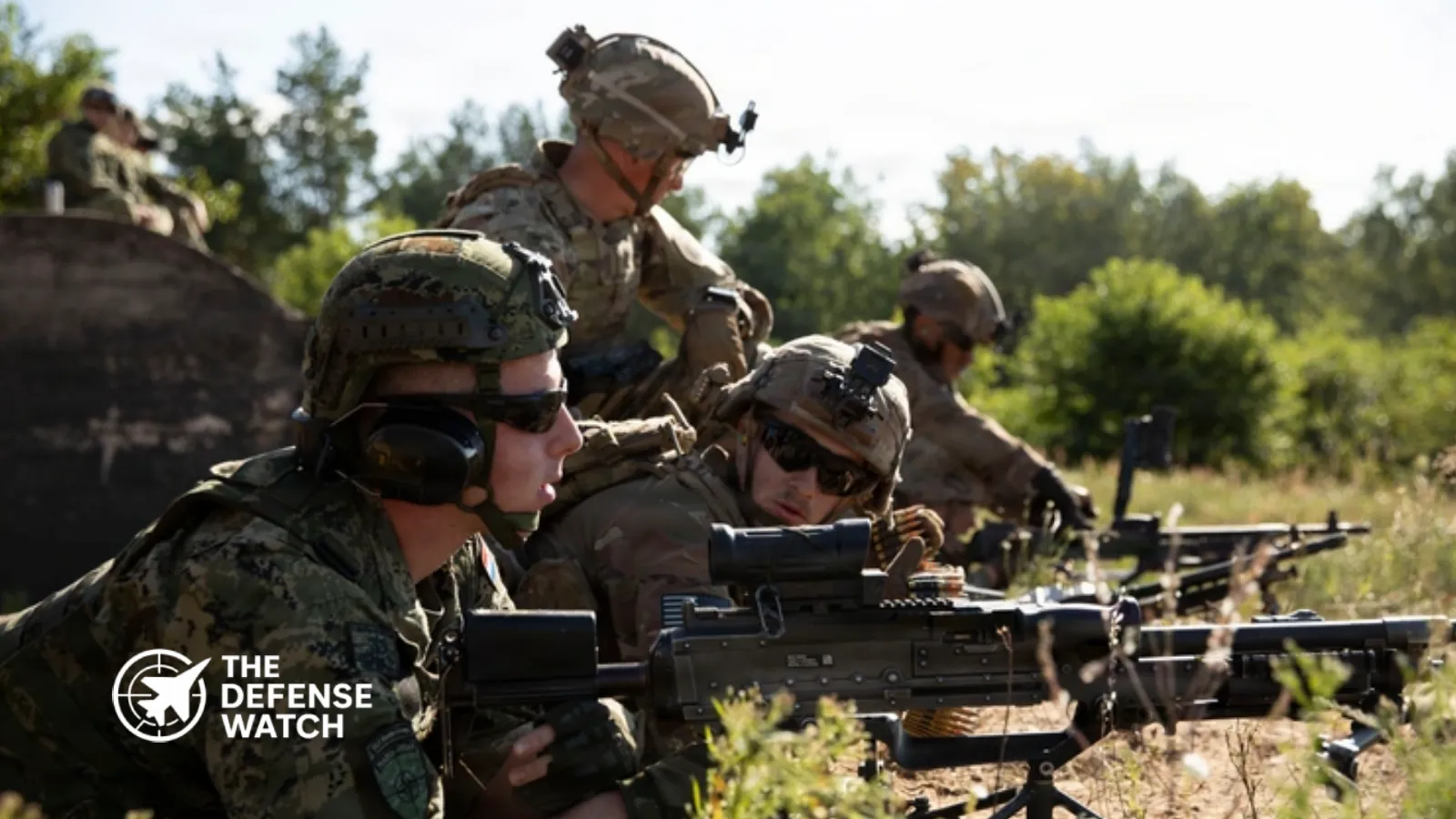
Why NATO’s 2026 Exercise Calendar Matters Right Now
NATO’s 2026 exercise season is unfolding against a genuinely unsettled backdrop: the Pentagon is pressing European allies to prove they can shoulder more of the continent’s conventional defense as Washington reallocates forces elsewhere, Russian hybrid activity — drone incursions, sabotage plots, and disputed weapons caches — has become a near-weekly headline across the Baltic states and Germany, and Royal Navy activations against Russian vessels near the UK have risen sharply year over year. Every one of NATO’s scheduled 2026 exercises therefore reads as more than a training rotation: each is also a visible signal of alliance cohesion at a moment when that cohesion is being actively tested.
This page tracks every confirmed NATO exercise in 2026 in one place, organized chronologically, so you don’t have to piece the calendar together from scattered press releases.
Takeaways
What NATO’s 2026 exercise calendar reveals about alliance readiness
1. Counter-Drone Drills Are Multiplying
Baltic Trust 26 and the broader shift toward unmanned-systems exercises like REPMUS reflect direct alliance responses to the drone incursions disrupting European airspace this year.
2. The Baltic and High North Dominate
A majority of 2026’s largest exercises — BALTOPS, Lion Protector, Northern Viking, Baltic Trust — are concentrated in the Baltic Sea and High North, underscoring where NATO sees its most active flank.
3. Steadfast Noon Remains the Marquee Event
NATO’s annual nuclear deterrence exercise continues to draw the most scrutiny and the largest aircraft commitment of any single drill on the calendar.
4. Dates Are Still Firming Up for Autumn
Thunder Strike 26, Steadfast Duel 26, and Namejs remain unconfirmed as of late August, typical of how NATO’s back half of the year is finalized later than the spring–summer schedule.
NATO Exercises 2026: Full Calendar at a Glance
| Exercise | Dates | Location / Lead | Approx. Participants | Primary Focus |
|---|---|---|---|---|
| Cold Response 26 | Winter (concluded) | Norway | ~32,500 personnel | Arctic warfare, cold-weather readiness |
| Karelian Sword 26 | May 22–29 | Finland | National land forces | Mechanized defensive maneuvers, terrain denial |
| Ramstein Flag 26 | June 8–19 | Nordic/European air wings | Multinational air assets | Integrated air defense, tactical air combat |
| BALTOPS 26 | June 4–19 | Baltic Sea / US 6th Fleet | ~9,000+ (allied naval average) | Anti-submarine warfare, amphibious landings, mine clearing |
| AURORA 26 | Spring–summer | Sweden (DEFENDER-Europe 26 umbrella) | Multinational | Reinforcement of Finland and the Baltic states |
| Neptune Strike 26-3 | July 17–23 | High North | Allied naval task groups | Carrier strike group interoperability |
| Operation Firecrest (Phase 1) | Concluded July 24 | UK Carrier Strike Group | UK-led task group | Deployed readiness, home-waters posture |
| Baltic Trust 26 | Aug 3–14 | Sēlija range, Latvia | ~650 personnel, 24 nations | Integrated counter-drone defense |
| Lion Protector 26 | Aug 3 – Oct 12 | Baltic Sea (JEF) | Joint Expeditionary Force nations | Maritime escort, Baltic security patrols |
| Northern Viking 2026 | Aug 22 – Sept 3 | Keflavik, Iceland | Multinational | High North / GIUK gap air and maritime security |
| Saber Junction 26 | Late summer–Sept | Hohenfels, Germany | US Army-led, multinational | Land force interoperability, decisive-action training |
| Dynamic Messenger / REPMUS | Aug 31 – Sept 25 | Portugal | Multinational (NATO’s largest maritime unmanned-systems exercise) | Unmanned maritime systems, mine countermeasures |
| Ample Strike 26 | Sept 7–17 | Czech Republic (Czech-led) | ~600 personnel, 19 nations | Close air support coordination |
| Thunder Strike 26 | Dates pending | Lithuania | TBD | Live-manoeuvre land exercise |
| Steadfast Duel 26 | Dates pending | NATO-wide | Command-post exercise | Command and control, decision-making under crisis conditions |
| Namejs (probable) | Unconfirmed | Latvia | TBD | National territorial defense |
| Operation Firecrest (Phase 2) | Autumn | Northern European waters | UK Carrier Strike Group | Extended deployment, allied interoperability |
| Steadfast Noon 26 | October (expected) | Rotating host, historically Netherlands/Belgium/UK/Denmark | ~65-70 aircraft, 14 nations (based on 2025 edition) | Annual nuclear deterrence and dual-capable aircraft readiness |
Figures for exercises later in the year reflect the most recent confirmed or historically consistent scale where 2026-specific numbers are not yet published, and will be updated as official figures are released.
The Season So Far: Winter Through Late Summer
NATO’s 2026 training year opened with Cold Response 26 in Norway, anchoring the Arctic winter phase with roughly 32,500 personnel drilling cold-weather combat and logistics — consistently one of the largest single exercises on the calendar given the sheer scale of Arctic terrain and cold-injury risk management involved.
Spring and early summer carried the year’s densest run of activity. The DEFENDER-Europe 26 umbrella, with Sweden’s AURORA 26 at its center, focused on reinforcing Finland and the Baltic states — a mission set that has taken on new urgency since both countries’ NATO accession reshaped the alliance’s Nordic flank. BALTOPS 26, the premier annual naval exercise in the Baltic Sea, ran anti-submarine warfare, amphibious landing, and mine-clearing drills alongside Ramstein Flag 26‘s integrated air combat training and Finland’s Karelian Sword 26 land drills.
By August, the calendar shifted toward counter-drone and unmanned-systems readiness — a direct response to the drone incursions and airspace violations that have repeatedly disrupted European airports and military installations this year. Baltic Trust 26 in Latvia drew 24 nations specifically to drill integrated counter-drone defense, while Neptune Strike 26-3 and the UK Carrier Strike Group’s Operation Firecrest kept allied naval task groups active in the High North.
What’s Running Now and What’s Next
As of late August, the Joint Expeditionary Force’s Lion Protector 26 series is mid-run in the Baltic, the US Army’s Saber Junction 26 is underway at Hohenfels, and Northern Viking 2026 has just launched out of Keflavik to cover the High North and GIUK gap — the maritime corridor between Greenland, Iceland, and the UK that has become a focal point for tracking Russian submarine activity.
Looking into September, Dynamic Messenger / REPMUS in Portugal stands out as NATO’s largest maritime unmanned-systems exercise — a signal of how central autonomous and uncrewed systems have become to alliance maritime doctrine. The Czech-led Ample Strike 26 will bring roughly 600 personnel from 19 nations together for close air support coordination, while Lithuania’s Thunder Strike 26 and the alliance-wide Steadfast Duel 26 command-post exercise remain on the calendar with dates still to be finalized.
The year’s most closely watched drill, as always, will likely be Steadfast Noon — NATO’s annual nuclear deterrence exercise, historically held in October and rotating among host nations including the Netherlands, Belgium, the UK, and Denmark. The 2025 edition involved roughly 71 aircraft from 14 nations; NATO officials have consistently stressed the exercise is routine and not directed at any specific country, even as it draws heightened attention amid ongoing tension with Russia.
Reading NATO’s Exercise Calendar Like a Live Season, Not a One-Off Match
For readers who follow competitive strategy games, NATO’s exercise calendar maps surprisingly well onto how a live-service title structures its competitive season. Cold Response and DEFENDER-Europe function like the season opener — big, high-visibility, setting the meta for everything that follows. The mid-season stretch of BALTOPS, Baltic Trust, and Lion Protector is the equivalent of a ranked ladder grind: smaller-scale, higher-frequency engagements that build unit cohesion and reveal where coordination breaks down, much the way scrims sharpen a roster before a major tournament. And Steadfast Noon, arriving as the calendar’s final major event, plays the role of the season finale — the highest-stakes, most-watched moment, run under strict rules specifically because the cost of a real mistake is unacceptable. The comparison only goes so far, since NATO’s “matches” carry consequences no esports bracket does, but the underlying logic of building readiness through frequent, escalating repetition before the moment that actually matters is one competitive gamers will recognize instantly.
FAQs
By personnel count, Cold Response 26 in Norway (approximately 32,500 personnel) has been the largest single exercise of the year so far, though Steadfast Noon typically draws the most sustained international attention given its nuclear deterrence mission.
The Baltic Sea and High North have become NATO’s most operationally active theater following Finland and Sweden’s accession, alongside a marked rise in Russian hybrid activity — drone incursions, submarine and vessel movements, and reported sabotage attempts — across the region this year.
NATO officials consistently describe Steadfast Noon as a routine, long-planned exercise unrelated to specific current events, though it inevitably draws additional scrutiny given the broader security environment in Europe.
This page is treated as a living document and will be revised as new exercise dates are confirmed, exercises conclude, or participant figures are officially released.