F-16 Jets Spotted With Laser-Guided Rockets
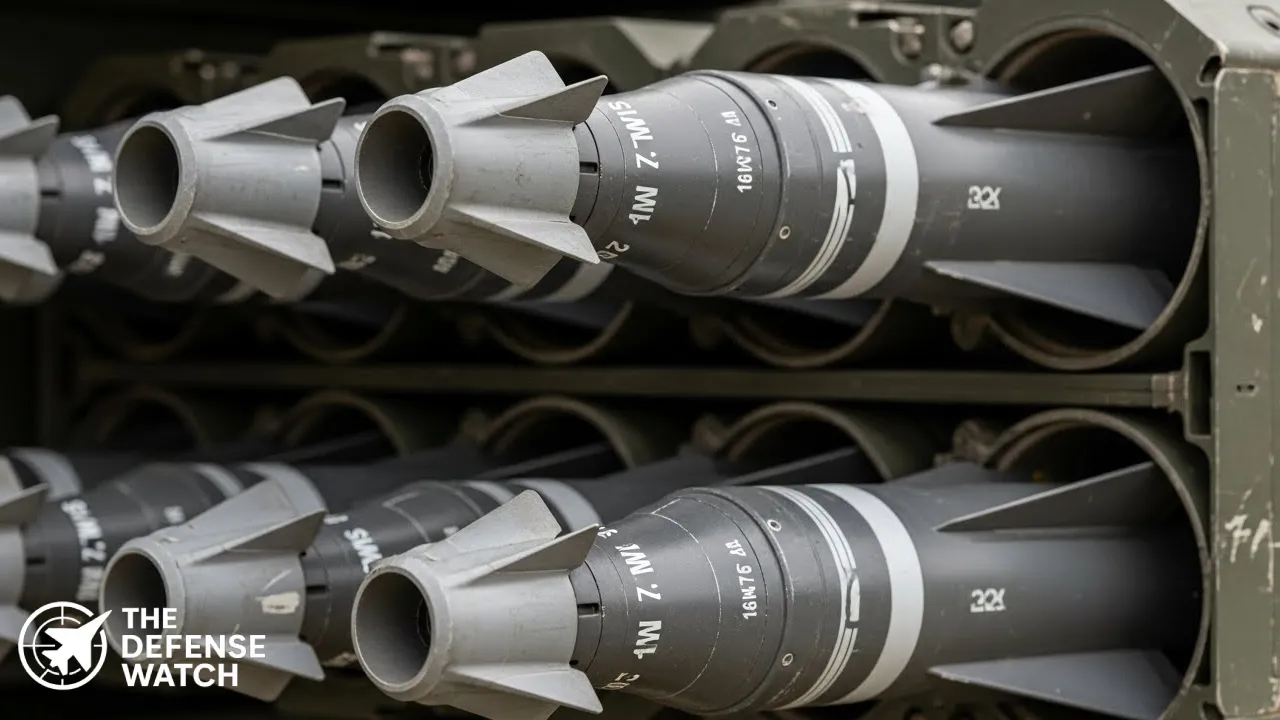
New imagery circulating on social media and defense forums suggests that Ukrainian Air Force F-16AM jets are now carrying laser-guided 70 mm rockets — specifically the Advanced Precision Kill Weapon System II (APKWS II).
According to the report, the photos — first shared by the Telegram channel Avia OFN on December 4, 2025 — show an F-16AM from the 107th Separate Aviation Wing fitted with two LAU-131/A 7-shot rocket pods, each apparently loaded with APKWS II rounds.
Context: Why This Matters Now
Since receiving Western-supplied F-16s from Denmark, the Netherlands, Belgium, and Norway, Ukraine has heavily relied on the jets for a mix of air defense and ground-attack missions.
Traditionally armed with air-to-air missiles like the AIM-120 AMRAAM and AIM-9 Sidewinder, and precision guided bombs for strike missions, the Ukrainian Air Force jets now appear to be adding a lower-cost but high-volume air-to-air capability.
The emergence of mass Russian drone attacks — slow-flying loitering munitions and cruise missiles — has put enormous strain on Ukraine’s air defenses. Against such threats, guided rockets like APKWS II provide a cost-effective complement to expensive missiles.
What the Numbers and Hardware Show
- Weapon System: APKWS II is a laser-guided upgrade kit based on the 70 mm Hydra rocket. When paired with proper rocket pods (e.g., LAU-131/A) and a targeting/laser designator pod, it can transform an otherwise unguided rocket into a precision munition.
- Cost Effectiveness: Compared with air-to-air missiles — typically costing hundreds of thousands to over a million dollars per round — a guided rocket like APKWS II costs roughly US$20,000–25,000 per unit.
- Expanded Loadout Potential: By employing two 7-shot rocket pods, a single F-16 sortie could field up to 14 guided rockets, offering multiple engagement chances with each mission. This “magazine depth” advantage becomes valuable when facing waves of low-cost drones or incoming missiles.
The photos reportedly also show the jets carrying a targeting pod — likely the AN/AAQ-33 Sniper Advanced Targeting Pod — necessary to lase targets for the rocket guidance.
Limitations and Considerations
While the development is significant, there are important caveats:
- Laser-Dependence: APKWS II rockets require continuous laser designation during flight (semi-active laser guidance). That limits their use primarily to targets that are slower-moving or non-evasive — such as drones, kamikaze UAVs, or cruise missiles — rather than high-performance fighter aircraft.
- Not Fire-and-Forget: Unlike radar-guided or infrared-guided missiles, these rockets are not fire-and-forget; a designating pod must keep the laser locked on target until impact, potentially exposing the launching aircraft or designator to risk.
- Unclear Variant Supply: Although a variant of APKWS II optimized for air-to-air use — called AGR-20F FALCO (Fixed-Wing Air-Launched Counter-UAS Ordnance) — exists, it remains unconfirmed whether Ukraine has received that specific version, or is using standard ground-oriented APKWS II kits.
What This Suggests Strategically
For Ukraine, employing APKWS II on F-16s represents a pragmatic adaptation to the evolving nature of aerial threats — especially the prevalence of low-cost drones and cruise missiles. The ability to fire guided rockets may allow more sorties with higher engagement capacity while conserving its limited stock of expensive air-to-air missiles.
This shift also demonstrates flexibility: by using existing hardware (Hydra rocket pods) and attaching guidance kits, Ukraine can rapidly field an affordable and effective counter-UAS solution without waiting for delivery of new types of missiles.
What’s Next: Implications and Open Questions
- Operational Impact: Will Ukrainian F-16s begin conducting more anti-drone patrols with rocket pods? Will these deployments reduce reliance on high-value missiles for threats like loitering drones and cruise missiles?
- Supply and Sustainability: Can Ukraine sustain enough ammunition supply of APKWS II rockets for prolonged use? Are there enough targeting pods and crews trained in laser designation?
- Escalation Risk: If Russian forces adapt — for example by deploying faster, more maneuverable UAVs — the limitations of semi-active laser rockets may become more apparent.
