

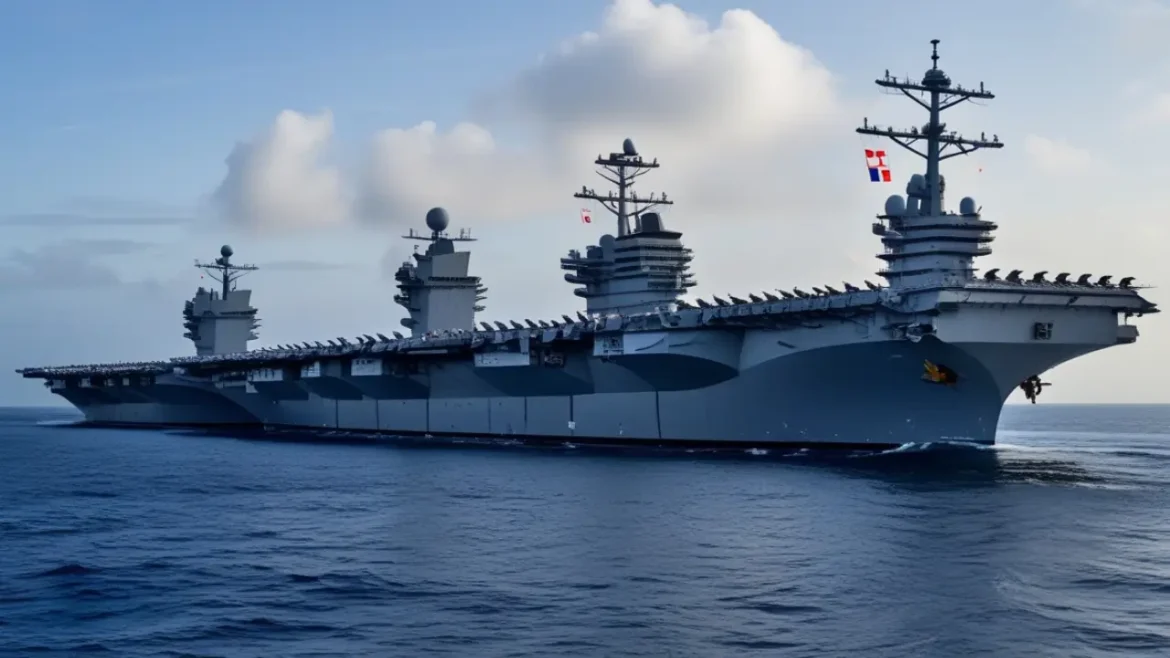
The Enduring Role of Carrier Strike Groups in the Indo-Pacific
Carrier Strike Groups remain a linchpin of strategic influence in the Indo-Pacific, enabling power projection, sea control, and regional deterrence through presence operations. These versatile naval formations—centred on an aircraft carrier, supported by escort ships and air wings—are designed not only for wartime operations but also for shaping the strategic environment during peacetime.
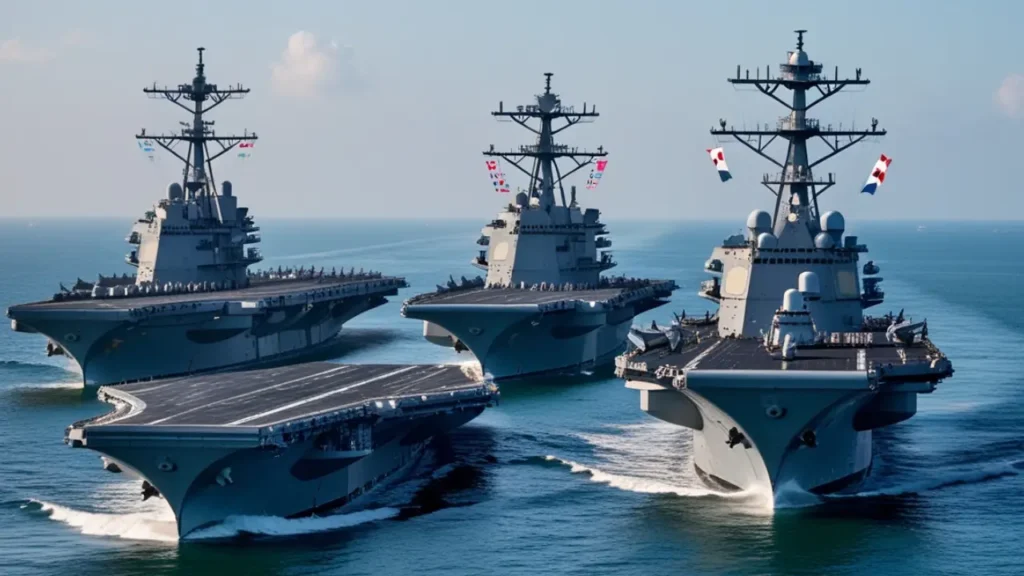
Rising Operations and Multinational Deployments
Recent months reflect growing use of CSGs across the region. The U.S. Carl Vinson CSG-1 completed a nine-month deployment engaging in freedom of navigation operations, multilateral exercises, and combat missions in both the Western Pacific and Middle East. Meanwhile, the UK’s HMS Prince of Wales, as part of Operation Highmast, leads a multinational strike group in East Asia, reinforcing interoperability with Australia, Japan, South Korea, and others.
European contributions are also increasing. France deployed its Carrier Strike Group under Operation Clemenceau between late 2024 and April 2025, and Italy dispatched ITS Cavour with advanced air wings to Japan as a signal of strategic commitment. These efforts bolster the shared message of supporting a free and open Indo-Pacific.
Adapting to Contestation: The Distributed Maritime Operations Shift
The U.S. Navy is shifting from large, centralized CSGs to more resilient distributed maritime operations (DMO). This posture disperses forces to increase battlefield survivability and complicate adversary targeting. The tiltrotor CMV-22B Osprey plays a pivotal role in this transition, providing flexible and rapid logistics support across wide operating areas—surpassing the legacy C-2A Greyhound in range, avionics, and communication capabilities. Its ability to operate without runways, self-deploy, and refuel in flight makes it a force multiplier for dispersed naval formations.
Strategic Implications amid Shifting Sea Power
China’s naval modernization is underway. In mid-2025, the PLA Navy operated two carrier strike groups—Liaoning and Shandong—simultaneously beyond the First and Second Island Chains, marking a shift to more assertive blue-water operations. Meanwhile, satellite imagery indicates progress on China’s development of a nuclear-powered carrier, signaling a potential strategic leap in endurance and power projection.
The Emergence of a “Latticework” Security Architecture
Increasing strains on U.S. naval capacity—highlighted by a stark disparity in shipbuilding, with China far outpacing the U.S.—have catalyzed a shift away from a centralized “hub-and-spoke” alliance. Instead, a resilient “latticework” of multilateral and minilateral partnerships is emerging. This new architecture decentralizes maritime security, with allies like Japan, Australia, and the Philippines strengthening their maritime cooperation through exercises and information sharing.
Analysis / Contextual Insight
- Resilience through Dispersion: The move toward distributed maritime operations, supported by platforms like the CMV-22B, offers greater tactical resilience in contested environments but demands robust logistics networks and interoperable command structures.
- Allied Burden-Sharing and Strategic Signal: Increased European and regional carrier deployments reflect a shifting burden-sharing dynamic. They serve both operational purposes and strategic signaling that deterrence is multilateral, not U.S.-centric.
- China’s Naval Expansion: The PLA’s expanded carrier operations and experimental reactor projects suggest Beijing is closing the strategic gap. U.S. and allied CSGs must balance demonstrating presence without escalation, while enhancing survivability and adaptability.
FAQs
CSGs project power, maintain sea control, support allies, and deter aggression through visible forward deployment and flexible operations.
The Navy is shifting toward distributed maritime operations, deploying forces over wider areas to reduce vulnerability. Platform innovations like the CMV-22B support these dispersed operations.
Yes. The UK, France, Italy, and Japan are deploying carrier groups to signal strategic commitment and improve interoperability.
China is launching more familiar carrier operations beyond the First and Second Island Chains and developing a nuclear-powered carrier, enhancing long-range strategic capabilities.
It’s a regional approach replacing the traditional hub-and-spoke alliance system. It emphasizes interconnected, ally-to-ally security partnerships alongside U.S. ties to build sustainable deterrence.