On the morning of June 9, 1982, in the narrow farmland corridor of Lebanon’s Bekaa Valley, the Israeli Air Force ran an experiment that Soviet air defense doctrine had never accounted for: what happens when the “eyes” of an integrated air defense system are fed a lie from the very first radar sweep. Within roughly two hours, the majority of Syria’s dug-in SAM network lay in ruins. By the time a U.S.-brokered ceasefire took hold the next day, Syria had lost dozens of fighter aircraft in the air battles that followed, and the IAF had lost none in aerial combat. Operation Mole Cricket 19 — known in Hebrew as Mivtza Artzav Tsha-Esreh — became the first time in history a Western-equipped air force dismantled a Soviet-built SAM belt outright, and it did so using a kill chain built almost entirely on deception, electronic intelligence, and real-time data links rather than raw firepower.

| Strategic Brief | Details |
|---|---|
| Codename / Mission | Operation Mole Cricket 19 (Mivtza Artzav Tsha-Esreh) |
| Date / Theater | June 9, 1982; Bekaa Valley, Lebanon — opening days of the 1982 Lebanon War |
| Executing Force(s) | Israeli Air Force (IAF), under Maj. Gen. David Ivry; RPV units, E-2C Hawkeye squadrons, F-4E/F-15/F-16/Kfir strike and fighter elements |
| Primary Target | Syria’s Bekaa Valley SAM belt — roughly 19 batteries of SA-2 Guideline, SA-3 Goa, and SA-6 Gainful systems |
| Key Platforms & Tech | IAI Scout and Tadiran Mastiff RPVs, E-2C Hawkeye AEW aircraft, Boeing 707 ECM platforms, AGM-45 Shrike and AGM-78 Standard anti-radiation missiles, F-15 Eagle / F-16 Fighting Falcon air cover |
| Mission Outcome | Decisive Israeli victory — most of the Syrian SAM belt destroyed and Syrian Air Force losses in the dozens of aircraft, without IAF air-to-air losses |
Strategic Background & Operational Context
The roots of Mole Cricket 19 go back nearly a decade, to the brutal opening days of the 1973 Yom Kippur War, when Egyptian and Syrian SA-2, SA-3, and SA-6 batteries shot Israeli aircraft out of the sky at an unsustainable rate — the IAF lost dozens of aircraft in the first three days alone. That trauma reshaped Israeli air power doctrine for the next decade: never again fly into a Soviet-designed, radar-guided SAM network without first blinding it.
By the early 1980s, Syria had rebuilt and expanded its integrated air defense system, moving roughly 19 SA-2, SA-3, and SA-6 batteries into Lebanon’s Bekaa Valley as tension over the Palestine Liberation Organization’s presence in southern Lebanon escalated. When Israel launched its ground invasion of Lebanon on June 6, 1982 — Operation Peace for Galilee — Syrian armor and air defense units moved to contest the valley, setting up a direct confrontation between the IDF’s ground advance and a SAM belt that could threaten every sortie flown in support of it. By June 9, with Israeli and Syrian ground forces already engaged, the Israeli high command authorized the IAF to take the SAM network down entirely rather than simply avoid it.
Engineering & Technological Innovation
What made Mole Cricket 19 historically significant wasn’t any single weapon — it was the architecture connecting sensors, decoys, and shooters into one loop, executed faster than the Syrian command structure could react.

Unmanned decoys as the opening move. Israel had spent months before the operation flying IAI Scout and Tadiran Mastiff RPVs over the valley to build a detailed picture of every battery’s location and radar signature. On the day of the strike, these same drones — along with additional decoy platforms — were sent in first, flown at altitudes and profiles designed to mimic incoming strike packages on Syrian radar scopes.
Baiting the radars. Syrian SA-6 fire-control crews, believing they faced a genuine air raid, switched on their radars to engage what were, in fact, unmanned and expendable aircraft. The instant those radars illuminated, they became targets themselves.
The sensor relay chain. A second tier of RPVs, orbiting outside SAM engagement range, picked up the emissions and relayed them onward to E-2C Hawkeye airborne early warning aircraft holding station off the coast, safely beyond Syrian reach. Boeing 707 electronic countermeasures aircraft cross-processed the same signals, refining the targeting picture in real time.
Command in real time. IAF chief David Ivry ran the battle from a Tel Aviv command post fed by live data links from the E-2Cs, with a two-way voice channel connecting him directly to pilots overhead — an early and rudimentary version of the networked command-and-control architecture that modern air forces now take for granted.
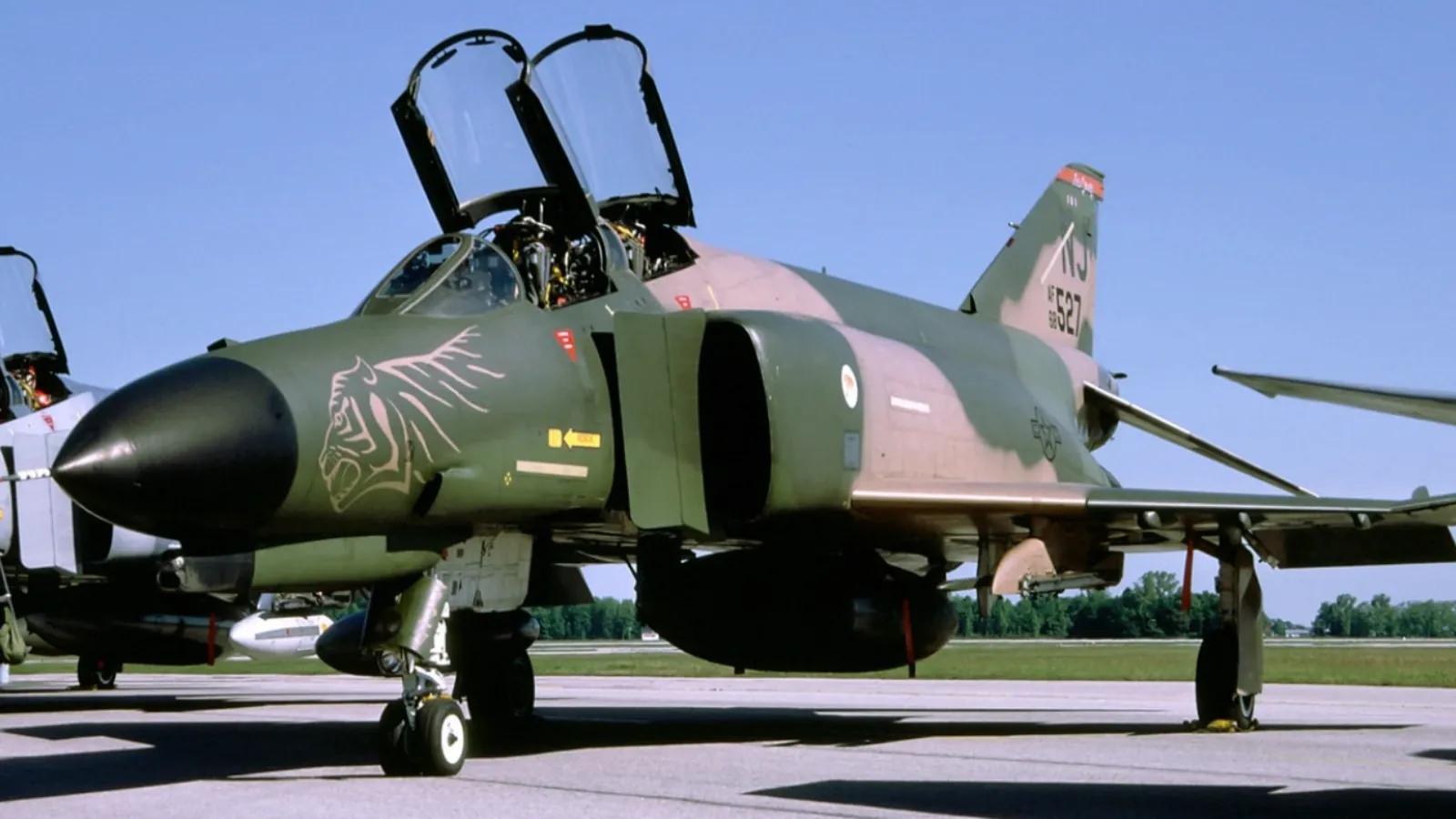
The kill shot. Once a battery’s radar was pinpointed, F-4E Phantoms — flying the Wild Weasel-style SEAD role — fired AGM-45 Shrike and AGM-78 Standard anti-radiation missiles that homed directly on the emitting radars, while other strike aircraft followed up with iron bombs on the launchers themselves. IAF aircraft carried jamming pods throughout to further degrade Syrian radar tracking, and the short flight times of the anti-radiation missiles minimized how long the F-4s were exposed to any SAMs still capable of firing.
Mission Execution & Key Sorties
The suppression phase unfolded with startling speed. As Israeli decoy RPVs entered the valley, Syrian SA-6 batteries activated their Gainful fire-control radars almost immediately, believing they were engaging real aircraft. Within minutes, that same activation had been relayed through the Scout-to-Hawkeye chain and turned into targeting data for the strike package already airborne. F-4 Phantoms began putting anti-radiation missiles onto exposed radar sites, and within roughly two hours, most of Syria’s Bekaa Valley SAM belt — commonly cited as 17 of 19 batteries — had been destroyed or knocked out of action. Syrian crews reportedly fired dozens of SA-6s during the engagement without downing a single Israeli aircraft.
With its SAM umbrella gone, Syria scrambled its fighter force to contest the airspace directly, and the operation tipped into one of the largest jet-era air battles since the Korean War. Waves of Syrian MiG-21 Fishbeds, MiG-23 Floggers, and Su-20 Fitters — at times numbering close to 100 aircraft — rose to meet Israeli F-15 Eagles, F-16 Fighting Falcons, F-4 Phantoms, and Kfirs. Syrian pilots, dependent on ground-controlled interception for tactical direction, found their GCI network degraded by the same electronic warfare effort that had blinded the SAM crews, while E-2C Hawkeyes gave Israeli formations a real-time picture of Syrian aircraft launching from airfields further inland. Armed with AIM-7F Sparrow and AIM-9L Sidewinder missiles and cueing off HUD-assisted intercepts, IAF fighters ran up a lopsided score across the following hours and days of air combat — accounts converge on somewhere between 82 and roughly 90 Syrian aircraft destroyed, against no Israeli losses in air-to-air combat. The scale of the mismatch quickly earned the engagement its lasting nickname: the “Bekaa Valley Turkey Shoot.” By the time U.S. President Ronald Reagan’s ceasefire pressure took effect at noon on June 10, the lopsided kill tally had already been set.
Tactical Outcome & Operational Assessment
Judged purely on its own terms, Mole Cricket 19 was about as close to a clean sweep as SEAD operations get: a defended, overlapping, Soviet-designed SAM network — the same type of system that had bloodied the IAF in 1973 — was rolled up in a single coordinated push, and the air superiority that followed gave Israeli ground forces largely unmolested close air support for the remainder of the Bekaa Valley fighting. The operational lesson that Israeli, American, and NATO planners drew from it was blunt: an integrated air defense system’s greatest vulnerability isn’t its missiles, it’s the moment its radars have to switch on to use them. Feed that moment a lie, and the entire network can be unraveled from the outside in.
That said, the operation is not without its caveats. Precise figures on SAM batteries destroyed and aircraft losses vary between Israeli, Syrian, Soviet, and independent Western accounts, and many operational details — squadron-level tasking, exact missile-count figures, and the full electronic order of battle — remain only partially declassified more than four decades later. Some retrospective analyses also note that Syria’s SAM crews and fighter pilots were operating with GCI-dependent doctrine and less flexible rules of engagement than their Israeli counterparts, which magnified the impact of the deception even before the technological mismatch is considered. The result was decisive, but it was also fought against an adversary whose command structure was uniquely brittle to exactly this kind of disruption.
The Modern Connection: Lineage to 21st-Century Warfare
Mole Cricket 19 is the direct ancestor of modern SEAD/DEAD doctrine. The opening night of Operation Desert Storm in 1991 — decoys and drones drawing out Iraqi radars ahead of a coordinated strike package — followed a blueprint Israeli planners had already proven nine years earlier. The AGM-88 HARM that anchors NATO’s modern anti-radiation missile inventory is a direct technological descendant of the AGM-45 Shrike and AGM-78 Standard that hunted Syrian radars in 1982, just with a far wider seeker bandwidth and longer standoff range.
The decoy-drone concept has aged into something even more consequential: today’s loitering munitions and low-cost expendable UAVs — from Israeli Harpy and Harop systems to the swarms of cheap decoy and strike drones seen over Ukraine and the Red Sea — trace their lineage to the same insight that powered the Mastiff and Scout RPVs over the Bekaa Valley: an unmanned aircraft that draws enemy fire, or absorbs a missile meant for a manned platform, is worth more than its cost many times over. Meanwhile, the real-time data-link architecture that connected E-2C Hawkeyes, Boeing 707 ECM aircraft, and a Tel Aviv command post into a single targeting loop was a primitive but unmistakable forerunner of the Link-16 and networked battle-management systems that now underpin NATO air operations — the difference today being milliseconds of latency instead of the manual relay chains of 1982.
Key Takeaways
- Operation Mole Cricket 19 (June 9, 1982) was the first time a Western-equipped air force destroyed a Soviet-built SAM network in direct engagement, dismantling most of Syria’s 19-battery Bekaa Valley belt in roughly two hours.
- The kill chain relied on unmanned decoy RPVs (IAI Scout, Tadiran Mastiff) baiting SA-6 radars into activating, with E-2C Hawkeye and Boeing 707 ECM aircraft relaying targeting data to F-4E Phantoms firing AGM-45 Shrike and AGM-78 Standard anti-radiation missiles.
- The subsequent air battle became one of the largest jet-era dogfights since the Korean War, with Israeli F-15s and F-16s destroying dozens of Syrian MiG-21s, MiG-23s, and Su-20s without losing an aircraft in air-to-air combat.
- The operation’s decoy-and-jam architecture is the direct doctrinal ancestor of modern SEAD/DEAD tactics, the AGM-88 HARM, and today’s loitering-munition and decoy-drone warfare.
FAQs
What was Operation Mole Cricket 19?It was a June 9, 1982 Israeli Air Force operation to destroy Syria’s SA-2, SA-3, and SA-6 SAM network in Lebanon’s Bekaa Valley at the outset of the 1982 Lebanon War, using decoy drones, electronic warfare, and anti-radiation missiles.
Why is it called the “Bekaa Valley Turkey Shoot”?The nickname refers to the lopsided air battle that followed the SAM suppression, in which Israeli fighters destroyed dozens of Syrian aircraft — commonly cited as 82 to roughly 90 — without losing any in air-to-air combat.
What role did drones play in Mole Cricket 19?IAI Scout and Tadiran Mastiff RPVs served as both reconnaissance platforms in the months before the strike and as decoys on the day itself, drawing Syrian SAM radars into activating so their positions could be pinpointed and struck.
How does Mole Cricket 19 connect to modern warfare?Its decoy-drone-plus-anti-radiation-missile template underpins modern SEAD/DEAD doctrine, informed the opening strikes of Operation Desert Storm, and its expendable-UAV logic is a direct precursor to today’s loitering munitions and drone-decoy tactics.
Esports & Wargaming Crossover: Fighting the Same Battle in Combined-Arms Sims
For strategy gamers, Mole Cricket 19 is a familiar shape wearing a historical uniform. Any player who has run a SEAD package in a modern combined-arms wargame or flight sim — sacrificing a cheap scout unit or decoy drone to bait an enemy’s air defense into revealing itself, then following up with a precision strike before it can reposition — is running the exact same tempo Israeli planners executed in 1982. The lesson translates directly into competitive strategy titles built around fog-of-war and unit signature: cheap, expendable reconnaissance assets that force an opponent to react are frequently worth more than their raw combat value, because the information (and the enemy’s exposure) they generate is the real payoff. It’s a large part of why flight-sim communities built around DCS World continue to recreate Mole Cricket 19 as a scenario decades later — the tactical puzzle it poses hasn’t gotten any less interesting.
Executive Summary:
The United States has approved a $373 million sale of 1,500 JDAM-ER precision guidance kits to Ukraine. The package will significantly enhance Ukraine’s ability to conduct long-range, accurate strikes against Russian positions. The move reflects continued Western efforts to strengthen Kyiv’s stand-off strike capability in a protracted conflict.
U.S. Expands Ukraine’s Precision Strike Arsenal
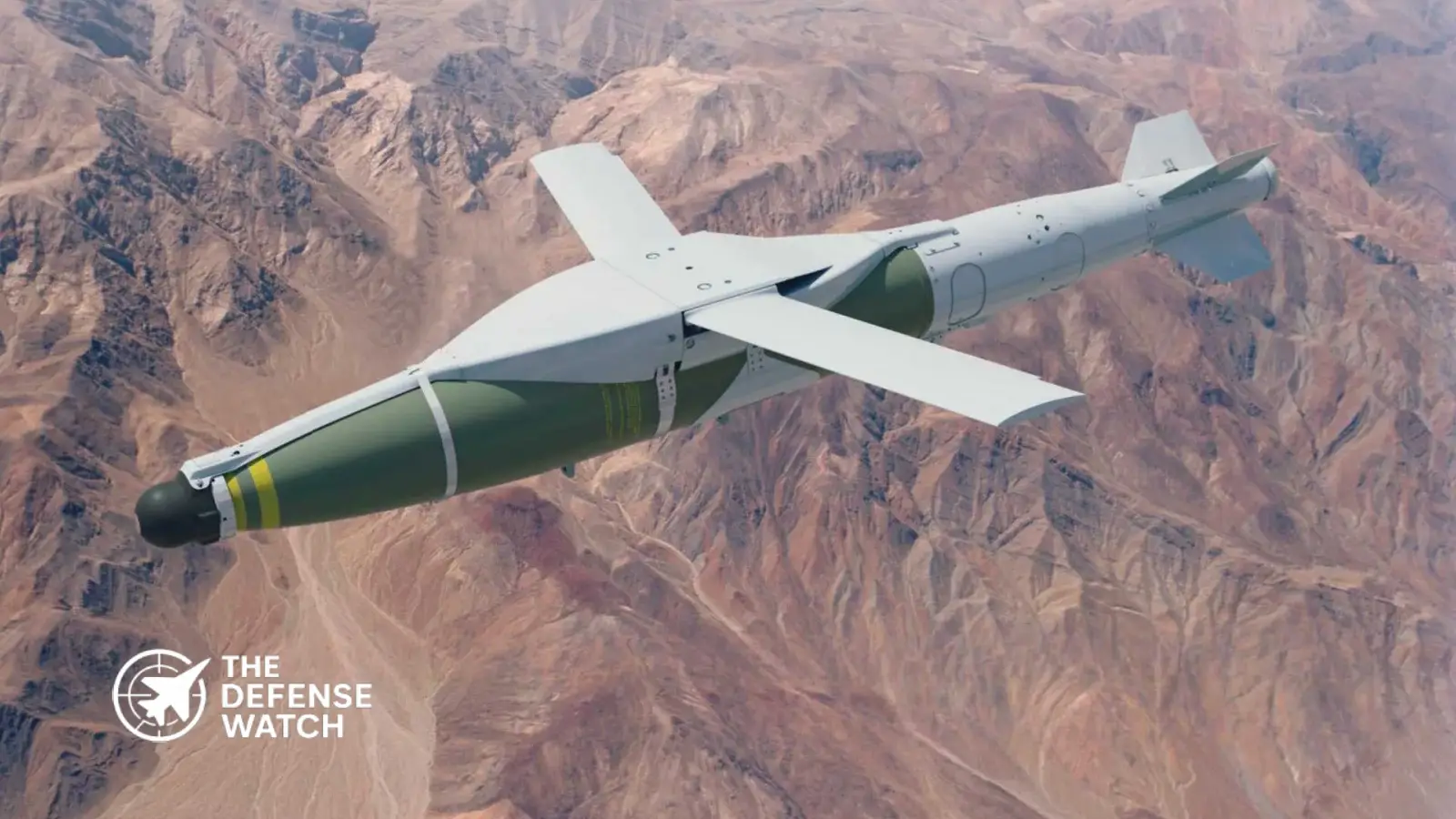
The United States has authorized the transfer of 1,500 Joint Direct Attack Munition-Extended Range (JDAM-ER) kits to Ukraine in a deal valued at $373 million. The systems, produced by Boeing, convert conventional unguided bombs into precision-guided munitions with extended range.
This latest package builds on earlier deliveries of standard JDAM kits and reflects a shift toward longer-range strike solutions. Ukrainian forces have increasingly relied on Western-supplied precision weapons to offset Russia’s numerical advantages in artillery and airpower.
What is JDAM-ER and Why It Matters
The JDAM-ER enhances legacy bombs by adding a GPS guidance system and deployable wings, extending their reach far beyond standard free-fall munitions.
Key Technical Advantages
- Extended Range: Up to 72 km, depending on launch conditions
- High Accuracy: GPS guidance enables strikes within a few meters of target
- Cost Efficiency: Converts existing bomb stockpiles into precision weapons
- All-Weather Capability: Operates in adverse weather conditions
- Stand-off Capability: Allows aircraft to strike without entering high-risk air defense zones
JDAM-ER vs Legacy Unguided Bombs
Feature JDAM-ER Unguided Bombs Range Up to 72 km Limited (free-fall only) Payload Standard bomb compatibility Standard bomb payload Status Operational in Ukraine Legacy systems Key Technology GPS guidance + glide wings None Operational Impact on the Battlefield
The integration of JDAM-ER kits will allow Ukraine to strike logistics hubs, command centers, and fortified positions at greater distances. This reduces exposure of Ukrainian aircraft to Russian air defense systems, a critical factor in contested airspace.
Ukrainian aircraft, including Soviet-era platforms adapted for Western munitions, have already demonstrated the ability to deploy JDAM systems effectively. The ER variant further enhances this capability by increasing stand-off range.
Strategic Context: Shifting Toward Stand-Off Warfare
The delivery comes amid continued fighting in the Russia-Ukraine War, where both sides are investing heavily in precision strike and counter-air defense capabilities.
For the United States, this package underscores a broader strategy:
- Strengthen Ukraine’s deep-strike capability
- Reduce reliance on short-range artillery duels
- Increase pressure on Russian rear-area infrastructure
JDAM-ER also fills a capability gap between traditional artillery and more advanced systems such as cruise missiles, offering a scalable and cost-effective strike option.
Broader Implications for Air Warfare
The deployment of JDAM-ER highlights a growing trend in modern warfare: adapting legacy platforms with precision technology. Instead of relying solely on expensive missiles, militaries are increasingly upgrading existing munitions for greater efficiency and reach.
As the conflict evolves, the emphasis on precision, range, and survivability is likely to intensify, making systems like JDAM-ER central to future air combat operations.
- UK deploys its largest number of combat aircraft to the Middle East in 15 years.
- Deployment includes advanced RAF fighter jets and support aircraft for sustained operations.
- Move aims to strengthen deterrence and support allied operations in a volatile region.
- Deployment reflects ongoing UK military commitments and rapid response capability.
- Marks a significant expansion of British air power projection beyond Europe.
UK Deploys Most Jets To Middle East In 15 Years
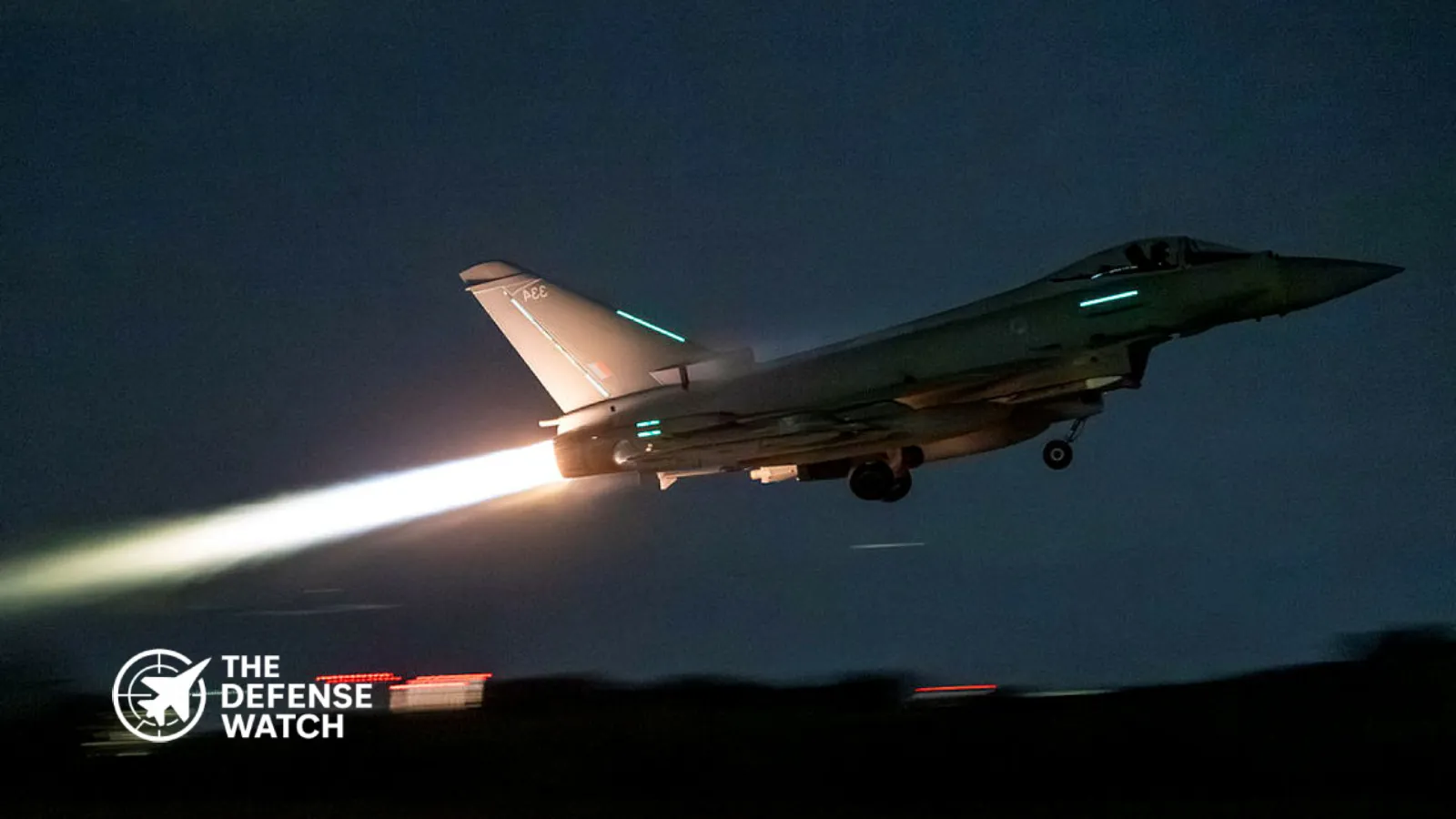
The UK deploys most jets to Middle East in 15 years, significantly expanding Royal Air Force operations in the region as part of a broader effort to reinforce allied presence and maintain regional stability.
The Big Picture
Britain’s latest air deployment reflects a wider shift in NATO and allied force posture toward persistent presence in strategically critical regions. The Middle East remains central to global energy flows, maritime security, and counterterrorism operations.
The United Kingdom has steadily reoriented its military strategy toward expeditionary operations since the release of its Integrated Review. Forward basing, rapid deployment, and coalition interoperability now define British defense planning.
This surge in aircraft deployment also aligns with broader Western efforts to maintain operational flexibility across multiple theaters, including Eastern Europe and the Indo-Pacific, without overcommitting ground forces.
What’s Happening
The Royal Air Force has deployed its largest contingent of jets to the Middle East in over 15 years, according to official reporting. The deployment includes frontline combat aircraft supported by tanker and surveillance platforms, enabling sustained air operations across extended distances.
The aircraft are operating from established UK and allied bases in the region. These locations provide strategic reach across key operational zones, including the Persian Gulf and surrounding airspace.
The deployment comes amid heightened regional tensions and ongoing military operations involving coalition forces. British aircraft are expected to support a mix of missions, including air policing, deterrence patrols, and potential strike operations if required.
Why It Matters
The decision to deploy the largest RAF air package in 15 years signals a clear intent to reinforce deterrence without escalating to large-scale ground deployments.
Air power offers flexibility. Fighter jets can conduct surveillance, intercept hostile aircraft, and deliver precision strikes with minimal footprint. This makes them a preferred tool in politically sensitive environments where escalation risks must remain controlled.
The presence of advanced aircraft also enhances interoperability with US and allied forces already operating in the region. Joint operations rely heavily on shared air assets, data links, and coordinated command structures.
Strategic Implications
The expanded RAF presence strengthens coalition air dominance in the Middle East. It ensures rapid response capability against emerging threats, including missile attacks, drone incursions, and maritime security challenges.
The deployment also reinforces the UK’s role as a key security partner in the region. By committing high-end air assets, London signals reliability to allies while maintaining influence in regional security discussions.
From a deterrence standpoint, the visible presence of combat aircraft complicates adversary planning. It reduces the likelihood of opportunistic actions by signaling readiness and capability.
Competitor View
Regional actors such as Iran are likely to interpret the increased air presence as part of a broader Western effort to contain and monitor its military activities. Increased air patrols and surveillance flights can directly impact operational freedom in contested airspace.
Russia, which maintains a military footprint in parts of the Middle East, may view the deployment through the lens of NATO expansion of influence. However, the RAF’s presence remains aligned with coalition operations rather than unilateral action.
China, while not a direct military actor in the region, continues to monitor Western force deployments closely as part of its global strategic assessment.
What To Watch Next
Operational tempo will provide the clearest indicator of the deployment’s intent. Increased sortie rates, joint exercises, or expanded mission sets could signal a longer-term commitment.
Future rotations of aircraft and personnel will also reveal whether this surge represents a temporary response or a sustained posture shift.
Defense planners will watch for integration with US-led command structures, particularly in areas such as air defense coordination and intelligence sharing.
Capability Gap
The deployment addresses a key gap in rapid-response air power availability in the Middle East. While the UK maintains a global presence, sustained high-tempo operations require forward-deployed assets.
However, limitations remain. Air power alone cannot secure territory or address underlying political instability. It must operate as part of a broader strategy that includes diplomacy and regional partnerships.
Logistical constraints also shape the deployment. Sustaining large numbers of aircraft overseas requires significant tanker support, maintenance capacity, and secure basing arrangements.
The Bottom Line
The UK’s largest jet deployment to the Middle East in 15 years underscores a renewed focus on air power as a flexible and credible tool for deterrence and regional stability.
Eurofighter Typhoon At World Defense Show 2026
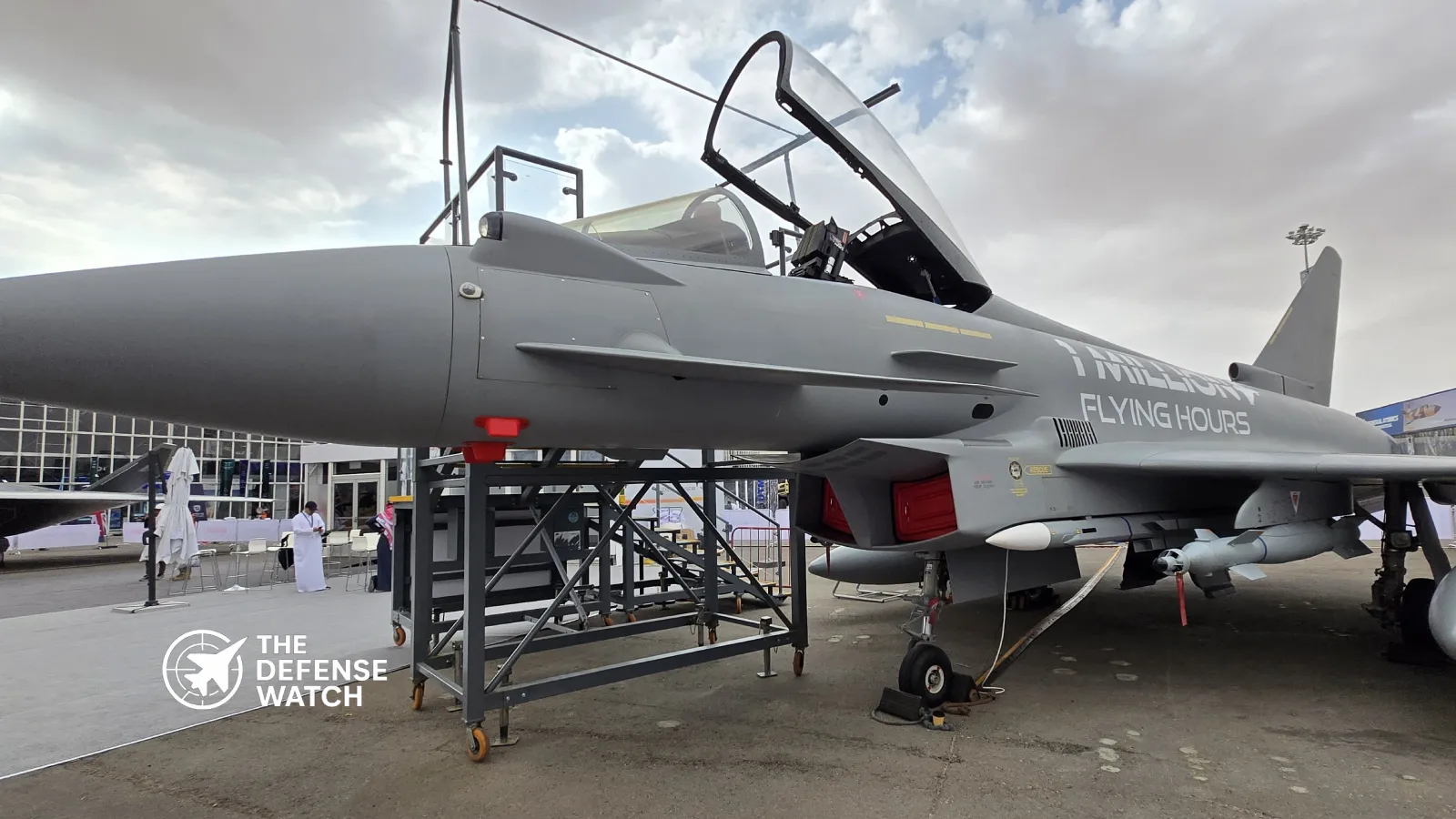
The Eurofighter Typhoon fighter jet took center stage at the World Defense Show 2026 in Riyadh as BAE Systems marked the aircraft’s achievement of one million cumulative flight hours across its global fleet. Displayed prominently in the company’s static exhibition area, the aircraft featured a special One Million Flight Hours insignia highlighting more than two decades of continuous operational service.
(adsbygoogle = window.adsbygoogle || []).push({});The milestone underscores the Eurofighter Typhoon’s role as a frontline multirole combat aircraft operated by several air forces across Europe, the Middle East, and beyond. The display at Saudi Arabia’s flagship defense exhibition placed emphasis on operational maturity, weapons integration, and ongoing modernization efforts rather than future concepts or experimental upgrades.
According to Eurofighter GmbH and BAE Systems data, the combined flight hours were accumulated across thousands of sorties conducted by partner nations including the United Kingdom, Germany, Italy, Spain, Saudi Arabia, and Qatar, among others.
Static Display Highlights Combat Loadout
BAE Systems configured the Eurofighter Typhoon on display with a representative combat weapons package, offering visitors a clear view of the platform’s strike and air dominance capabilities.
The aircraft was shown equipped with the Storm Shadow stealth cruise missile, a long range air launched weapon designed for deep precision strike missions against high value targets. Storm Shadow has been combat tested and remains a core element of the Typhoon’s strike portfolio in several air forces.
Also visible were Brimstone precision guided missiles, optimized for close air support and anti armor roles. Brimstone’s low collateral damage profile and dual mode guidance have made it a preferred option for dynamic targeting environments.

For air to air combat, the display included Meteor beyond visual range air to air missiles. Meteor provides extended engagement range and a high no escape zone, enhancing the Eurofighter Typhoon’s ability to counter advanced aerial threats.
This combination reflects the aircraft’s multirole design philosophy, allowing it to transition between air superiority and strike missions within the same deployment.
Operational Record And Global Fleet
The one million flight hours milestone reflects sustained operational tempo rather than ceremonial flying. Eurofighter Typhoon aircraft have conducted routine air policing, quick reaction alert missions, expeditionary deployments, and combat operations.
(adsbygoogle = window.adsbygoogle || []).push({});Royal Air Force Typhoons continue to support NATO air policing missions over Eastern Europe and the Baltic region. Middle Eastern operators, including the Royal Saudi Air Force and Qatar Emiri Air Force, employ the platform for national air defense and regional security tasks.
Eurofighter GmbH has previously stated that the fleet’s availability rates and mission capable performance have improved steadily through incremental upgrades, supply chain optimization, and software driven enhancements.
Modernization And Upgrade Path
While the static display focused on current capabilities, the Eurofighter Typhoon program continues to evolve. Partner nations are progressing with phased modernization programs aimed at keeping the aircraft relevant into the 2040s.
Key areas include radar upgrades, electronic warfare enhancements, sensor fusion improvements, and expanded weapons compatibility. The ECRS Mk2 AESA radar, led by BAE Systems, is among the most significant upgrades planned for future Royal Air Force Typhoon variants.
(adsbygoogle = window.adsbygoogle || []).push({});These efforts are intended to ensure interoperability with allied air forces and compatibility with emerging command and control architectures.
Strategic Importance Of WDS 2026
The World Defense Show 2026 in Riyadh has emerged as a major platform for aerospace and defense manufacturers targeting Middle Eastern and Asian markets. Saudi Arabia’s focus on defense localization, sustainment, and long term capability development has made the event strategically important for Western defense firms.
By highlighting a proven operational milestone rather than a conceptual prototype, BAE Systems reinforced the Eurofighter Typhoon’s status as a mature, combat ready aircraft with a long service life ahead.
Industry observers note that such displays are aimed at reinforcing confidence among existing operators while supporting long term sustainment and upgrade discussions.