

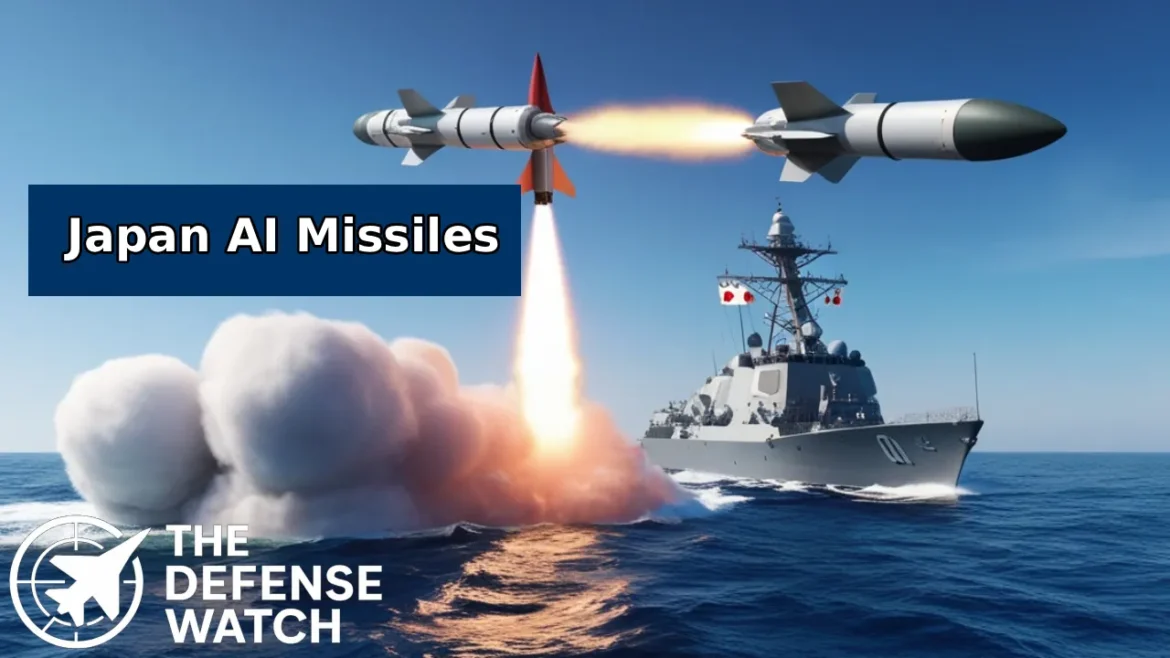
Tokyo, Japan – November 2025 – Japan is actively studying the development of AI-powered anti-ship missiles capable of coordinating with one another during flight, signaling a major step forward in the country’s naval defense capabilities. The program, aimed at strengthening maritime security in the Indo-Pacific, would allow missiles to autonomously share information and adjust attack strategies in real time.
Background: Japan’s Strategic Naval Modernization
Japan’s defense posture has increasingly focused on advanced maritime technologies, partly in response to rising regional tensions in the East and South China Seas. The nation’s Maritime Self-Defense Force (JMSDF) has been upgrading its missile inventory to counter potential threats from hostile vessels and aircraft. This AI-driven initiative represents an evolution beyond conventional guided missile systems, integrating machine learning and networked coordination into missile operations.
According to officials, the new missile concept could function in swarms, enabling multiple missiles to exchange targeting information and optimize attack patterns. The approach leverages artificial intelligence to enhance decision-making, making each missile capable of adjusting its flight path and targeting priority autonomously.
AI Coordination in Missile Operations
Unlike traditional anti-ship missiles that follow a preprogrammed course toward a target, AI-enabled missiles can communicate with one another during flight. This allows the missile group to distribute targets among themselves, avoid countermeasures, and maintain higher probabilities of successful strikes. Military analysts note that swarm coordination could be critical in penetrating modern ship defenses, such as layered radar systems and anti-missile interceptors.
While Japan has not publicly released the full technical specifications, sources indicate the program could integrate high-speed data links, advanced onboard sensors, and adaptive navigation systems. The technology aims to enhance response speed, minimize human intervention, and improve the efficiency of missile attacks in contested environments.
Expert and Policy Perspective
Dr. Hiroshi Nakamura, a defense analyst at Tokyo Maritime Studies Institute, stated, “This initiative represents a transformative step in missile technology. AI coordination allows the missiles to operate as a collective system, which could significantly increase operational effectiveness while reducing the risk to human personnel.”
The development also aligns with Japan’s broader defense modernization strategy, which emphasizes autonomous systems and AI applications across land, air, and maritime domains. The Ministry of Defense has stressed that research into AI-driven weapons is being pursued with strict adherence to ethical guidelines and international regulations.
Potential Implications
If successfully deployed, AI-powered anti-ship missiles could alter naval dynamics in the region by offering the JMSDF a rapid, adaptable, and networked strike capability. This could provide a credible deterrent against large surface fleets and potentially shift strategic calculations for neighboring powers.
Experts suggest that beyond Japan, several other countries are exploring similar autonomous weapon technologies, highlighting a growing trend in AI-enabled combat systems. The integration of AI in missile warfare underscores the increasing importance of technological superiority in modern naval conflicts.
Next Steps
Japan is expected to conduct extensive simulations and controlled trials before operational deployment. Collaboration with domestic defense contractors and research institutions will likely continue to refine AI algorithms, data communication protocols, and missile guidance systems. Observers anticipate that the first experimental launches could occur within the next few years, pending funding approvals and successful testing milestones.
As AI continues to reshape defense strategies globally, Japan’s exploration of networked missile swarms demonstrates its commitment to maintaining technological edge and strengthening maritime security in an evolving strategic landscape.