India’s Nuclear Arsenal Reaches 190 Warheads
India is estimated to have an inventory of about 190 nuclear warheads as of January 2026, according to the Stockholm International Peace Research Institute. The figure places India ahead of Pakistan’s estimated 170 warheads, but the more important development is the continued modernization of the delivery systems used to support India’s nuclear deterrent.
A separate 2026 assessment by the Federation of American Scientists estimates that more than 160 Indian warheads are associated with operational delivery systems, with roughly 30 additional warheads produced for missiles still in production. Because India does not publicly disclose the size of its nuclear stockpile, these figures remain open-source estimates rather than official inventory data.
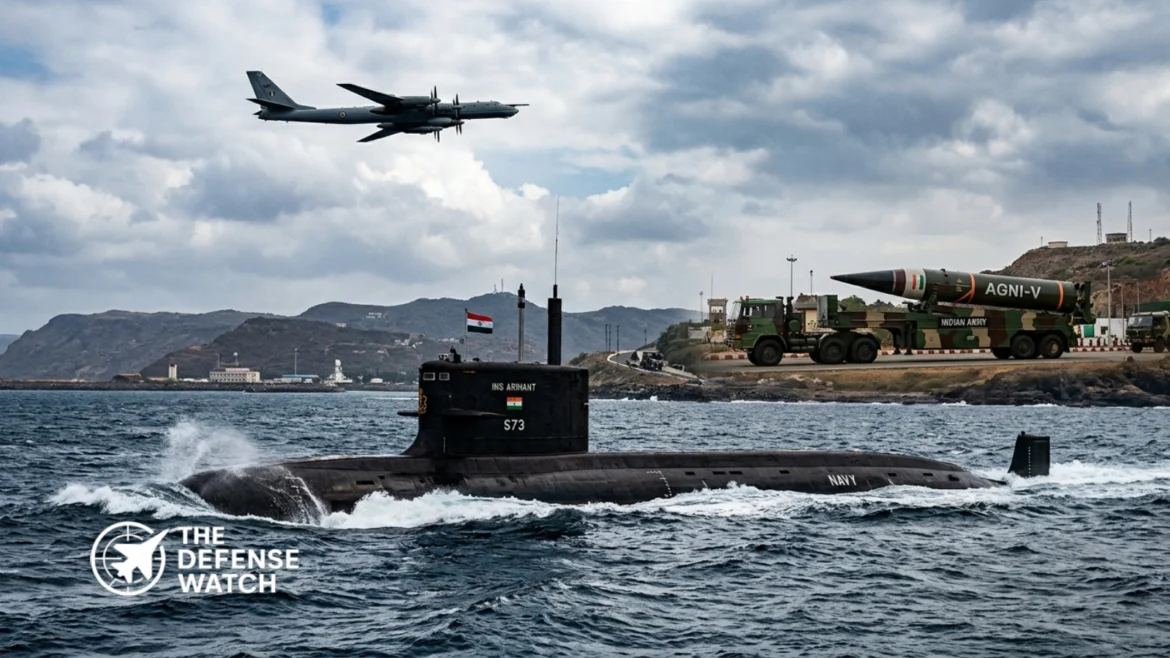
The distinction matters. India’s nuclear posture is not defined simply by the number of warheads. Its strategic direction is increasingly visible through the development of land based ballistic missiles, nuclear capable aircraft and ballistic missile submarines, giving New Delhi the three legs of a nuclear triad.
The 190 warhead figure is an estimate, not an official count
SIPRI’s 2026 assessment puts India’s total nuclear inventory at approximately 190 warheads. Its methodology distinguishes between deployed warheads, the broader military stockpile and the total inventory.
SIPRI assessed 12 Indian warheads as deployed at the beginning of 2026, while the total inventory was estimated at 190. The organization also cautions that its nuclear force figures are estimates and are revised as new information becomes available.
That makes the 190 figure useful for assessing the direction of India’s nuclear modernization, but it should not be presented as a number confirmed by the Indian government.
The Federation of American Scientists reached a similar overall figure through a different open-source assessment. Its Nuclear Notebook analysis estimates that India has more than 160 warheads for operational launchers, with additional warheads being produced for newer delivery systems.
India’s triad is becoming more credible at sea
The naval component is particularly important because ballistic missile submarines provide a survivable platform for a retaliatory nuclear force.
India commissioned its second Arihant class nuclear powered ballistic missile submarine, INS Arighaat, at Visakhapatnam on August 29, 2024. India’s Ministry of Defence said the submarine would strengthen the country’s nuclear triad and nuclear deterrence.
The significance of the submarine force is less about the number of missiles carried by an individual boat and more about survivability. A submarine operating undetected at sea is harder for an adversary to locate and destroy than a fixed facility or a known land based launcher.
India therefore does not need to match the much larger submarine forces operated by the United States, Russia or China for the sea based leg to have strategic value. Its purpose is to ensure that an adversary cannot assume that a first strike could eliminate India’s ability to retaliate.
The Federation of American Scientists estimates that India operates one sea based ballistic missile system and identifies additional submarines as part of the country’s continuing nuclear force development.
Land based missiles remain the backbone
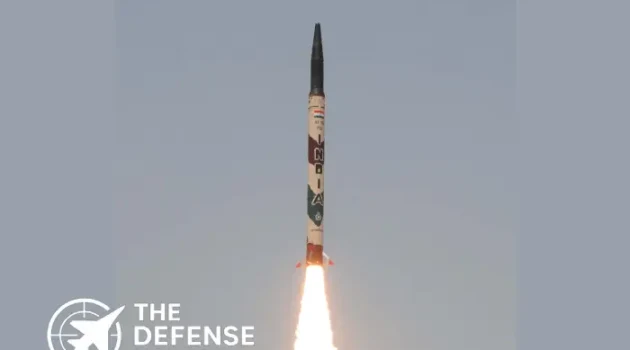
India’s land based nuclear force remains centered on the Agni family of ballistic missiles, which provides the country with a range of delivery options.
One of the most consequential developments has been India’s work on multiple independently targetable reentry vehicle, or MIRV, technology.
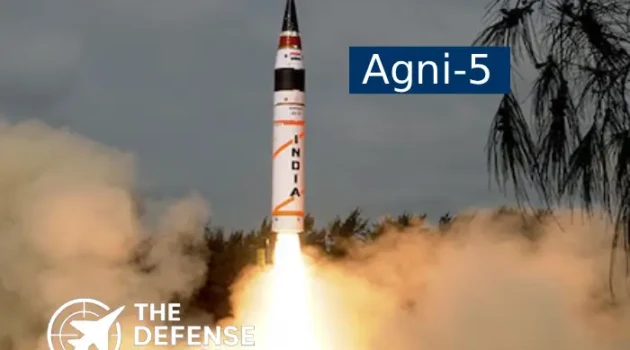
India’s Defence Research and Development Organisation conducted the first flight test of an Agni 5 missile equipped with MIRV technology in March 2024. The Indian government said telemetry and radar stations tracked multiple reentry vehicles during the Mission Divyastra test.
MIRV technology can allow a single ballistic missile to deliver multiple independently targeted reentry vehicles. It can therefore increase the number of potential targets covered by a missile and complicate missile defense planning.
However, the 2024 test should not automatically be interpreted as evidence that India’s operational Agni 5 force has already been equipped with MIRVs at scale. Public information does not establish the number of operational MIRV equipped missiles or the number of nuclear warheads assigned to them.
That distinction is important when assessing India’s nuclear modernization. A successful technology demonstration is not the same thing as a fully deployed operational capability.
The China factor is becoming harder to ignore
India’s nuclear strategy has historically been closely linked to Pakistan, but the geography of its missile modernization increasingly points toward a second requirement: maintaining a credible deterrent against China.
SIPRI’s 2026 assessment specifically notes that India’s modernization program is increasingly focused on developing longer range weapons capable of reaching targets throughout China, while planning continues to address the country’s longstanding rivalry with Pakistan.
This is a significant change in the strategic context.
Pakistan remains India’s most immediate nuclear rival and possesses an estimated 170 warheads, according to SIPRI. China, however, has a vastly larger and rapidly expanding arsenal. SIPRI estimated China’s nuclear inventory at about 620 warheads at the beginning of 2026, compared with India’s 190.
India therefore faces two different deterrence problems.
Against Pakistan, geography permits shorter range delivery systems to cover potential targets. Against China, India needs systems capable of reaching targets across a much larger geographic area. That requirement helps explain why India’s nuclear modernization is increasingly associated with longer range missiles and a more capable submarine force.
Air power provides the third leg
India’s nuclear triad also includes nuclear capable aircraft. The air component provides a different form of flexibility from ballistic missiles.
Aircraft can be dispersed, recalled before weapon release and used to signal readiness without necessarily committing to a missile launch. They can also provide a degree of ambiguity that is more difficult to achieve with fixed missile forces.
The tradeoff is survivability. Aircraft operating from known bases can be vulnerable during a major conflict, particularly if an adversary has the ability to strike airfields and supporting infrastructure.
This is one reason the development of the sea based component is strategically important. A more credible submarine force can reduce reliance on vulnerable land and air bases for maintaining a retaliatory capability.
What the 190 warhead estimate does not tell us
The headline number should not be confused with India’s immediately available nuclear striking power.
Open-source estimates cannot establish the precise allocation of individual warheads among aircraft, land based missiles and submarine launched systems. Nor do they provide a complete picture of India’s readiness procedures, storage arrangements or command and control architecture.
SIPRI’s assessment of 12 deployed warheads is therefore particularly significant, but it should also be treated as an external assessment rather than an official declaration by New Delhi.
India’s stated nuclear doctrine continues to emphasize credible minimum deterrence and a no first use posture. The Indian Ministry of External Affairs has publicly described its nuclear doctrine in those terms.
The modernization of delivery systems does not, by itself, prove a change in that doctrine.
A smaller force with increasingly sophisticated delivery systems
India’s nuclear arsenal remains much smaller than those of the United States, Russia and China. Its modernization program is instead aimed at improving the survivability, reach and credibility of a relatively limited deterrent.
The combination of Agni ballistic missiles, nuclear capable aircraft and Arihant class ballistic missile submarines gives India the basic structure required for a triad. The addition of MIRV technology and newer submarine capabilities indicates that modernization is moving beyond simply maintaining legacy delivery systems.
The strategic challenge for New Delhi is balancing this modernization against its stated objective of credible minimum deterrence.
For Pakistan, India’s growing capabilities reinforce an already established nuclear competition. For China, the development of longer range systems and a more survivable sea based force gives India’s deterrent a broader geographic purpose.
The available evidence does not establish that India is seeking numerical parity with either country. Instead, the 190 warhead estimate and ongoing delivery system modernization point toward a force designed to preserve a credible retaliatory capability while giving Indian planners greater flexibility across land, air and sea based systems.