

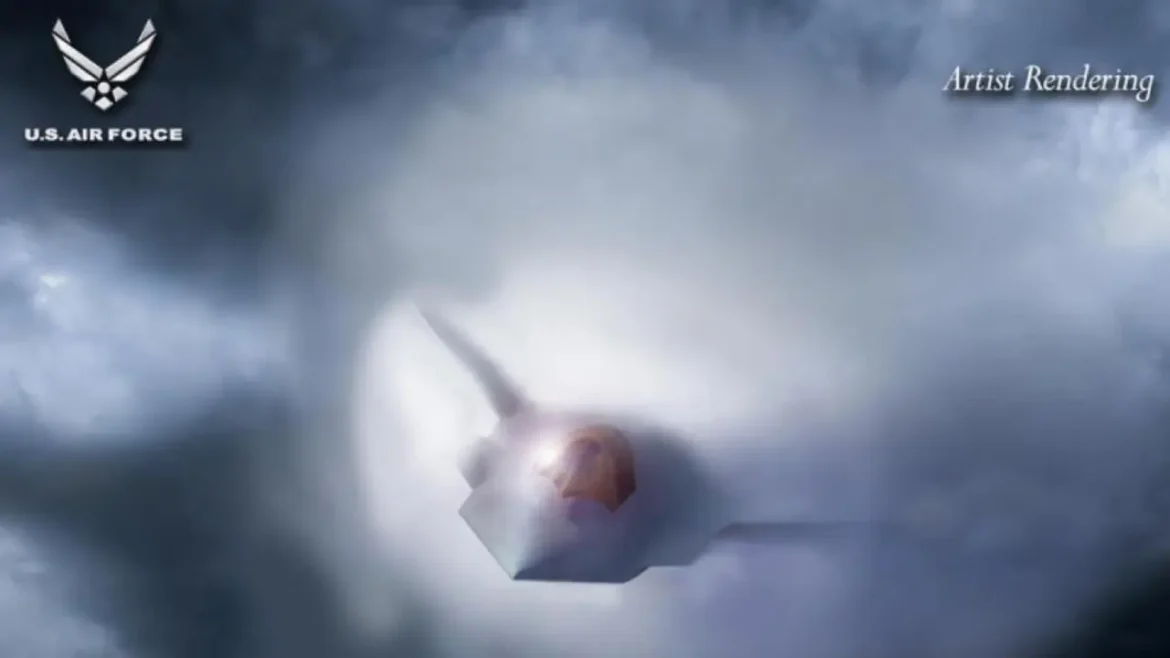
Boeing F-47 fighter jet: The Next Leap in Air Dominance
In March 2025, Boeing was awarded a milestone contract to develop the U.S. Air Force’s Next Generation Air Dominance (NGAD) fighter, designated F-47—a crewed, stealthy sixth-generation air superiority platform intended to succeed the F-22 Raptor. The Boeing F-47 fighter jet is the centerpiece of the NGAD family of systems, designed to operate seamlessly with unmanned Collaborative Combat Aircraft (CCAs), pioneering manned–unmanned teaming (MUM-T).
Design Goals: Stealth, Speed, Range
Although much of the F-47’s design remains classified, the Air Force has emphasized that it will offer significantly longer range, enhanced stealth, higher availability, and lower lifecycle costs versus fifth-generation fighters like the F-22 and F-35. Public infographics indicate a combat radius exceeding 1,000 nautical miles, and top speeds above Mach 2. The USAF plans to procure at least 185 F-47 jets.
Power: Adaptive Cycle Engines
Core to achieving extended range and high-speed performance are adaptive cycle turbofan engines, capable of switching efficiently between high-bypass and low-bypass modes mid-flight. These engines offer the dual benefits of fuel efficiency and powerful thrust—ideal for long transits and sudden bursts of speed, while generating greater electrical power and thermal management for advanced sensors.
Design Speculation — and Misdirection
Release of initial artist renderings sparked intrigue: visible canards and a tailless, dihedral-wing profile sparked debate, though analysts caution that these might be deliberate misdirections, not truly indicative of the final design. Such visual cues may mimic Boeing’s experimental Bird of Prey program as an obfuscation strategy.
DARPA’s Foundation: X-Plane Testing
The F-47’s development is rooted in a decade of advanced testing. DARPA funded X-plane demonstrators first flown in 2019 and 2022, which have accumulated hundreds of flight hours testing stealth, autonomy, and next-gen design concepts.
Industrial Priorities: Funding and Challenges
The Fiscal Year 2026 Pentagon budget request allocates approximately $3.5 billion toward the F-47, while drastically reducing funding for the Navy’s rival sixth-generation F/A-XX program—reflecting a strategic decision to prioritize one major fighter and avoid over-stretching the industrial base.
However, the program is already facing headwinds: engine development has reportedly slipped by up to two years, and labor disputes at Boeing’s St. Louis production facility raise the potential for strikes that could disrupt timelines.
Strategic Imperatives: Mass Matters
Planners have underscored that in future scenarios—particularly in the vast Indo-Pacific—the F-47’s impact will hinge not just on capability, but on numbers. A large, networked fleet of long-range fighters and CCAs is deemed essential to overwhelm sophisticated defenses and shorten sensor-to-shooter timelines
FAQs
The F-47 offers extended range (>1,000 nm), Mach 2+ speed, improved stealth and availability, lower costs, and networked operations with drones, surpassing the F-22’s performance envelope.
These engines, like GE’s XA102 or Pratt & Whitney’s XA103, can switch airflow configurations mid-flight for both efficiency and high thrust, improving range, performance, and onboard power for advanced systems.
CCAs extend mission capabilities—such as surveillance, jamming, or extra missiles—while reducing risk to pilots. The F-47 acts as a “queen,” commanding drone “pawns” across contested airspace.
Estimates suggest initial fielding between 2025 and 2029, with more realistic full availability projected in the 2030s.