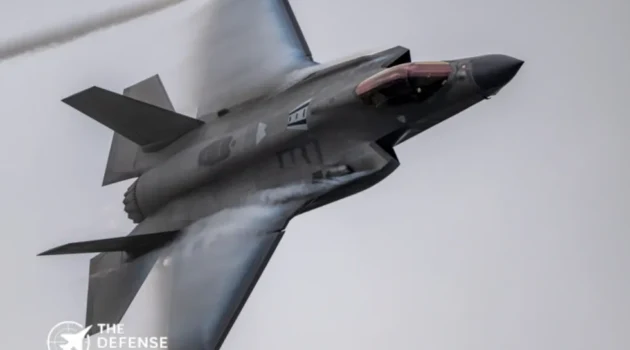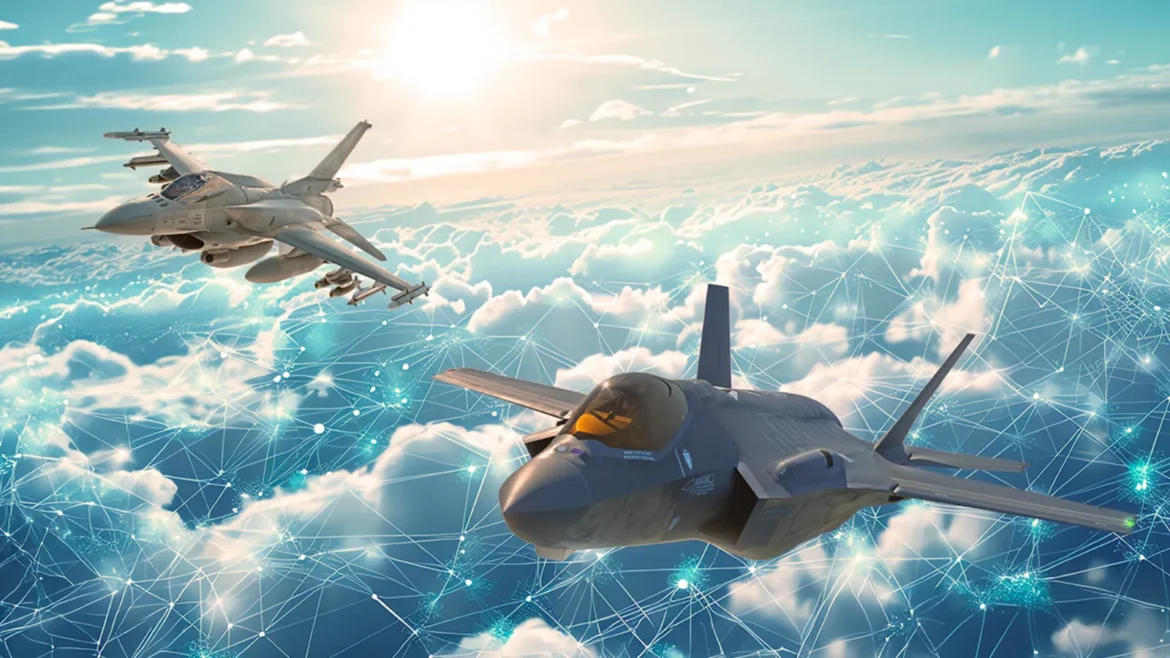
On August 7, 2026, Lockheed Martin outlined a missile-defense architecture that reframes one of its own flagship products. The F-35 Lightning II, long marketed primarily as a fifth-generation stealth fighter, is now being positioned as something closer to a mobile sensor platform — an airborne node capable of feeding tracking and targeting data into a network that spans space-based satellites, command-and-control systems, and interceptor missiles.
The presentation, framed around the phrase “Speed Wins: Modern Defense,” is less about a new piece of hardware than a new way of connecting hardware Lockheed already builds. And that distinction matters, because the company says the technologies involved aren’t conceptual — they’re described as mature and already available to operational forces.
How the Kill Chain Works
The architecture Lockheed describes follows a specific sequence. An overhead persistent infrared satellite first detects a missile launch from space. From there, F-35 aircraft operating in the vicinity of the threat refine that initial track using their own onboard sensors — principally the Distributed Aperture System (DAS), which provides spherical infrared coverage around the aircraft, and the Electro-Optical Targeting System (EOTS), combined with the jet’s advanced onboard data-fusion software.
That refined tracking and targeting information then feeds into the Command and Control, Battle Management and Communications system, or C2BMC — Lockheed’s own system for building a shared operational picture across the missile-defense enterprise. From C2BMC, the data is distributed to the systems responsible for actually intercepting the threat: the Terminal High Altitude Area Defense (THAAD) system and the Next Generation Interceptor (NGI), which is being developed as the backbone of U.S. homeland ballistic-missile defense.
Why “Architecture-Centric” Matters
Lockheed has framed this as a shift from platform-centric warfare to architecture-centric warfare — the idea that an individual platform’s value increasingly comes from what it unlocks for the rest of the force, not just its own specifications. In practical terms, that means the F-35 doesn’t need to fire a shot to contribute meaningfully to a missile-defense engagement. Its stealth, mobility, and sensor suite are reframed as inputs to somebody else’s shot.
That has a specific tactical payoff: launch-on-remote and engage-on-remote operations. Rather than a THAAD battery or an NGI site having to build a complete, independent track using its own organic radar before engaging, it could begin an engagement using tracking data generated by a distant sensor — an F-35 orbiting elsewhere in theater, or a satellite overhead. Shortening that sequence compresses the overall sensor-to-shooter timeline, which matters enormously against fast, maneuvering threats where every second of decision time counts.
What This Solves — and What It Doesn’t
The stated goal is straightforward: reduce the time between detecting a missile launch and actually engaging it, particularly against threats — including emerging hypersonic weapons — where traditional, sensor-isolated defenses may not have enough time to build an independent track before the threat arrives.
But the architecture, as publicly described, remains a high-level vision rather than a fielded, tested system with disclosed performance data. Open questions include the actual operational latency of the data links involved, the classified interface standards required to connect an F-35’s sensor suite to C2BMC in real time, the reliability of track-handoff between platforms, cybersecurity safeguards for a network that touches both a stealth fighter’s sensor data and national missile-defense command systems, and — critically — how the approach performs against sophisticated, maneuvering hypersonic weapons and coordinated electronic warfare, rather than more predictable ballistic threats.
There’s also a resourcing question worth flagging: tasking a multi-role, high-demand, expensive stealth fighter with a persistent sensor-node role is a different mission profile than air superiority or strike, and it raises questions about availability trade-offs if F-35s are increasingly expected to loiter in a tracking role during a live missile-defense scenario.
Comparing the Architecture’s Building Blocks
Element Role in the Architecture Status Overhead persistent infrared satellites Initial launch detection from space Operational F-35 (DAS, EOTS, data fusion) Airborne track refinement and targeting node Concept built on fielded aircraft/sensors C2BMC Fuses inputs into a shared operational picture Operational, Lockheed-built THAAD Terminal-phase intercept Operational Next Generation Interceptor (NGI) Homeland ballistic-missile intercept backbone In development FAQ
What did Lockheed Martin announce on August 7, 2026?Lockheed Martin outlined a missile-defense architecture in which the F-35 Lightning II acts as an airborne tracking and targeting node, feeding data into a network that links space-based sensors, the C2BMC command system, THAAD, and the Next Generation Interceptor.
How does the F-35 contribute to missile defense without firing weapons?The F-35 uses its Distributed Aperture System, Electro-Optical Targeting System, and onboard data-fusion software to detect and refine tracks on missile threats, then passes that tracking and targeting data into C2BMC, which distributes it to interceptor systems like THAAD and NGI.
What is C2BMC?C2BMC stands for Command and Control, Battle Management and Communications — a Lockheed Martin-developed system that fuses data from multiple sensors into a single operational picture and routes tracking and targeting information to the appropriate missile-defense interceptors.
What is “launch-on-remote” or “engage-on-remote” and why does it matter?It refers to an interceptor battery beginning an engagement using tracking data generated by a remote sensor — such as an F-35 or a satellite — rather than waiting to independently build a complete track with its own radar. This can significantly shorten the time between detection and engagement.
Is this a new F-35 capability or a new missile-defense system?Neither, strictly speaking. Lockheed describes the underlying technologies — the F-35’s sensors, C2BMC, THAAD, and NGI — as already mature and operationally available. The announcement is about a new architecture for connecting them, not a new piece of hardware.
The Support-Class Analogy
Strategy-game players will recognize the logic here immediately. A scout or support unit that never fires a shot can still decide the outcome of a fight simply by revealing the map and feeding targeting data to your heavy hitters — vision control wins games as often as raw damage output does. Lockheed’s pitch effectively recasts the F-35 as that support-class unit for national missile defense: its combat value isn’t measured only by what it can shoot down itself, but by how much faster it lets THAAD and NGI batteries react once a threat is airborne. In a domain where intercept windows are measured in seconds, being the unit that calls the shot early can matter as much as being the unit that takes it.