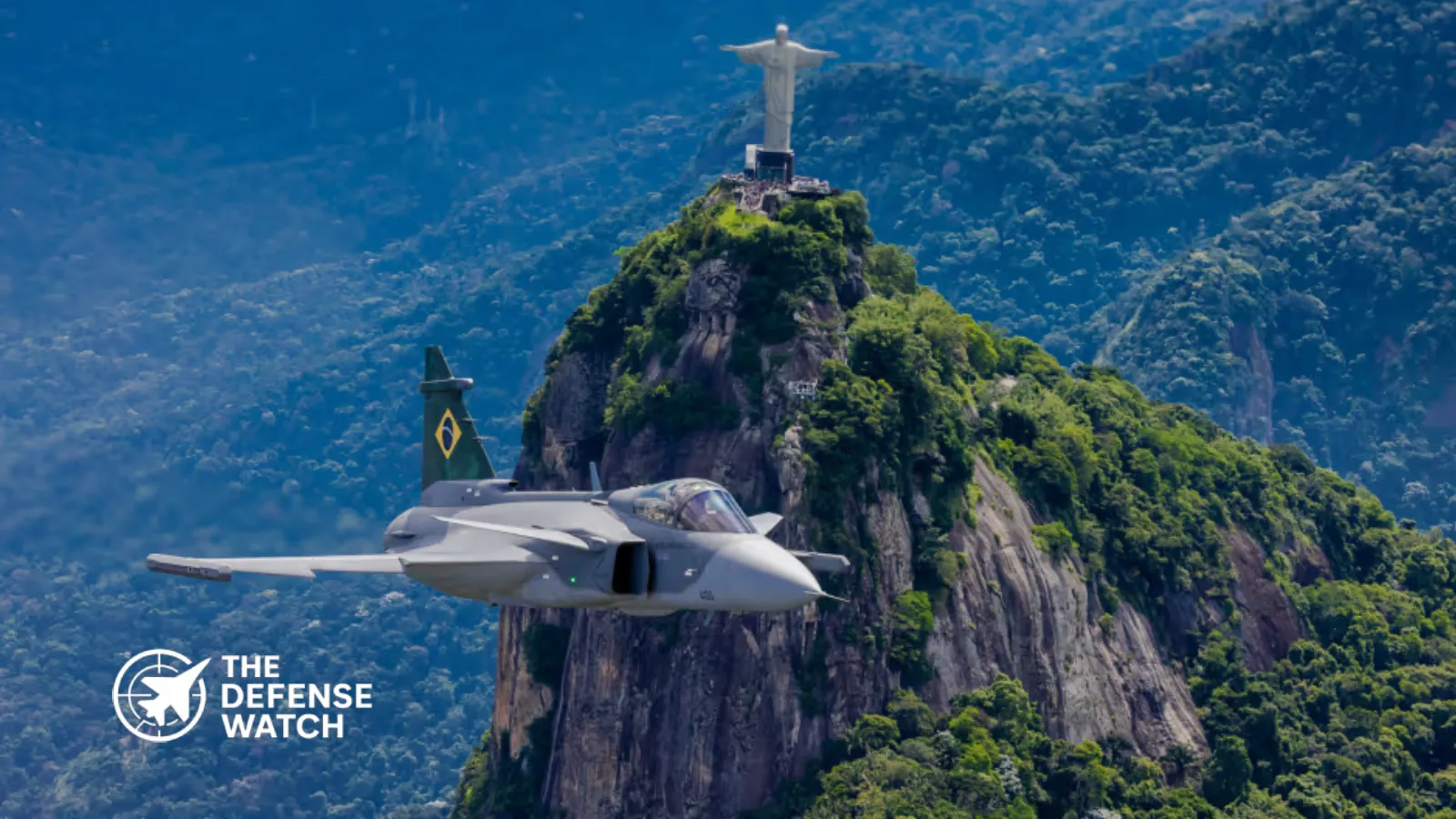
Saab Gripen E/F Production Ramps With Brazil Assembly Line
Saab’s target to build 36 Gripen E/F fighters per year marks a major shift in production capacity for one of the world’s key light combat aircraft programmes. The Swedish defence firm is boosting output as its Brazilian assembly line prepares to deliver its first aircraft to the Brazilian Air Force (FAB) this year.
The plan was outlined at the Singapore Airshow where Saab’s marketing lead for the Gripen programme said the company is investing heavily to raise production capacity. The goal is to reach a steady annual rate of 36 aircraft, reflecting both existing orders and potential future contracts.
Brazil Becomes First Latin American Fighter Producer
Saab and Brazilian partner Embraer established a final assembly line in Gavião Peixoto, São Paulo State, where the first locally assembled Gripen will be delivered in early 2026. This facility will handle final assembly for a portion of Brazil’s 36-aircraft order, under a broad tech transfer agreement between the two companies.
The Brazil line is the only Gripen final assembly site outside Sweden and represents a major milestone in Brazil’s aerospace sector. Embraer’s workforce has been trained in Sweden and will complete fighter assembly, functional testing and production flights prior to delivery.
Growing Global Demand for Gripen E/F
Brazil is the launch customer for the F-39 designation of the Gripen E/F, but the production increase is linked to wider international interest. Saab cites firm orders and ongoing opportunities in markets including Sweden, Colombia, and Thailand as underpinning the need for greater output.
Other countries have expressed interest in the aircraft as a cost-effective alternative to heavier jets, and Saab has discussed production options in Canada, potentially duplicating the Brazil model of local assembly.
Production Challenges and Delivery Timeline
Aircraft programmes of this scale often face schedule pressures. Independent reporting suggests Brazil’s deliveries, originally expected to finish in the mid-2020s, may now extend to around 2032 given contractual changes and budgetary factors.
So far Brazil has received several Swedish-built Gripen Es, with the locally assembled jets soon to join the fleet. Fifteen of the 36 jets are slated for assembly at the Brazilian line, with the balance completed in Sweden.
Strategic Context for Saab and Global Air Forces
The effort to scale Gripen production comes against a backdrop of shifting global fighter markets. Non-US manufacturers such as Saab are gaining traction as some customers seek alternatives to traditional suppliers amid changing geopolitical currents.
For the Brazilian Air Force, the F-39 fleet is central to its modernisation drive, replacing older jets and providing a multi-role capability. The expansion of production throughput could give Saab a competitive edge in future international tenders.
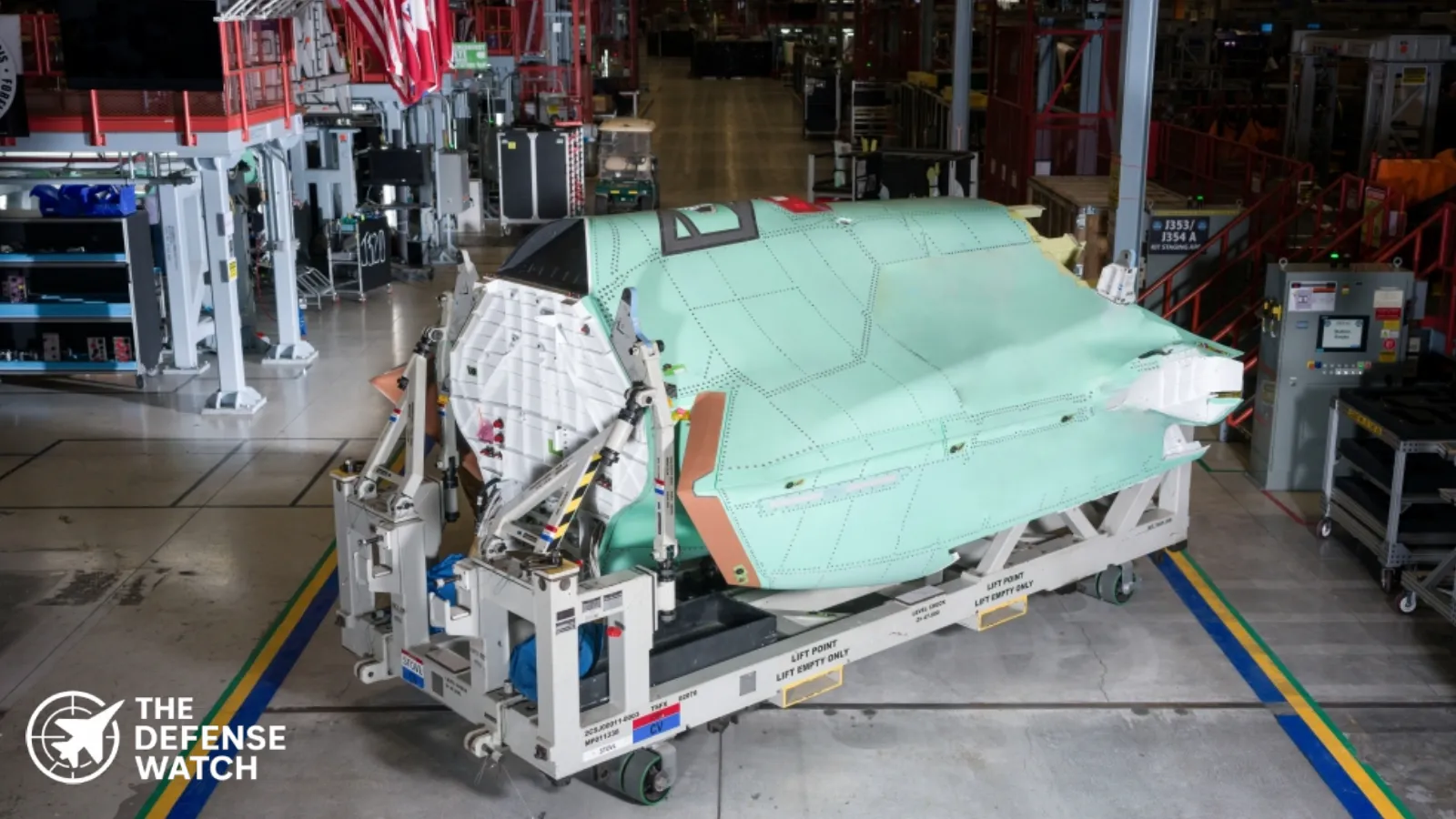
Northrop Grumman Delivers 1,500th F 35 Center Fuselage
Northrop Grumman has delivered its 1,500th F 35 center fuselage, marking a major production milestone for the F 35 Lightning II program and the broader U.S. and allied fighter fleet.
The center fuselage is a critical structural section of the aircraft, integrating the cockpit, weapons bays, and key avionics. Northrop Grumman produces the component at its Integrated Assembly Line in Palmdale, California, before shipping it to Lockheed Martin for final aircraft assembly.
According to the company, the delivery reflects more than a decade of continuous manufacturing in support of the Joint Strike Fighter program. The F 35 center fuselage is common across all three variants of the aircraft, including the conventional takeoff F 35A, the short takeoff and vertical landing F 35B, and the carrier based F 35C.
Northrop Grumman stated that its role in the F 35 program extends beyond fuselage production. The company also provides the AN APG 81 active electronically scanned array radar, communications subsystems, and mission systems integration support. These components are central to the aircraft’s stealth, sensor fusion, and multi domain capabilities.
The F 35 program remains the largest fighter aircraft program in the world, with more than 1,000 aircraft delivered globally and operators across the U.S. military and allied air forces. Sustained delivery of the F 35 center fuselage supports ongoing production lots and long term fleet growth.
Industry officials have consistently highlighted the importance of production stability and supply chain resilience as the program transitions toward sustainment and modernization. The 1,500th fuselage delivery underscores the maturity of the industrial base supporting the F 35.