Executive Summary:
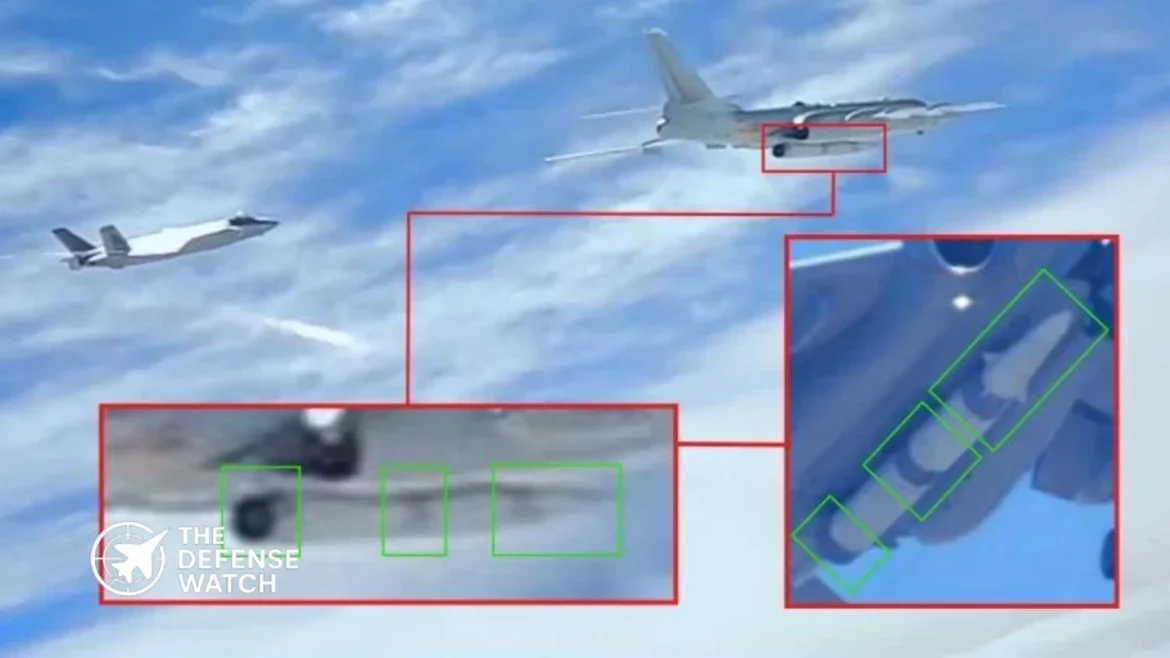
China has released its first official in flight footage showing an H-6N strategic bomber carrying the JL-1 nuclear capable air launched ballistic missile while escorted by two J-20 stealth fighters. The imagery highlights Beijing’s continued efforts to strengthen its long range conventional and nuclear strike capabilities while demonstrating an increasingly integrated strategic air force.
China Reveals H-6N Bomber Carrying JL-1 Air Launched Ballistic Missile
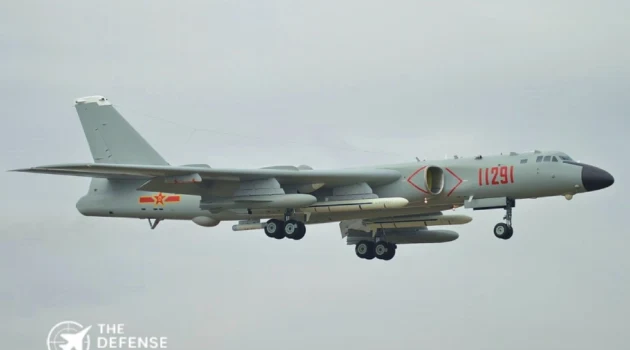
China has publicly released the first in flight footage of an H-6N bomber carrying the JL-1 air launched ballistic missile (ALBM), providing the clearest official view to date of one of the country’s most significant strategic aviation capabilities.
The video shows the H-6N operating with two J-20 fifth generation stealth fighters, underscoring the People’s Liberation Army Air Force’s emphasis on integrating strategic bombers with advanced fighter escorts during long range missions.
The release marks another step in China’s effort to showcase key elements of its evolving strategic deterrent while demonstrating improvements in long range strike operations.
First Official View of the JL-1 Air Launched Ballistic Missile
The footage provides the first official confirmation of the H-6N carrying the large externally mounted JL-1 missile beneath its fuselage.
Unlike earlier H-6 bomber variants, the H-6N was specifically modified with a recessed fuselage section to accommodate oversized weapons, including air launched ballistic missiles. The aircraft also incorporates aerial refueling capability, allowing significantly longer mission endurance than previous members of the H-6 family.
Defense analysts have long assessed that the H-6N was developed to serve as China’s first dedicated airborne platform for launching ballistic missiles capable of striking targets far beyond the reach of conventional cruise missiles.
JL-1 Strengthens China’s Long Range Strike Options
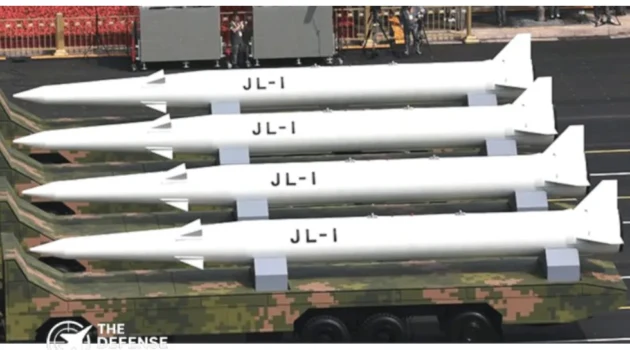
The JL-1 air launched ballistic missile is believed to be a nuclear capable weapon designed to expand China’s strategic strike flexibility.
Open source defense assessments indicate the missile offers an estimated range approaching 8,000 kilometers, depending on launch profile and payload configuration.
Key reported capabilities include:
- Nuclear capable payload
- Air launched ballistic trajectory
- Hypersonic reentry vehicle
- Long range land attack capability
- Potential anti ship strike capability against high value naval targets
Launching a ballistic missile from an airborne platform extends operational reach because the missile begins its flight at altitude and speed rather than from a fixed ground launcher.
This combination increases deployment flexibility while complicating an adversary’s early warning and missile defense planning.
J-20 Escort Highlights Integrated Air Operations
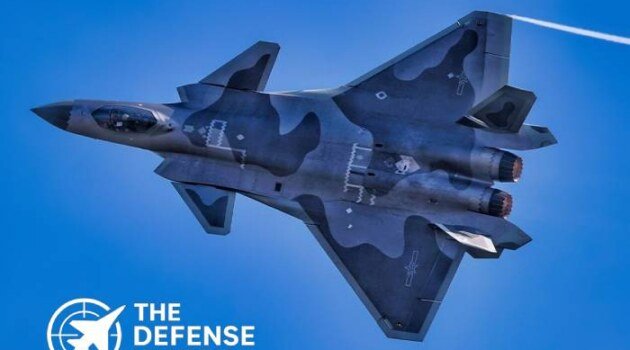
Another notable aspect of the released footage is the presence of two J-20 stealth fighters accompanying the H-6N.
The J-20 is China’s premier fifth generation fighter and is increasingly tasked with protecting high value airborne assets during long range operations.
Operating strategic bombers alongside stealth fighters reflects an evolving operational concept similar to those employed by other major air forces, where escorts enhance survivability against advanced air defense systems and hostile fighters.
The pairing also demonstrates improvements in command, control, and coordinated air operations across multiple aircraft types.
Strategic Significance Beyond the Video
While the footage primarily serves as an official demonstration, it also reflects broader trends within China’s military modernization program.
Over the past decade, Beijing has invested heavily in expanding its strategic aviation capabilities through new bombers, long range precision weapons, hypersonic systems, aerial refueling assets, and advanced fighter aircraft.
The H-6N forms an important component of this modernization effort by providing an airborne launch platform capable of supporting both conventional and nuclear missions.
For regional militaries and defense planners, an operational air launched ballistic missile introduces additional complexity compared with traditional ground based missile forces. Airborne launch platforms can approach from multiple directions, operate over vast distances with tanker support, and create less predictable attack profiles.
Although many technical details of the JL-1 remain classified, the newly released imagery offers additional visual confirmation of a capability that analysts have monitored for several years.
Regional Security Implications
The appearance of the H-6N carrying the JL-1 comes as security competition across the Indo-Pacific continues to intensify.
China has accelerated modernization across its air, naval, missile, and space forces while regional countries and the United States continue investing in integrated air and missile defense, advanced fighters, and long range precision strike systems.
The release of official imagery is therefore significant not only as a technological milestone but also as a strategic communication effort highlighting China’s expanding long range deterrence capabilities.
While the video does not reveal new technical specifications, it provides valuable confirmation of an operational configuration that had previously been observed primarily through satellite imagery and unofficial photographs.
Conclusion
China’s first official in flight footage of the H-6N bomber carrying the JL-1 air launched ballistic missile represents an important public demonstration of its evolving long range strike capabilities. Combined with J-20 stealth fighter escorts, the imagery illustrates an increasingly integrated strategic aviation force capable of supporting both conventional and nuclear deterrence missions.
Although many characteristics of the JL-1 remain undisclosed, the footage reinforces assessments that China continues to expand the flexibility, reach, and survivability of its strategic air power as part of its broader military modernization strategy.