Hungary Gripen Fighters Delivery Strengthens Air Force Fleet
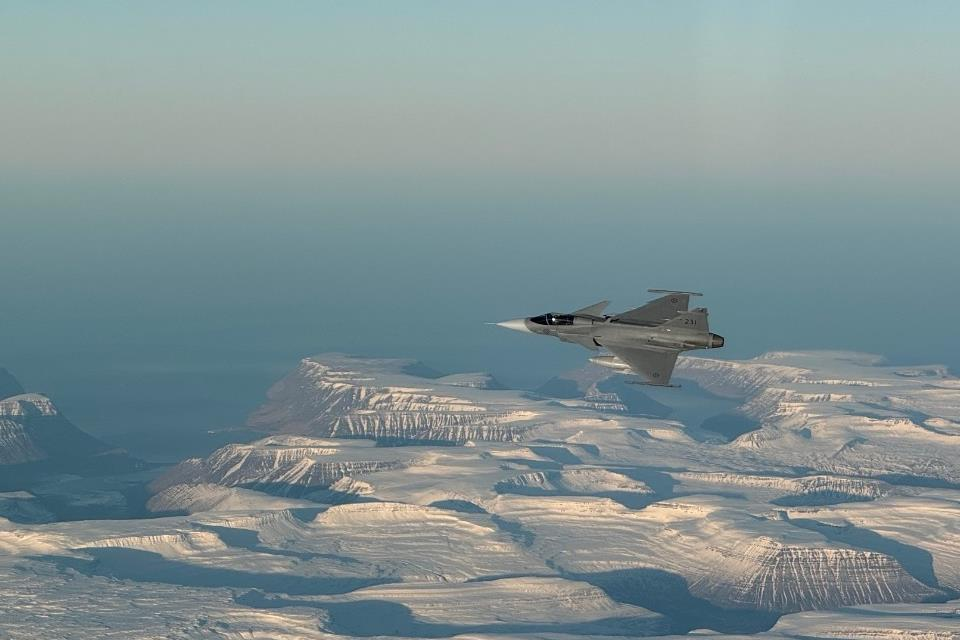
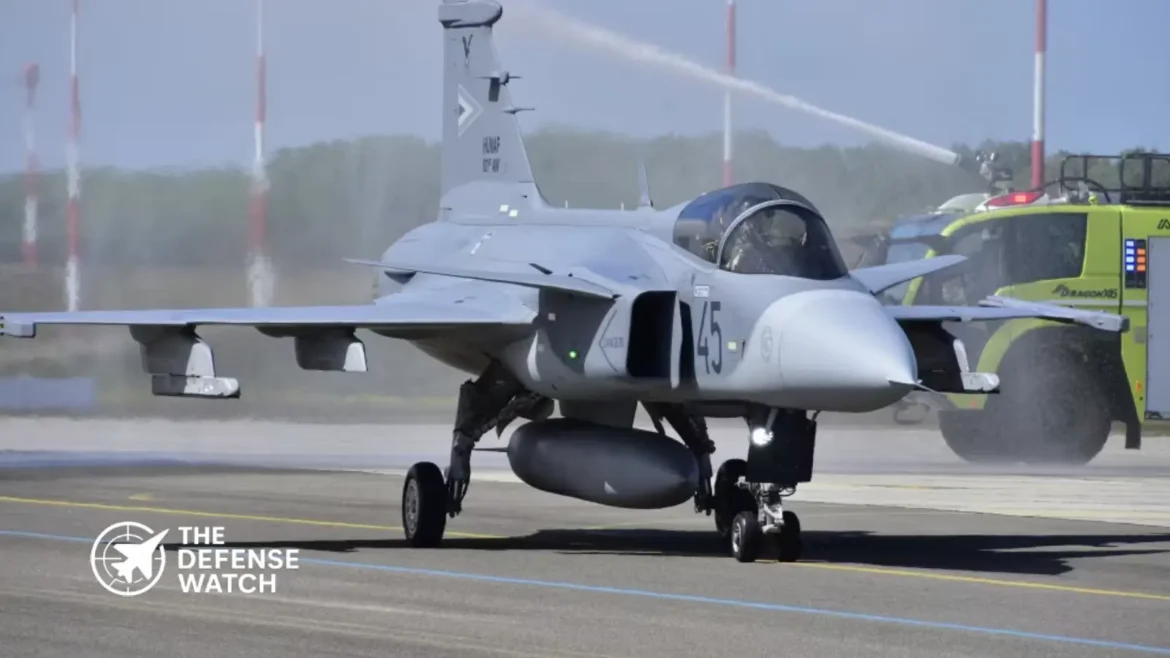
The Hungary Gripen fighters delivery marks a key step in Budapest’s ongoing air force modernization, as two new Gripen C aircraft formally entered service with the Hungarian Defence Forces.
The jets will be operated by the 101st Aviation Wing based at Kecskemét Air Base, reinforcing Hungary’s ability to maintain air policing and NATO interoperability missions across Central Europe.
The delivery follows a contract signed in February 2024 between Hungary’s Ministry of Defence and Swedish Defence Materiel Administration, covering four additional aircraft. The two newly delivered fighters represent the first tranche of that agreement.
- Hungary received two new Gripen C fighter jets for the 101st Aviation Wing at Kecskemét Air Base.
- The delivery follows a February 2024 contract between Hungary’s Ministry of Defence and Sweden’s FMV.
- These are the first two of four additional aircraft ordered under the agreement.
- Hungary will expand its fleet to 18 Gripen C D fighters with upgraded capabilities.
- Saab reaffirmed its commitment to delivery timelines and long term partnership with Hungary.
According to Saab, the timeline underscores its ability to meet customer delivery commitments while supporting long term capability development.
Fleet Expansion And Capability Upgrades
Hungary has operated the Gripen platform since 2006, making it one of the early European adopters of the Swedish-built multirole fighter. With this latest expansion, the country will field a total of 18 Gripen C/D aircraft, all expected to receive incremental upgrades.
The Gripen C/D variant is designed for multirole missions, including air defense, ground attack, and reconnaissance. It is optimized for high sortie rates, dispersed operations, and relatively low lifecycle costs compared to heavier Western fighters.
While the current delivery focuses on fleet size, the broader program includes system upgrades aimed at improving avionics, communications, and weapons integration. These enhancements are critical for maintaining compatibility with NATO standards and evolving operational requirements.
Saab has also indicated plans to invest in an Aviation Development Centre in Hungary. This initiative is expected to deepen local industrial participation and allow Hungary to play a more active role in future Gripen system development.
Strategic Context: NATO Readiness And Regional Security
The Hungary Gripen fighters delivery comes amid heightened focus on air defense readiness across Europe, particularly following Russia’s ongoing military activity in Eastern Europe.
For Hungary, expanding its Gripen fleet is less about numerical advantage and more about ensuring sustained operational availability. A larger fleet allows for better rotation cycles, maintenance flexibility, and readiness for both national and NATO missions.
Hungary contributes to NATO’s Integrated Air and Missile Defence System, including Baltic Air Policing rotations in the past. Maintaining a modern and reliable fighter fleet is central to fulfilling these commitments.
Compared to larger air forces in the alliance, Hungary’s approach emphasizes efficiency and interoperability. The Gripen platform supports this model by offering advanced capabilities without the logistical burden associated with heavier aircraft such as the F-35 or Eurofighter Typhoon.
Saab Partnership And Long Term Industrial Cooperation
The agreement highlights the deepening defense relationship between Hungary and Sweden. Beyond aircraft delivery, the partnership includes training, logistics support, and technology collaboration.
Lars Tossman, head of Saab’s Aeronautics business area, emphasized that Hungary’s long term modernization program and Saab’s local investment plans will enable the country to influence future Gripen development.
This level of industrial cooperation reflects a broader trend in European defense procurement, where countries seek not only platforms but also participation in development and sustainment ecosystems.
For Saab, Hungary remains a key Gripen operator alongside countries such as the Czech Republic and Brazil, reinforcing the platform’s global footprint.
Operational Impact And Future Outlook
The Hungary Gripen fighters delivery will enhance operational resilience for the Hungarian Air Force, particularly in maintaining continuous air policing coverage.
Looking ahead, the remaining two aircraft under the 2024 contract are expected to be delivered on schedule, completing the planned fleet expansion.
While the Gripen C/D remains a capable platform, future decisions may involve transitioning to more advanced variants or integrating next generation systems. For now, Hungary’s focus remains on maximizing the effectiveness of its existing fleet through upgrades and partnerships.
In a European security environment defined by rapid change, incremental capability improvements such as this delivery play a crucial role in sustaining readiness and alliance cohesion.

Sweden Assumes First NATO Air Policing Leadership Role in Iceland
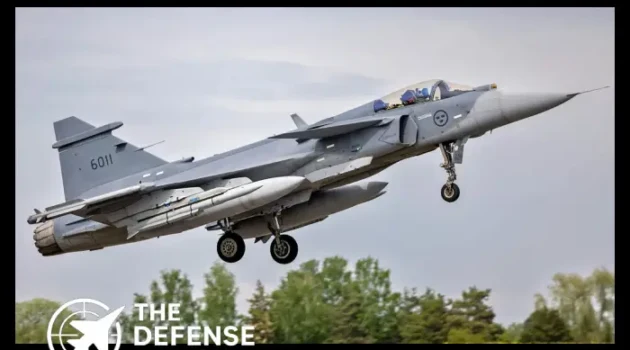
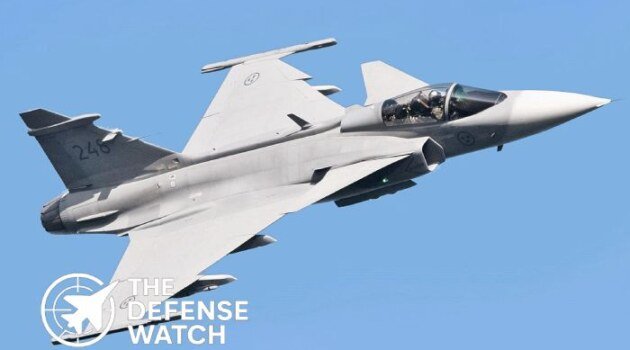
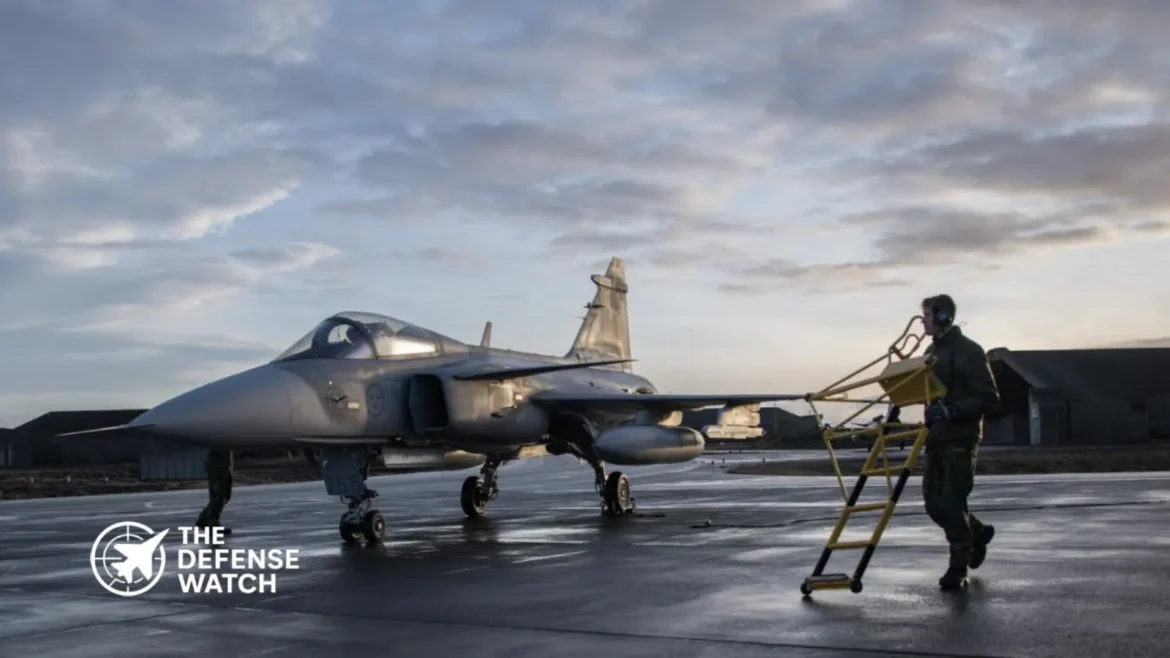
Six Swedish JAS 39 Gripen fighters arrived at Keflavik Air Base, Iceland, on February 4, 2026, marking Sweden’s first leadership of a NATO air policing rotation since joining the Alliance in March 2024. The deployment represents a significant milestone in Sweden’s operational integration within NATO and reinforces Allied air defense over the strategically vital Greenland-Iceland-United Kingdom (GIUK) gap.
The Swedish contingent, comprising more than 110 personnel from Skaraborg Air Wing F 7, replaced Belgium’s 350th Fighter Squadron and its F-16AM Fighting Falcons, assuming responsibility for the 55th rotation of Iceland’s air policing mission. Lieutenant Colonel Johan Legardt, the contingent commander, emphasized the operation’s strategic importance given current international security conditions.
The mission will continue until mid-March 2026, with Swedish forces operating under NATO’s Combined Air Operations Centre at Uedem, Germany. French aerial refueling support was provided during the deployment, with a French A330 MRTT tanker conducting joint operations with four Swedish Gripens between the Norwegian coast and Iceland to ensure the fighters reached their operational base.
Strategic Significance of Swedish Participation
Iceland’s location between Greenland and the United Kingdom positions it at a critical chokepoint where the Arctic Ocean and Norwegian Sea feed into the Atlantic Ocean. During the Cold War, this passage served as the primary route for Soviet submarines accessing the Atlantic from northern bases. Today, the GIUK gap remains essential for monitoring Russian naval and aerial movements in the region.
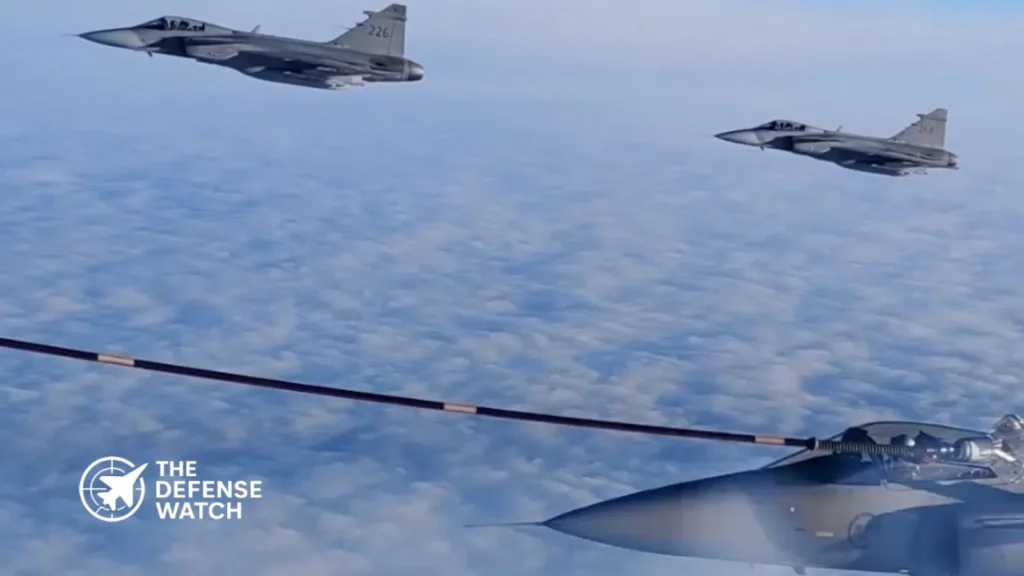
Sweden’s deployment builds on experience gained during its participation in NATO air operations in Poland in 2025, which served as an initial test of interoperability, command integration, and procedural alignment with Allied air forces. Major General Jonas Wikman, Chief of the Swedish Air Force, previously noted that the Poland deployment demonstrated Sweden’s capability to operate effectively under NATO leadership.
Since accession in March 2024, Stockholm has committed to meeting the Alliance’s 2% of GDP defense investment guideline by 2026, announced fighter deployments to Poland for enhanced air policing, and pledged naval and airborne surveillance assets to reinforce maritime security in the Baltic Sea.
JAS 39 Gripen Capabilities for Arctic Operations
The Saab JAS 39 Gripen is a single-engine, multirole fighter optimized for northern European conditions, combining a delta-canard airframe with a modern radar and mission system. The Gripen C/D variant in Swedish service can carry approximately 6.5 tonnes of external stores across multiple hardpoints, in addition to an internal 27mm Mauser BK-27 cannon used for visual-range engagements and warning shots during air policing scenarios.
For the Icelandic mission, the aircraft are expected to carry beyond-visual-range air-to-air missiles such as the AIM-120 AMRAAM or the ramjet-powered MBDA Meteor, paired with short-range infrared-guided missiles for close-quarters intercepts. The Gripen’s advanced sensors, data links, and ability to operate in austere environments make it particularly suited for extended patrols over remote oceanic expanses.
More than 70 Gripens are in service or on order with the Swedish Air Force, and the type has proved to be both capable and cost-effective. The aircraft’s short takeoff capabilities and agility are particularly valuable for operations from Keflavik Air Base.
NATO Iceland Air Policing Mission Framework
Iceland, as a founding NATO member without armed forces, has relied on Alliance air policing support since 2008. When Iceland signed the Treaty in 1949, it did not have and still does not have armed forces, though it maintains a Coast Guard, national police forces, an air defense system and a voluntary expeditionary peacekeeping force.
The air policing mission typically rotates Allied aircraft three to four times annually for several-week deployments. Participating nations provide airborne surveillance, identification of unknown tracks, and rapid interception of aircraft that fail to file flight plans, lose radio contact, or approach Alliance airspace in non-compliant manner.

Image Source : NATO Integrated into NATO’s Air Policing system, the Swedish detachment will contribute to continuous radar coverage, operating under control of the Combined Air Operations Centre in Uedem and supported when required by NATO E-3 AWACS. The mission forms part of a layered detection and interception chain proven effective against various military and civilian incidents over the North Atlantic.
Rapid NATO Integration Following Accession
Sweden’s participation in the Iceland air policing mission demonstrates the rapid pace of its NATO integration. Sweden flew its first NATO-controlled air defense mission in October 2024, with JAS 39 Gripen C combat aircraft tasked to defend allied airspace as part of the NATO Joint Incident Response Force.
The deployment creates an operational link between the Baltic-Nordic region, where Sweden and Finland bring substantial capabilities, and transatlantic reinforcement routes vital in any major crisis. Iceland’s Foreign Minister Þorgerður Katrín Gunnarsdóttir stated that Sweden’s participation demonstrates how NATO membership strengthens defense cooperation and security.
Weather permitting, Swedish forces are expected to conduct training flights to alternate airports in Akureyri and Egilsstaðir in early February, ensuring familiarity with Iceland’s airfield infrastructure and operational procedures across the island nation.
Broader Nordic Defense Cooperation
The Swedish deployment aligns with enhanced Nordic defense cooperation initiatives. The Nordic countries entered into cooperation to promote access to Denmark, Finland, Iceland, Norway and Sweden’s airspace for NATO’s air operations, with Swedish Defense Minister Pål Jonson noting that deepening airspace cooperation strengthens military integration while giving NATO access to larger contiguous areas for deterrence, exercises and training.
This coordination is particularly significant given the Arctic’s growing geopolitical importance. Rising global temperatures have increased commercial opportunities in the region, including the Northern Sea Route connecting Europe and Asia, while Russia maintains its Northern Fleet and the majority of its nuclear missile-carrying strategic submarines in Arctic waters.
The Swedish Air Force’s assumption of leadership responsibility in one of NATO’s most strategically sensitive regions demonstrates the Alliance’s confidence in Sweden’s operational capabilities and commitment to collective defense. As the newest NATO member on the northern flank, Sweden’s active participation in air policing missions reinforces Allied deterrence and interoperability during a period of heightened geopolitical tensions.