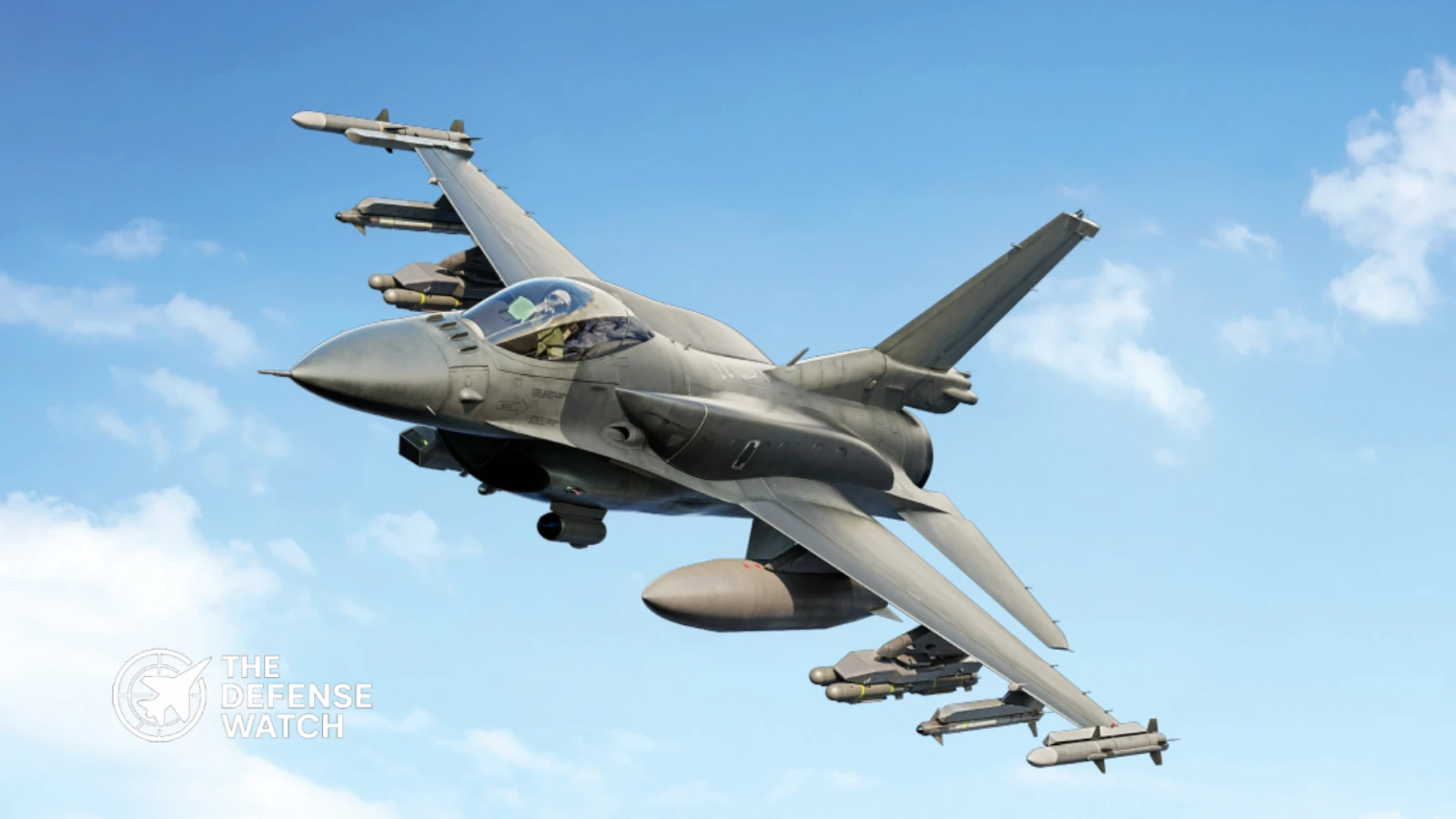
F-16 Block 70/72 Gains New Combat Systems
The F-16 Block 70/72 is being positioned by Lockheed Martin as a modernized fourth-generation fighter built around an advanced radar, upgraded mission systems, improved cockpit displays and extensive weapons integration. The company says its current Block 70/72 backlog stands at 119 aircraft, with 41 fighters delivered to customers across seven countries.
Takeaways
The F-16 Block 70/72 combines a proven fourth-generation airframe with modern sensors, avionics, safety systems and weapons integration intended to keep the fighter relevant for decades.
The latest production standard does not turn the F-16 into a stealth aircraft or change its fundamental fourth-generation design. Instead, the modernization focuses on the systems that determine how effectively a fighter can detect, identify, track and engage targets in a networked combat environment.
Lockheed Martin says the wider F-16 fleet now includes about 2,800 aircraft operating across 29 countries, with more than 14 million sorties and 21 million flight hours.
APG-83 AESA Radar Provides Fifth-Generation-Derived Capability
The most important sensor upgrade is Northrop Grumman’s AN/APG-83 Scalable Agile Beam Radar, or SABR.
The APG-83 is an active electronically scanned array, or AESA, fire-control radar. Northrop Grumman says the system brings modern AESA technology associated with the F-22 and F-35 to the F-16 while fitting within the aircraft’s existing physical, power and cooling constraints.
Lockheed Martin describes the radar as providing fifth-generation fighter radar capabilities. That description refers to radar technology and processing rather than the F-16 itself becoming a fifth-generation fighter. The aircraft remains a fourth-generation design without the low-observable characteristics associated with platforms such as the F-35 and F-22.
The radar upgrade matters because modern air combat increasingly depends on the quality and speed of information available to the pilot. AESA technology supports functions including air-to-air search and tracking, air-to-ground mapping and targeting in a single integrated radar architecture.
Modern Cockpit Improves Pilot Access to Sensor Data
The Block 70/72 also introduces a high-resolution Center Pedestal Display, giving pilots a larger digital interface for tactical information.
Lockheed Martin says the display can present radar and targeting-pod information, color moving maps and enlarged air-to-air situation displays. It also supports digital flight instrument information and helmet-mounted display integration.
This is an important part of the modernization because sensor performance alone does not determine combat effectiveness. A fighter can collect large volumes of information, but the pilot still needs to interpret that information quickly enough to make decisions.
The Block 70/72 architecture therefore combines radar improvements with cockpit displays, mission computing, navigation and networking rather than treating each upgrade as a separate capability.
Advanced Targeting and IRST Expand Sensor Options
The fighter can also incorporate the Sniper Advanced Targeting Pod and Legion-ES infrared search and track system.
These systems provide additional means of detecting and identifying targets beyond the primary radar. Infrared search and track is particularly relevant because it gives the aircraft a passive sensing option that does not rely on radar emissions.
Lockheed Martin also identifies an advanced data link, precision GPS and inertial navigation, and upgraded mission computing as elements of the Block 70/72 architecture.
The result is a fighter that can combine information from multiple sensors and present it through a substantially more modern cockpit than earlier F-16 configurations.
Weapon Integration Remains a Core F-16 Advantage
Weapons flexibility is another major element of the Block 70/72 package.
Lockheed Martin says the F-16 program has certified more than 3,300 carriage and release configurations covering more than 180 weapon and store types.
That integration history gives the aircraft access to a broad range of air-to-air and air-to-ground weapons, depending on the customer configuration and applicable U.S. export approvals.
Recent Foreign Military Sales packages demonstrate how broad that ecosystem can be. For example, the U.S. government approved a possible $5.58 billion F-16 package for the Philippines in April 2025 that included Block 70/72 aircraft, APG-83 radars, AIM-120C-8 AMRAAMs, AIM-9X Block II missiles, GBU-39/B Small Diameter Bombs and JDAM-related equipment.
The significance is not simply the number of weapons available. A modern multirole fighter must integrate weapons with its radar, mission computer, navigation system, targeting sensors and data links. That systems-level integration determines how effectively the aircraft can transition between air-to-air and air-to-ground missions.
12,000-Hour Airframe Supports Long-Term Service
The Block 70/72 also addresses one of the central challenges facing mature fighter fleets: structural age.
Lockheed Martin gives the aircraft a 12,000-hour structural service life, more than 50 percent beyond previous production F-16 aircraft according to the company.
The extended life is important for operators that want to retain a relatively large fighter fleet while gradually introducing newer platforms. It can also reduce the pressure to replace every aircraft solely because of accumulated airframe fatigue.
The modernization approach therefore combines a new-production airframe with a significantly revised electronic architecture. That distinction is important because many existing F-16 operators are simultaneously pursuing modernization programs for older aircraft.
Auto GCAS Adds a Major Safety Layer
Another standard Block 70/72 feature is Lockheed Martin’s Automatic Ground Collision Avoidance System, or Auto GCAS.
The system is designed to detect situations in which an aircraft is at risk of controlled flight into terrain and automatically initiate a recovery when required. Lockheed Martin says Auto GCAS entered U.S. Air Force F-16 service in 2014 and has saved pilots and aircraft in multiple incidents.
For a high-performance fighter, this type of system has operational significance beyond routine safety. Pilots can become spatially disoriented, lose situational awareness or become overloaded while concentrating on tactical tasks.
Reducing the likelihood of a catastrophic ground collision can therefore protect both trained personnel and expensive aircraft.
Why the Block 70/72 Matters to Global Fighter Fleets
The central value of the F-16 Block 70/72 is not a single new sensor. It is the combination of mature airframe design, modern computing, AESA radar, networking, targeting systems, weapons integration and extended structural life.
For many air forces, that combination offers a path to fielding a modern multirole fighter without moving entirely to a fifth-generation fleet.
The F-16 also benefits from a large international support ecosystem. Lockheed Martin’s current program information identifies roughly 530 suppliers worldwide, while more than 700 F-16s operate in Europe according to company data.
That existing ecosystem can matter to operators because training, maintenance, spare parts, weapons integration and interoperability are increasingly important factors in determining the practical value of a fighter fleet.
A Fourth-Generation Fighter With a Modernized Electronic Core
The Block 70/72 illustrates how an established fighter can remain relevant through changes to its sensors, computers, displays, networking and weapons rather than through a completely new airframe.
The aircraft still lacks the low-observable design and other characteristics that define fifth-generation fighters. Its value instead comes from improving the information, targeting and weapons systems carried by a proven fourth-generation platform.
That distinction is important as air forces balance the cost and availability of fifth-generation aircraft with the need to maintain sufficient numbers of capable multirole fighters.
For the F-16, the modernization path now extends well beyond the original Cold War-era configuration. The Block 70/72 is designed around a 12,000-hour airframe, APG-83 AESA radar, modern mission computing, improved cockpit displays, advanced targeting and broad weapons integration, giving the platform a long runway for continued service.
F-16 Block 70/72 Key Specifications
Feature F-16 Block 70/72 Aircraft type Multirole fighter Generation Fourth-generation Primary radar Northrop Grumman AN/APG-83 SABR AESA Structural service life 12,000 hours Maximum speed More than Mach 2 Maximum takeoff gross weight 48,000 lb Design load factor 9 g Targeting systems Sniper Advanced Targeting Pod, optional IRST Navigation GPS/INS Safety system Automatic Ground Collision Avoidance System Weapons integration More than 180 weapon and store types across certified configurations Production location Greenville, South Carolina Specifications are based on Lockheed Martin’s published Block 70/72 product information.
What Comes Next for the F-16
Lockheed Martin’s current production figures show that international demand for the F-16 has not ended with the arrival of newer fighter designs. The company reported 122 aircraft in its June 2026 fast-facts document, although its September 2026 update cited a 119-aircraft backlog and 41 deliveries, reflecting the changing production status as aircraft are delivered and orders are updated.
The continuing production line also provides operators with a route to acquire new aircraft while maintaining compatibility with a large global F-16 community.
For countries that already operate the F-16, the Block 70/72 architecture also provides a reference point for modernization. Radar, mission computing, cockpit displays and other systems can extend the operational usefulness of existing fleets, although the exact equipment available depends on aircraft configuration, customer requirements and applicable export approvals.
The result is a fighter that retains the familiar F-16 aerodynamic and operational architecture while replacing much of the electronic foundation with systems designed for contemporary networked combat.